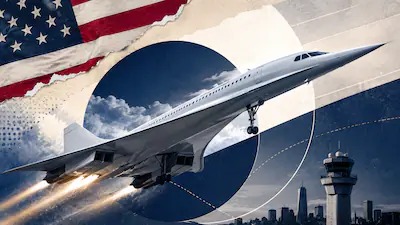
The FAA has proposed new noise-based regulations that could lift the 53-year ban on supersonic passenger flights over the continental United States. While the agency aims to finalize rules by 2027, companies like Boom Supersonic are racing to launch commercial flights by 2029 using noise-reduction technology.
New noise-based regulatory proposals could allow civilian supersonic travel over the U.S. for the first time in over 50 years.
The United States is moving closer to ending its decades-long ban on overland supersonic flight as the Federal Aviation Administration (FAA) recently unveiled proposed rule changes. By shifting from a speed-based restriction to a noise-based certification standard, the FAA aims to enable a new generation of high-speed passenger jets while mitigating the impact of sonic booms on communities.
The proposed regulations, reported in early July 2026, mark a significant regulatory shift. Since 1973, civilian aircraft have been prohibited from exceeding the speed of sound—Mach 1—over the continental United States to protect residents from the disruptive, thunder-like noise and potential structural damage caused by sonic booms. Now, advancements in aerospace engineering and materials science are encouraging regulators to reconsider these limits.
The Push for "Boomless" Travel
The core of the FAA's initiative relies on "quiet technology." Modern supersonic aircraft designs, such as those being developed by private companies like Boom Supersonic, utilize techniques like "Mach cutoff." This operational concept allows the aircraft to fly at supersonic speeds at high altitudes in a way that causes shock waves to refract upward into the atmosphere, significantly reducing the intensity of the noise that reaches the ground.
FAA Administrator Bryan Bedford stated that the new standards are intended to ensure that any sonic boom overpressure is minimized, potentially making the sound comparable to a car door slamming rather than an explosive blast. In addition to the recently proposed noise standards, the FAA signaled plans to introduce further rules regarding takeoff and landing noise later this year.
Industry Targets and 2029 Ambitions
While the FAA’s proposal is a major step forward, the return of supersonic travel is not immediate. The agency expects to finalize these new standards by mid-2027. Despite this timeline, some private manufacturers maintain aggressive goals for commercial service.
Boom Supersonic, a leader in the race to return supersonic travel to the skies, continues to target 2029 for the commercial entry of its Overture aircraft. The company has secured conditional pre-orders from major carriers, including United Airlines, American Airlines, and Japan Airlines. However, independent industry analysts have expressed caution, noting that the company still faces significant hurdles, including finalizing its "Symphony" engine and completing rigorous FAA certification for both the airframe and engine.
Why It Matters
The potential return of supersonic passenger flights represents a fundamental change for international and domestic travel. If successfully implemented, the technology could reduce travel times on transoceanic and continental routes by nearly half. Proponents argue that restoring high-speed travel would transform global connectivity, though critics and analysts emphasize that success hinges on proving the long-term economic and environmental sustainability of these aircraft.
Key Facts at a Glance
Policy Shift: The FAA is replacing a 1973 ban on supersonic flights over land with new, noise-based certification standards.
Safety Limits: Proposed rules aim to keep sonic boom overpressure below 0.11 pounds per square foot at ground level.
Commercial Targets: Boom Supersonic is working toward a 2029 entry into service for its Overture jet.
Certification Timeline: The FAA expects to finalize new noise-based regulatory standards by mid-2027.
Technological Shift: New designs aim to "refract" shock waves into the atmosphere, preventing the loud booms associated with the Concorde era.
FAQ
1. Why were supersonic flights banned over the U.S. in 1973?
The ban was implemented due to widespread public concern regarding "sonic booms," which are thunderous noises created by aircraft traveling faster than the speed of sound. These booms caused community disturbances and concerns about structural damage to buildings.
2. Are supersonic flights guaranteed to return by 2029?
Not necessarily. While some manufacturers are targeting 2029, regulatory finalization is not expected until mid-2027, and companies must still complete extensive flight testing and safety certification before commercial passenger service can begin.
3. Will these flights be affordable for the average passenger?
Manufacturers, such as Boom Supersonic, claim they are designing their aircraft to be profitable at fares comparable to today’s business-class tickets, though cost remains a primary point of uncertainty for the industry.
4. How does modern technology differ from the Concorde?
Modern designs use advanced materials and aerodynamic shapes to minimize noise at the source. Unlike the Concorde, which often required afterburners and had significant noise issues, new aircraft aim to operate with efficient, quiet engines.
Source: Federal Aviation Administration (FAA), Boom Supersonic, Popular Science, Fox Business