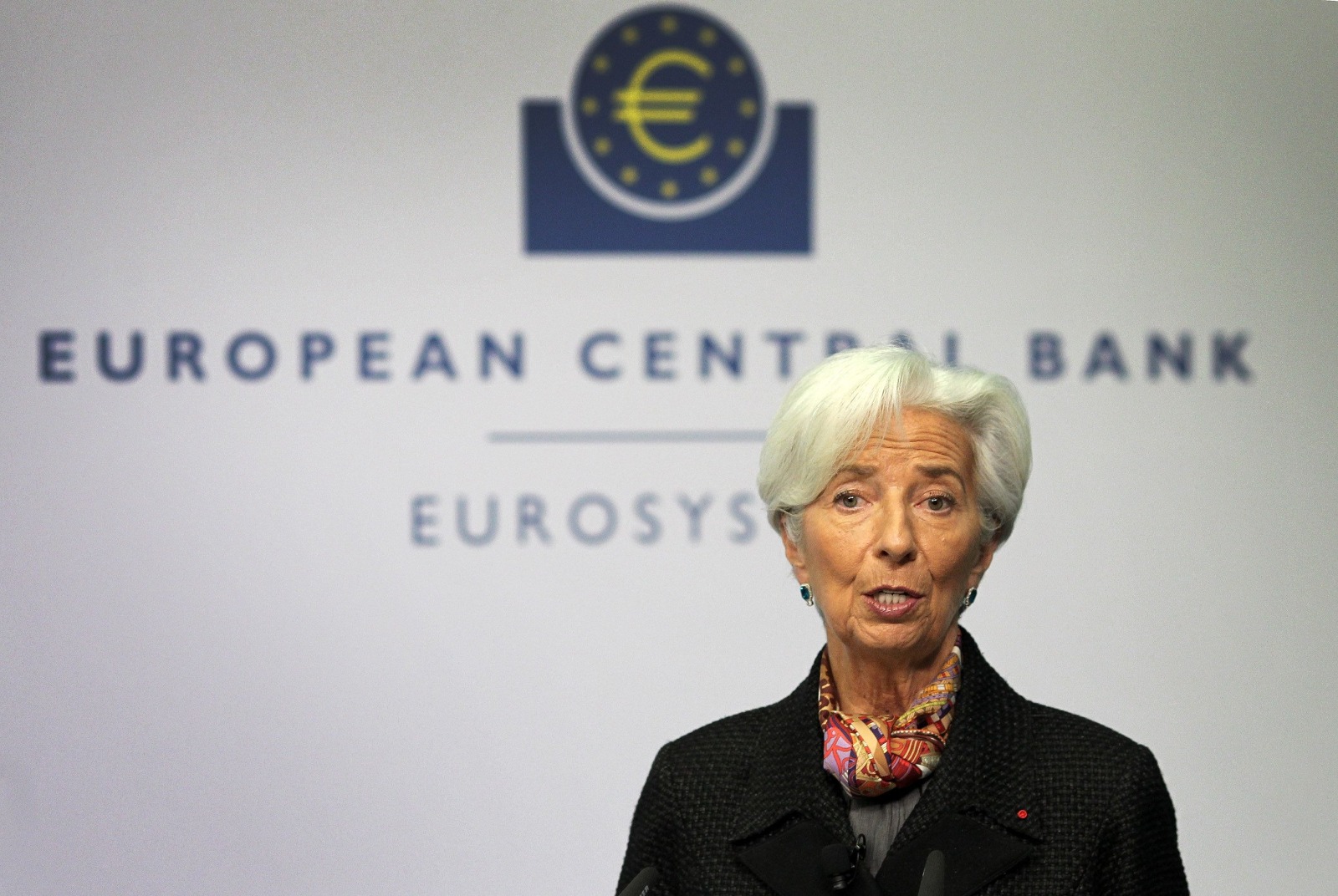
European Central Bank (ECB) President Christine Lagarde addressed reporters in Frankfurt following the Governing Council's monetary policy meeting. The central bank held its benchmark deposit facility rate unchanged at 2.25 percent. Lagarde emphasized that while headline inflation has moderated to 2.8 percent, elevated energy prices driven by geopolitical conflicts require continued vigil and a strict meeting-by-meeting approach.
FRANKFURT — European Central Bank President Christine Lagarde confirmed that the Governing Council has opted to maintain its benchmark deposit facility rate at 2.25 percent, holding key borrowing costs steady across the 20-nation euro area. The decision follows a period of heightened market scrutiny as central bankers evaluate the persistent effects of energy price volatility triggered by geopolitical conflicts in the Middle East.
Speaking at the ECB’s headquarters in Frankfurt, Lagarde outlined the rationale behind the policy hold. She noted that while inflation metrics have shown encouraging signs of cooling with headline consumer price inflation easing to 2.8 percent upside risks from global commodity markets remain front and center.
The central bank’s decision to pause follows a single 25-basis-point rate hike implemented earlier in the quarter, reinforcing its commitment to keeping inflation anchored to its 2.0 percent medium-term target without unnecessarily choking regional economic growth.
Economic Projections and Inflation Outlook
During the post-decision press briefing, President Lagarde reviewed the macroeconomic conditions shaping monetary policy decisions across the Eurozone:
Inflation Dynamics: Headline inflation in the euro area fell to 2.8 percent year-on-year, while core inflation excluding volatile food and energy components moderated to 2.4 percent.
Energy Market Volatility: Crude oil prices have experienced significant upward pressure due to geopolitical tensions and shipping disruptions in key maritime corridors like the Strait of Hormuz. Brent crude trading near $95 per barrel continues to pose pass-through inflation risks for European energy consumers.
Economic Growth Trajectory: Eurosystem staff projections point to modest GDP expansion of 0.8 percent in 2026, followed by 1.2 percent in 2027. Broader economic growth remains constrained by subdued consumer sentiment and elevated input costs.
Policy Flexibility: The central bank explicitly avoided committing to a pre-set rate path, reiterating that future interest rate decisions will remain strictly dependent on incoming economic and financial data.
Lagarde noted that while household balance sheets across the euro area remain relatively resilient, weaker investment activity continues to weigh on overall economic momentum.
Financial Market Reaction and Sectoral Impact
Financial markets responded with measured stability following the announcement, as the decision to hold rates matched consensus expectations.
Impact on Banking and Corporate Borrowing
By maintaining the deposit rate at 2.25 percent, the ECB provides predictable capital conditions for European commercial banks. Corporate bond issuance and lending rates are expected to stabilize near current levels, helping businesses manage debt refinancing without facing immediate rate spikes.
Implications for Eurozone Consumers
For households, stable interest rates offer temporary relief on variable-rate mortgages and consumer credit lines. However, persistent energy cost pressures continue to erode purchasing power, keeping real income growth muted across major economies like Germany and France.
Foreign Exchange and Fixed Income
The euro traded steadily against major currencies, hovering near $1.14 against the U.S. dollar as foreign exchange markets digested Lagarde's neutral-to-cautious policy tone. Government bond yields across core eurozone economies remained range-bound.
Official Sources Section
According to the monetary policy statement released by the European Central Bank, the Governing Council formally decided to leave the three key ECB interest rates unchanged:
"The Governing Council is determined to ensure that inflation returns to its two percent medium-term target in a timely manner. We will continue to follow a data-dependent and meeting-by-meeting approach to determining the appropriate level and duration of restriction."
Official releases from the Eurostat statistical office confirmed the underlying inflation figures, while official transcripts of the press briefing were published by the ECB’s communications division.
Why It Matters
The ECB's rate stance has direct practical implications for international trade, business investment, and household borrowing:
Mortgage and Loan Costs: The rate pause prevents an immediate rise in borrowing costs for European businesses and homeowners.
Inflation Containment: By holding rates in restrictive territory, the ECB aims to prevent supply-side energy spikes from spilling into broader consumer goods and wages.
Cross-Border Trade: Stable monetary policy supports currency stability, providing clarity for importers and international trade partners operating within the European Single Market.
Key Facts at a Glance
Central Bank: European Central Bank (ECB)
ECB President: Christine Lagarde
Key Rate Decision: Deposit Facility Rate held steady at 2.25%
Eurozone Inflation Rate: Headline CPI at 2.8%; Core CPI at 2.4%
Growth Outlook: Euro area GDP projected at 0.8%
Frequently Asked Questions (FAQs)
What are the three key ECB interest rates?
The ECB sets three primary rates: the deposit facility rate (currently 2.25%), the main refinancing operations rate (2.40%), and the marginal lending facility rate (2.65%).
Why did the ECB choose to hold interest rates unchanged?
The central bank chose to pause because inflation has moderated toward its target level, allowing policymakers time to evaluate the impact of earlier rate adjustments and monitor ongoing geopolitical risks affecting energy markets.
When is the next ECB monetary policy meeting scheduled?
The Governing Council meets every six weeks to set monetary policy. The next rate-setting meeting and press conference are scheduled for September, where new macroeconomic staff projections will also be presented.
How does the ECB rate decision affect everyday consumers in Europe?
ECB interest rates directly influence the borrowing rates that commercial banks offer to households and businesses. A rate hold stabilizes interest rates on personal credit, automobile loans, and new mortgage agreements across the eurozone.
Source: Official press statements and monetary policy releases from the European Central Bank, inflation statistics from Eurostat, and macroeconomic updates from the International Monetary Fund.