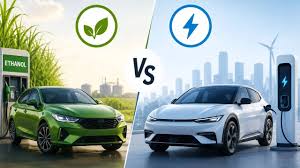
NEW DELHI — The choice for Indian car buyers looking for alternative fuel options has significantly changed as Maruti Suzuki prepares to officially unveil India’s first mass-market production vehicle running on 100% ethanol (E100) on June 4, 2026. Attended by Union Minister for Road Transport and Highways Nitin Gadkari and Union Minister for Petroleum and Natural Gas Hardeep Singh Puri at the Taj Palace in New Delhi, this launch offers a competitive alternative to electric vehicles (EVs). Consumers must now weigh the pros and cons of two different clean energy solutions: flex-fuel vehicles using agricultural biofuels versus battery electric vehicles backed by government infrastructure incentives.
NEW DELHI -The choice for Indian car buyers looking for alternative fuel options has significantly changed as Maruti Suzuki prepares to officially unveil India’s first mass-market production vehicle running on 100% ethanol (E100) on June 4, 2026. Attended by Union Minister for Road Transport and Highways Nitin Gadkari and Union Minister for Petroleum and Natural Gas Hardeep Singh Puri at the Taj Palace in New Delhi, this launch offers a competitive alternative to electric vehicles (EVs). Consumers must now weigh the pros and cons of two different clean energy solutions: flex-fuel vehicles using agricultural biofuels versus battery electric vehicles backed by government infrastructure incentives.
Maruti Suzuki Unveils E100 Car Amid Mandated E20 Rollout
The timing of this flex-fuel unveiling highlights India's multi-track approach to energy security. From April 1, 2026, the Ministry of Petroleum and Natural Gas officially mandated E20 (20% ethanol-blended petrol) as the national standard at retail outlets, moving the original target up from 2030.
Maruti Suzuki's upcoming E100 car, expected to be a production-ready version of either the Wagon R or Fronx flex-fuel prototypes showcased at recent mobility expos, will be capable of operating on any combination of petrol and ethanol up to 100% purity.
While manufacturers have developed the necessary engine technology, the commercial success of E100 cars will depend entirely on how fast specialized fuel pumps are set up. To support this deployment, the central government announced plans to establish 5,000 dedicated E100 fuel dispensing stations across the country within the next two years.
The EV Paradigm: Subsidy Transitions and Infrastructure Maturity
While ethanol vehicles are just starting to enter the market, electric vehicles are moving into a more mature phase. According to the Ministry of Heavy Industries, direct fiscal support to individual buyers through the flagship PM Electric Drive Revolution in Innovative Vehicle Enhancement (PM E-DRIVE) scheme will phase out for specific segments. The government’s official policy states that direct consumer incentives are discontinued once a segment hits 10% market penetration.
The transition away from direct consumer subsidies suggests that the EV ecosystem is becoming more self-sufficient, thanks to a wider public charging network across major national highways and expanding production lines from local manufacturers. For car buyers, this means the long-term total cost of ownership (TCO) will depend more on standard fuel-to-electricity price differences rather than upfront government discounts.
Cost and Efficiency Comparison: Fuel Bills vs. Electricity Tariffs
For the average consumer, the choice between an ethanol flex-fuel vehicle and an electric car comes down to operating costs, initial purchase price, and fuel efficiency.
Upfront Costs: Flex-fuel vehicles are built on existing internal combustion engine (ICE) architectures, making them significantly cheaper to buy upfront than battery-powered EVs, which carry higher costs due to import-dependent lithium-ion chemistry.
Fuel Efficiency and Mileage: Ethanol contains lower energy density than pure petrol. Data from a recent nationwide survey by LocalCircles revealed that while official guidelines estimate a marginal 1% to 6% drop in fuel efficiency for E20 blends, nearly 25% of surveyed vehicle owners reported a mileage drop of over 20%, particularly in older, unoptimized engines.
Running Costs: Pure ethanol (E100) is expected to be priced lower per liter than conventional petrol to encourage adoption. However, it still cannot match the lower per-kilometer operating cost of an EV charged via residential electricity grids.
Official Sources Section
Statements regarding the alternative fuel rollout and EV transition have been gathered from the following official entities:
Quote Section
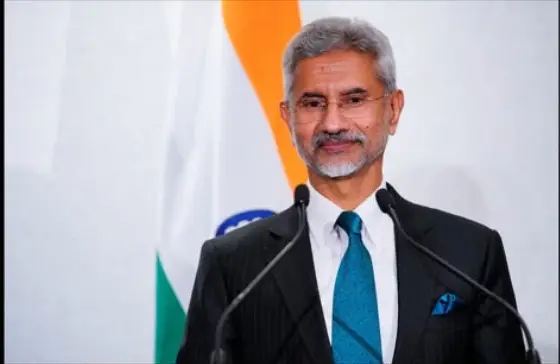
Addressing the dual-track strategy at a regional energy transit summit, Union Minister Nitin Gadkari stated:
"Vehicles with flex-fuel engines are going to be introduced on a large scale soon. This initiative will help India become more self-reliant, lower pollution, reduce the country's annual fossil fuel imports, and provide consumers with cheaper fuel options, all while supporting our local agricultural sector and farmers."
Regarding production scaling, Rahul Bharti, Senior Executive Officer for Corporate Affairs at Maruti Suzuki, noted during a recent earnings call:
"We have the technology, whether it is for ethanol-blending increase or for flex-fuel vehicles. We will support the government whenever the need arises. However, it will take 5 to 10 years from now to become a meaningful volume."
Why It Matters
The competition between ethanol and electric options will affect both consumer spending and macroeconomic policy. India currently imports nearly 87% of its crude oil requirements, leaving the economy exposed to geopolitical supply shocks. The choice between these technologies will shape how domestic infrastructure is built, how agricultural crop waste is utilized, and how urban air pollution is managed over the next decade.
Key Facts at a Glance
National Fuel Standard: E20 petrol is now mandatory across all Indian fuel stations as of April 2026.
Flex-Fuel Landmark: Maruti Suzuki is unveiling the country's first production passenger vehicle capable of running on 100% ethanol (E100).
Fuel Infrastructure: The government plans to deploy 5,000 specialized E100 fuel dispensing stations over the next 24 months.
EV Subsidy Timeline: PM E-DRIVE demand incentives are being adjusted as the electric vehicle ecosystem shifts toward market-driven growth.
Efficiency Factor: Ethanol's lower energy density means buyers must weigh lower fuel prices against a potential 10% to 20% drop in absolute mileage.
FAQ Section
Q1: Can I use E100 or high-blend ethanol fuel in my current petrol car?
No. Vehicles built before 2023 are generally designed for E5 or E10 blends. High ethanol concentrations can corrode standard rubber and plastic components in older fuel lines and cause engine knocking.
Q2: Will E100 fuel be cheaper than standard petrol at the pump?
Yes, official pricing strategies aim to keep ethanol cheaper than fossil fuels to offset its lower mileage and encourage drivers to buy flex-fuel models.
Q3: Are electric cars still eligible for government tax benefits in 2026?
While direct cash incentives are phasing out for mature vehicle segments under PM E-DRIVE guidelines, broader benefits like lower GST rates (5% for EVs vs. 28% for regular ICE cars) and road tax waivers remain active in many states.
Q4: Which option is better for long-distance highway travel?
Flex-fuel vehicles are currently more convenient for long distances because they can seamlessly switch back to standard petrol if an ethanol station isn't nearby. EVs require planned stops at fast-charging stations, which are still being set up along rural highways.
Source: Ministry of Heavy Industries, Ministry of Road Transport & Highways, Maruti Suzuki Corporate Communications.