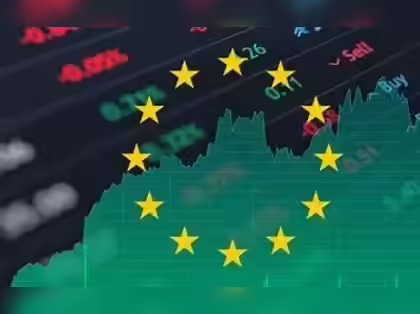
European equity futures remained muted on June 10, 2026, as investors assessed the market impact of U.S.-Iran tensions. With the ECB expected to announce a rate hike on Thursday, traders are prioritizing defensive positioning amid rising inflation, supply chain uncertainty, and a broader cooling of the tech-sector investment cycle.
European stock indices, including those linked to the Euro Stoxx 50, DAX, CAC 40, and FTSE 100, are bracing for a cautious session on Wednesday, June 10, 2026. As of early trading, futures contracts for major European benchmarks were largely unchanged, reflecting a "wait-and-see" approach from market participants following a period of heightened geopolitical instability and a recent retreat in technology-related equities.
The market outlook remains dominated by the impact of renewed U.S.-Iran tensions. Following fresh airstrikes in the region, investors have demonstrated a clear shift toward risk-aversion, tempering enthusiasm despite a recent recovery in semiconductor stocks that had provided a brief lift to indices earlier in the week.
Market Drivers and Geopolitical Uncertainty
European markets continue to grapple with a dual-threat environment: the potential for supply chain disruptions in the Middle East and the cooling of the "AI-driven" speculative boom that has defined much of the first half of 2026. According to recent market analysis, while major companies in the software and data infrastructure sectors faced significant selling pressure on Tuesday, the broader European market is now awaiting fresh catalysts to determine direction.
Traders are closely monitoring the European Central Bank (ECB), which is expected to issue a pivotal monetary policy decision on Thursday. With inflation remaining a persistent concern amid elevated energy costs—a direct byproduct of the regional conflict—policymakers are widely anticipated to implement a 25-basis-point interest rate hike to stabilize the Eurozone economy.
Performance of Major Index Futures
The outlook for key benchmarks remains cautious:
Euro Stoxx 50: Futures suggest a flat open as traders balance safe-haven demand with the need for growth-oriented assets.
DAX (Germany): German markets are particularly sensitive to industrial production data and energy price volatility.
CAC 40 (France) & FTSE (UK): Regional indices are reflecting similar levels of risk-aversion, with investors shifting toward defensive sectors like banking and healthcare.
"According to officials, the current market volatility is a reflection of the difficulty in navigating the transition toward a new economic equilibrium, characterized by higher inflation, geopolitical fragmentation, and the ongoing integration of artificial intelligence into core business models," as noted in recent macro-financial reports.
Why It Matters
For investors, the present environment requires a high degree of agility. Geopolitical shocks, such as the current conflict in the Middle East, are testing the resilience of financial infrastructure and causing rapid fluctuations in capital flows. As the ECB prepares its policy update, the focus is squarely on whether the central bank can effectively curb inflation without inducing a deeper economic contraction. For businesses, the uncertainty surrounding energy prices and potential trade barriers remains the primary concern for supply chain stability throughout the remainder of the year.
Key Facts at a Glance
Futures Outlook: Euro Stoxx 50, DAX, CAC 40, and FTSE futures are indicating a cautious, muted start to the Wednesday session.
Central Bank Watch: The European Central Bank (ECB) is scheduled to release a major monetary policy decision on Thursday, June 11.
Inflationary Pressures: Energy costs linked to Middle East instability continue to influence the inflation outlook for the Eurozone.
Sector Trends: Technology and software stocks remain volatile, leading investors to favor defensive sectors.
FAQ
Why are European futures currently flat?
European futures are reflecting investor uncertainty as markets balance geopolitical risks in the Middle East with the anticipation of upcoming ECB interest rate decisions.
What should investors expect from the ECB decision?
Markets are widely anticipating a 25-basis-point interest rate hike, intended to address persistent inflation driven by energy supply shocks.
How is the Middle East conflict affecting European stocks?
Conflict-related uncertainty has led to a risk-off sentiment, causing investors to move away from speculative tech stocks and toward defensive holdings.
Are there any specific economic indicators to watch?
Yes, traders are focused on regional industrial production data and the upcoming U.S. inflation reports, both of which will influence future market trends.
Source: European Central Bank (ECB), Stoxx Index Data, Barchart Market Analytics, Saxo Market Analysis