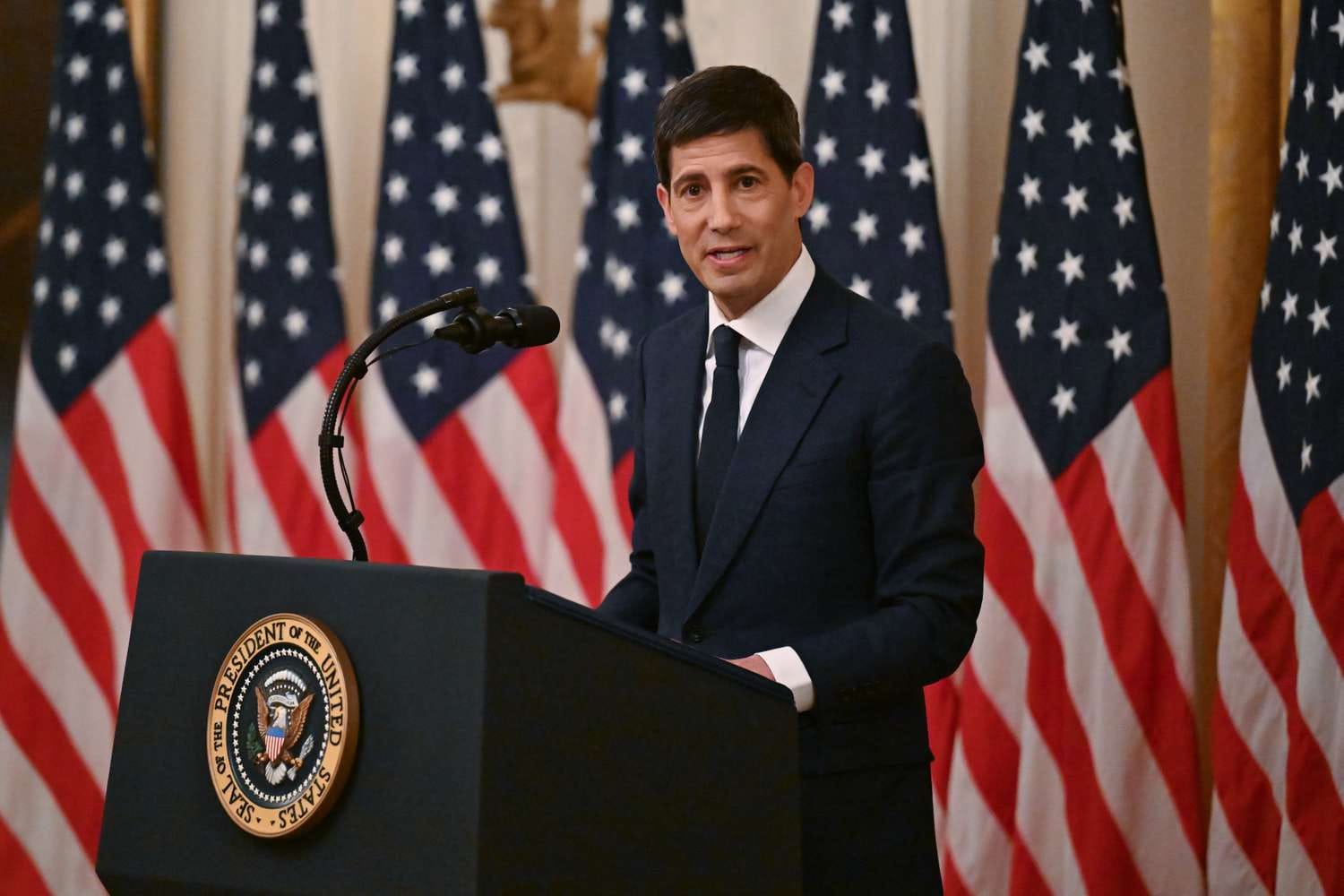
The Federal Reserve unanimously raised benchmark interest rates to a 3.75 to 4 percent range and published economic projections showing inflation returning to 2% by 2028. Stock indexes ticked upward and bond yields eased as markets digested the quarter-point hike, shifting commodity prices, and updated central bank policy paths.
FOMC Approves Quarter-Point Rate Hike
In a unanimous 12-0 vote on September 16, 2026, the Federal Open Market Committee decided to raise the target range for the federal funds rate by 1/4 percentage point to 3-3/4 to 4 percent. According to official statements from the Board of Governors of the Federal Reserve System, the policy action supports the central bank's dual mandate to achieve maximum employment and price stability.
Economic activity is currently expanding at a solid pace. The central bank noted that domestic spending remains resilient and capital investment is robust, despite elevated uncertainty stemming from geopolitical developments. Furthermore, strong productivity growth and steady job gains have kept the unemployment rate relatively unchanged. However, with inflation remaining elevated, officials indicated that today's policy action is necessary to support a timelier return to the Committee's 2 percent goal.
Summary of Economic Projections (SEP)
Alongside the rate decision, the Federal Reserve released its updated Summary of Economic Projections, detailing policymakers' median expectations for key macroeconomic indicators:
Real GDP Growth: Projected median growth stands at 2.3% for 2026, 2.4% for 2027, 2.1% for 2028, and 2.0% for 2029, with a longer-run convergence rate of 2.0%.
Unemployment Rate: The median unemployment rate is projected at 4.1% through 2026, 2027, and 2028, ticking up slightly to 4.2% by 2029, aligning with a longer-run rate of 4.2%.
PCE Inflation: Total personal consumption expenditures (PCE) inflation is forecasted to moderate from a median of 3.7% in 2026 down to 2.3% in 2027, before settling at the Fed's target of 2.0% in 2028 and 2029.
Core PCE Inflation: Core inflation projections indicate a median of 3.4% for 2026, cooling to 2.5% in 2027 and reaching 2.0% by 2028.
Federal Funds Rate Path: SEP participants project the appropriate median federal funds rate path to be 4.1% at the end of 2026 and 2027, easing to 3.9% in 2028 and 3.2% by 2029, with a longer-run value of 3.0%.
US Stock Markets, Commodities, and Bond Yields Today
Following the Federal Reserve's policy update and economic projections release, financial markets reflected active trading across equities, commodities, and fixed-income assets:
Dow Jones Industrial Average: Trading near a real-time level of 52,113.59, up 20.48 points (+0.04%), with a day's range between 51,881.68 and 52,173.70.
S&P 500: Standing at a real-time level of 7,619.14, gaining 33.46 points (+0.44%), with a day's range spanning from 7,598.25 to 7,626.83.
Nasdaq Composite: Reaching a real-time level of 26,195.70, up 214.12 points (+0.82%), with a day's range of 26,076.47 to 26,225.09.
Commodities: Gold stands higher at 4,370.90 (+0.88%), XAU/USD trades at 4,329.07 (+0.81%), Silver is at 64.555 (+1.09%), Copper rests at 6.5013 (+0.90%), while Crude Oil WTI declines to 102.42 (-3.22%) and Brent Oil trades at 105.74 (-2.77%).
US Treasury Bond Yields: The U.S. 10-year yield is down 1.00% at 4.946, the 30-year yield sits lower at 5.316 (-0.88%), and the 2-year yield rests at 4.644 (-0.41%).
Monetary Policy Implementation and Directives
To execute the target range decision, the Board of Governors voted unanimously to raise the interest rate paid on reserve balances to 3.90 percent, effective September 17, 2026. In a related action, the primary credit rate was also increased by 1/4 percentage point to 4.0 percent.
The Open Market Desk at the Federal Reserve Bank of New York received specific domestic policy directives to manage liquidity and maintain ample reserves. Key implementation measures include:
Undertaking open market operations to maintain the federal funds rate within the 3-3/4 to 4 percent target range.
Conducting standing overnight repurchase agreement operations at a rate of 4.0 percent.
Executing standing overnight reverse repurchase operations at an offering rate of 3.75 percent with a per-counterparty limit of $160 billion per day.
Incrementally increasing System Open Market Account (SOMA) holdings through Treasury bills and short-term securities with maturities of 3 years or less.
Official Sources Section
Information for this report is based on official announcements, monetary policy statements, and regulatory releases from the Board of Governors of the Federal Reserve System and the Federal Reserve Bank of New York.
Quote Section
"According to officials, the policy action will support a timelier return to the Committee's 2 percent goal and ensure the delivery of price stability."
Why It Matters
The Federal Reserve's decision to raise interest rates and publish updated multi-year economic forecasts directly dictates borrowing costs and shapes expectations across the global economy. For everyday consumers and businesses, higher rates influence loan pricing, corporate expansion expenses, and credit availability, acting as a crucial brake to cool persistent inflation and protect purchasing power.
Key Facts at a Glance
Rate Adjustment: The FOMC raised the federal funds rate target range by 1/4 percentage point to 3-3/4 to 4 percent.
Unanimous Vote: The policy decision passed with a 12-0 vote among committee members.
Inflation Outlook: SEP median projections show PCE inflation moderating from 3.7% in 2026 down to the 2% target by 2028.
Effective Date: Implementation changes for reserve balances and primary credit rates take effect on September 17, 2026.
FAQ Section
Why did the Federal Reserve raise interest rates?
The central bank acted because inflation remains elevated, utilizing the rate hike to support a timelier return to its 2 percent inflation goal.
What do the Federal Reserve's latest economic projections show for GDP?
The median projection for real GDP growth is set at 2.3% for 2026 and 2.4% for 2027, before settling to a longer-run rate of 2.0%.
What is the new federal funds rate target range?
The target range has been increased to 3-3/4 to 4 percent.
When do the new monetary policy rates take effect?
The adjustments to reserve balances, primary credit rates, and open market directives become effective on September 17, 2026.
Source: Board of Governors of the Federal Reserve System, Federal Reserve Bank of New York