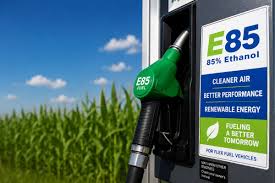
Automotive engineering and environmental agencies warn that drivers cannot safely fill E85 fuel in a normal petrol car to save money. The high 85% ethanol concentration corrodes standard fuel components, forces engines to run dangerously lean, reduces fuel efficiency by 30%, and immediately voids manufacturer vehicle warranties.
WASHINGTON — The rising retail price disparity between standard gasoline and high-ethanol alternatives has prompted international transportation authorities and automotive engineering groups to issue consumer warnings regarding fuel compatibility. As drivers seek cost-cutting measures at the pump, technical agencies have clarified that a driver cannot safely fill E85 fuel in a normal petrol car to save money without risking catastrophic, long-term mechanical failure.
The issue has grown increasingly relevant as retail fuel centers expand access to alternative blends. While E85 remains significantly less expensive per gallon than standard unleaded gasoline, automotive experts stress that utilizing this fuel in non-compatible engines compromises vehicle integrity and negates any short-term savings through severe mileage loss and engine damage.
Chemical Incompatibility Triggers Fuel System Degradation
According to comprehensive technical bulletins distributed by the Society of Automotive Engineers (SAE), E85 fuel consists of a high-ethanol blend containing up to 85% ethanol and 15% gasoline. Conversely, a normal petrol car is chemically and mechanically engineered to operate on standard gasoline containing no more than 10% to 15% ethanol, commonly designated as E10 or E15.
The core threat of attempting to fill E85 fuel in a normal petrol car lies in ethanol’s natural chemical properties. Ethanol is highly hygroscopic, meaning it actively absorbs moisture from the surrounding atmosphere. It is also corrosive to specific metals and polymers used in standard internal combustion engines.
When introduced to an incompatible fuel network, the high ethanol concentration systematically corrodes aluminum components and degrades rubber seals, gaskets, and fuel lines. Over time, this degradation causes severe fuel leaks, injector blockages, and premature fuel pump failures.
Electronic Tuning Faults and Financial Implications for Drivers
Beyond the physical destruction of components, filling E85 fuel in a normal petrol car severely disrupts the vehicle's electronic control unit (ECU). Automotive testing data from the U.S. Department of Energy demonstrates that ethanol possesses a lower energy density than pure gasoline, requiring a significantly higher volume of fuel to achieve complete stoichiometric combustion.
Standard vehicles lack the specialized fuel injectors and flexible-fuel sensors required to dynamically adjust and increase fuel flow volume by the 30% necessary to compensate for E85's lower energy density. Consequently, the ECU registers an extreme "lean" operating condition, triggering immediate check engine warnings. Under sustained heavy loads, running a standard engine on a lean fuel mixture causes severe cylinder misfires, extreme internal operating temperatures, and eventual piston or valve warping.
Furthermore, the environmental and consumer protection agencies note that using E85 in an unoptimized vehicle diminishes fuel economy by roughly 25% to 30%. This sharp drop in fuel efficiency means the apparent cost savings at the gas station are immediately canceled out by the requirement to refuel more frequently, even before factoring in the cost of mechanical repairs.
Official Sources Section
Consumer advisories and technical compatibility frameworks published by the U.S. Environmental Protection Agency and the U.S. Department of Energy Efficiency and Renewable Energy state that E85 use must be strictly confined to certified Flexible Fuel Vehicles (FFVs). These designated vehicles are manufactured with yellow fuel caps, clear labeling, and specialized internal metallurgy to resist ethanol corrosion.
Quote Section
"According to officials from major automotive manufacturing groups, misfueling a standard internal combustion engine with E85 immediately voids all factory powertrain warranties. Repairing a fuel system cross-contaminated by high-ethanol corrosion can exceed thousands of dollars, completely erasing any minor financial benefit sought at the pump."
Why It Matters
Understanding fuel compatibility is vital for protecting household finances and maintaining vehicle reliability. While alternative energy sources offer long-term environmental benefits, introducing high-ethanol fuels into incompatible civilian infrastructure creates severe financial liabilities for vehicle owners, spikes local mechanical repair demand, and presents serious road safety hazards from sudden engine failure.
Key Facts at a Glance
Chemical Conflict: E85 contains up to 85% ethanol, which actively corrodes standard automotive rubber gaskets, aluminum components, and lines.
Efficiency Loss: The lower energy density of E85 reduces fuel economy by 25% to 30% in standard cars, negating upfront retail savings.
Engine Damage: Running high ethanol blends in standard vehicles forces the engine to run lean, increasing combustion heat and risking warped valves.
Warranty Voided: Major global automobile manufacturers explicitly state that using E85 in a non-FFV vehicle immediately cancels active factory warranties.
FAQ Section
Q1: Can I fill E85 fuel in a normal petrol car to save money if it's just a small amount? A: No. Even small amounts of E85 can trigger check engine lights, rough idling, and micro-corrosion in standard fuel networks. If accidentally misfueled, it should be siphoned out or immediately diluted with standard unleaded petrol.
Q2: How do I know if my vehicle can safely run on E85 fuel? A: Vehicles capable of utilizing E85 are designated as Flexible Fuel Vehicles (FFVs). They feature a bright yellow gas cap, a clear emblem on the rear chassis, or explicit confirmation within the owner’s manual.
Q3: What should I do if I accidentally put E85 into my standard gasoline car? A: If you filled only a small fraction of the tank, immediately top off the remainder with premium, high-octane standard gasoline to dilute the ethanol ratio. If you filled the entire tank, do not start the engine; have the vehicle towed to a repair facility to drain the tank.
Source: Official automotive consumer guides and technical safety bulletins distributed by the U.S. Environmental Protection Agency and the U.S. Department of Energy.