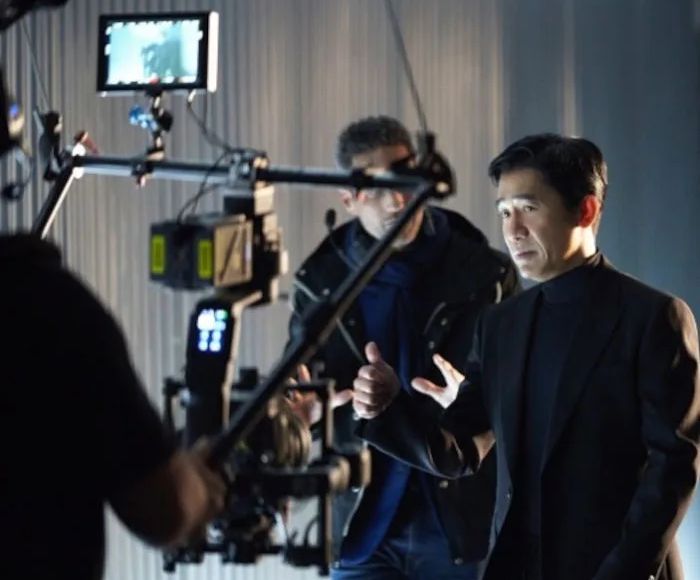
At the 2026 Shanghai International Film Festival, actor Tony Leung criticized the expansion of AI in filmmaking, stating the technology lacks a "soul" and produces calculation rather than art. While acknowledging its cost-saving benefits in post-production, Leung announced an absolute refusal to license his digital image rights for algorithmic model training.
SHANGHAI — Acclaimed Hong Kong actor Tony Leung Chiu-wai delivered a sharp critique of artificial intelligence on June 19, 2026, warning that the technology lacks the emotional core necessary for true creative expression. Speaking at the 28th Shanghai International Film Festival (SIFF), where he serves as the president of the Golden Goblet Awards jury, Leung stated that while automation accelerates production timelines, the ultimate output from algorithms is merely a calculation without human warmth. His public remarks arrive at a critical juncture for global cinema as studios ramp up experimental deployments of machine learning systems, generating escalating friction between technical efficiency and creative labor protection.
Double-Edged Sword: Production Speed Versus Job Security
The implementation of automated systems has rapidly transitioned from speculative concept to standard workflow across major international production hubs. During a series of industry panels at the festival, technical organizers highlighted the deployment of specialized toolkits capable of executing complex video rendering, language translation, and dialogue editing within minutes rather than weeks.
Leung acknowledged that technology provides undeniable financial incentives for production companies looking to minimize overhead. "I think AI is a double-edged sword," Leung stated during a joint press briefing with international correspondents. He observed that while accelerating post-production workflows saves substantial corporate capital, it simultaneously threatens the livelihoods of visual effects artists, editors, and entry-level crew members who rely on traditional technical roles.
The Diamond Analogy: Why Math Cannot Copy Emotion
Beyond the immediate macroeconomic impacts on cinema labor, the veteran actor focused heavily on the structural limitations of algorithmic creation. He argued that the core distinction between a human performer and an automated avatar relies entirely on authentic life experiences and emotional memory.
According to Leung, an actor synthesizes personal trauma, joy, and psychological nuance to construct a multi-dimensional character. Machine learning models, conversely, compile statistical distributions of historical imagery to predict visual patterns. He compared the output of creative automation to simulated jewelry, noting that while an algorithm can generate a highly realistic performance, the audience instinctively senses the absence of human empathy. He likened the difference between real actors and algorithmic performers to the distinction between natural and artificial diamonds.
Protecting Digital Identity: Personal Refusal of Image Rights
The ongoing policy debate surrounding artificial intelligence has extended deeply into intellectual property frameworks, particularly regarding the monetization of an actor's physical likeness. As part of his firm stance on the issue, Leung confirmed that he has officially refused to grant authorization for software developers or production studios to utilize his portrait or voice for machine learning training models.
This decision reflects broader systemic anxieties within the global acting community. Over a career spanning more than four decades, Leung has established a highly protected artistic brand. By withholding his digital likeness, the actor sets an influential precedent for international talent managing intellectual property rights in an era where deepfake technology and predictive performance software are widely accessible to commercial entities.
Official Sources Section
The information, analytical figures, and structural details presented in this report are based on official press transcripts released by the Shanghai International Film Festival Organizing Committee, public statements distributed by the China Research Institute of Film Science and Technology, and direct interview transcripts compiled by Agence France-Presse (AFP) during the Golden Goblet Awards media panels on June 19, 2026.
Quote Section
"You don't need to think. There's no creativity. That's just calculation," Leung stated when describing the rise of automated consumer media. "AI really brings many benefits to the film production process, from pre-production to post-production... But cinema is about emotional communication and the ability to create empathy, and that human warmth is what AI currently cannot bring."
Why It Matters
Leung’s critique outlines the practical boundary between consumer-grade commercial media and high-end dramatic art. For independent filmmakers and theater operators, his arguments provide a conceptual framework to defend the financial valuation of human-driven cinema against a rising tide of low-cost, automated streaming content. For corporate entertainment executives and tech regulators, the actor's absolute refusal to license his image emphasizes the urgent need for robust global legal frameworks governing digital likeness rights, proving that top-tier international talent will actively resist corporate efforts to replace physical actors with synthetic data structures.
Key Facts at a Glance
Firm Critique: Hong Kong actor Tony Leung publicly declared that automated software lacks a "soul" during the 28th Shanghai International Film Festival.
Economic Warning: While acknowledging that automation reduces studio editing expenses, Leung warned it poses an immediate threat to industry job security.
Image Rights Denial: The veteran actor has officially blocked developers from utilizing his personal likeness or voice for model training.
Popcorn Media Limitation: Leung predicted that automation will primarily dominate formulaic, mass-market media that prioritizes mathematical calculation over true creative risk.
Utility as an Assistant: Despite his artistic skepticism, the actor admitted to using text models strictly for conceptual research and background information gathering.
FAQ Section
What is Tony Leung's primary objection to AI in filmmaking?
He maintains that software cannot experience or replicate real human emotion. While machines can calculate performance data, they cannot generate the authentic empathy or psychological complexity that human actors draw from life experiences.
Does Tony Leung oppose all uses of technology in cinema?
No. Leung clarified that he views technology as a beneficial auxiliary tool for logistical tasks. He noted that automated tools can optimize pre-production data searches and dramatically cut down post-production editing times when managed properly by human creators.
Why did Tony Leung refuse to license his image rights?
He aims to protect his personal identity and artistic legacy from being automated. His decision establishes a high-profile precedent for how prominent international actors can safeguard their physical likenesses from unauthorized algorithmic cloning.
Source: Shanghai International Film Festival Press Bureau, China Research Institute of Film Science and Technology Announcements.