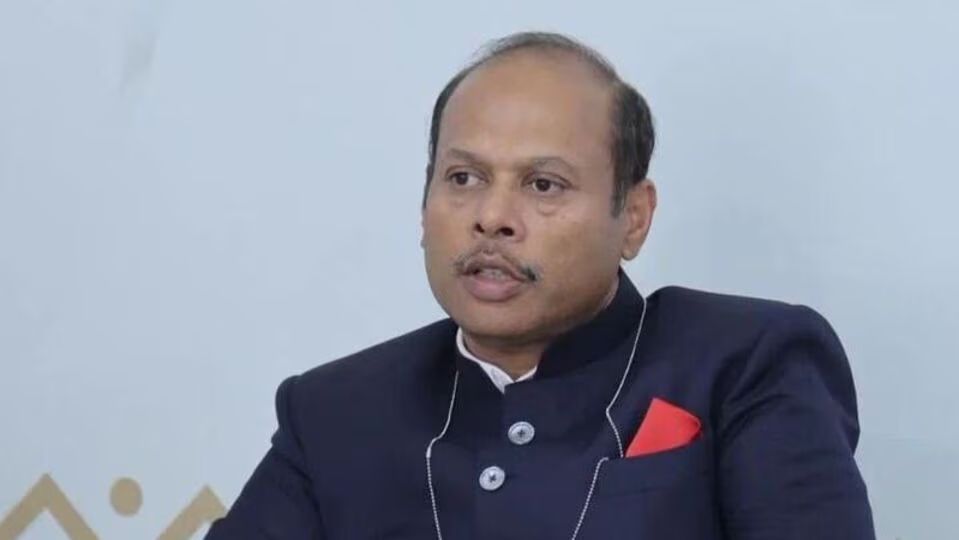
In a historic first, India's Ministry of Culture Secretary and former FIU-IND chief Vivek Aggarwal was elected Vice-President of the Financial Action Task Force (FATF) during its June 2026 Paris Plenary. Serving from July 2026 to June 2027, Aggarwal will help steer global policy against international financial crime and emerging digital asset risks.
PARIS — In a historic milestone for South Asian diplomatic influence, senior Indian Administrative Service (IAS) officer Vivek Aggarwal was elected as the next Vice-President of the Financial Action Task Force (FATF) on June 19, 2026. The decision was formalized during the three-day FATF Plenary session held in Paris from June 17 to June 19. Aggarwal's appointment marks the first time an Indian official will assume a top leadership position within the global intergovernmental body since its inception by the G7 nations in 1989. This high-profile deployment positions India to actively shape international regulatory frameworks combating money laundering, terrorist financing, and illicit cyber-asset networks over the coming year.
A Strategic Elevation to the Global Anti-Laundering High Command
Vivek Aggarwal, a 1994-batch IAS officer of the Madhya Pradesh cadre who currently serves as the Secretary to the Government of India in the Ministry of Culture, will formally take charge in July 2026. His tenure as FATF Vice-President will run until June 2027. He succeeds Giles Thomson of the United Kingdom, who has served in the position since July 2025 and is slated to step up to the FATF Presidency.
The appointment is not merely ceremonial. As FATF Vice-President, Aggarwal will directly assist the incoming president in steering the organization’s strategic mandate, managing evaluation schedules, and coordinating with FATF-Style Regional Bodies (FSRBs). The promotion highlights India's institutional transition from a country subject to rigorous monitoring to a nation designing the global regulatory playbook.
Deep Intelligence Roots Drive India's Regulatory Credibility
Aggarwal’s path to the FATF Vice-President seat is backed by extensive fiscal security experience. Prior to his current bureaucratic role, he served as the Additional Secretary in the Department of Revenue under the Ministry of Finance. Crucially, he held the concurrent charge as the Director of the Financial Intelligence Unit-India (FIU-IND).
During his tenure at the FIU-IND, Aggarwal routinely led high-level Indian delegations to international FATF summits. His technical background in enforcing the Prevention of Money Laundering Act (PMLA) and investigating cross-border financial syndicates heavily influenced his selection by the plenary body. Observers note that his intricate knowledge of virtual digital assets and complex tax architecture will be central to the watchdog's upcoming supervisory cycles.
Broader Implications for Emerging Markets and Digital Assets
The choice of an Indian official to fill the FATF Vice-President vacancy arrives shortly after the watchdog wrapped up a comprehensive mutual evaluation of India’s systemic defenses. The assessment placed India in the coveted "regular follow-up" tier—a distinction shared by only a select handful of G20 nations.
According to policy analysts, Aggarwal’s presence at the apex level will likely alter how the global network addresses risks in developing economies. Under his co-leadership, the FATF is expected to sharpen its focus on the following regulatory frontiers:
Virtual Assets Regulation: Designing uniform compliance standards for cryptocurrency exchanges and decentralized finance platforms.
Digital Payment Protections: Developing rapid-response frameworks to prevent real-time retail payment rails from being exploited by transnational fraud rings.
Financial Inclusion Balance: Ensuring that stringent anti-money laundering controls do not inadvertently cut off marginalized populations in developing nations from banking infrastructure.
Official Sources Section
The biographical records, administrative timelines, and organizational updates detailed in this report are verified by statements released by the Ministry of Culture and official session briefings issued by the Financial Action Task Force following the conclusion of the June 2026 Paris Plenary.
Quote Section
"This landmark appointment places an Indian official at the helm of the premier global body standardising the fight against money laundering and terrorist financing," the Ministry of Culture stated in an official announcement. "It reflects the immense trust and credibility India has built across more than 200 jurisdictions, highlighting the nation's proactive role in shaping global policy on emerging risks like digital payments and virtual assets."
Why It Matters
For international businesses, multinational banks, and cross-border tech platforms, having Vivek Aggarwal serve as the FATF Vice-President means global financial rules will increasingly factor in the nuances of highly digitalized, high-volume emerging markets. For everyday citizens, it reinforces the integrity of domestic banking infrastructure against international sanctions, ensuring smoother cross-border remittances, higher foreign direct investment, and elevated defense against systemic financial crimes.
Key Facts at a Glance
Historic First: Vivek Aggarwal becomes the first Indian representative elected to a senior leadership seat at the Paris-based global financial watchdog.
Official Mandate: Appointed as the FATF Vice-President, his one-year operational term will span from July 2026 through June 2027.
Elite Precedent: Aggarwal takes over the role from the United Kingdom’s Giles Thomson, who is moving up to assume the FATF Presidency.
Expertise Alignment: Aggarwal’s background includes key tenures as India's Culture Secretary and the former head of the Financial Intelligence Unit-India (FIU-IND).
Policy Focus: His term is poised to prioritize tracking emerging financial risks, specifically targeting cryptocurrency oversight and digital transaction safety.
FAQ Section
What is the primary role of the FATF Vice-President?
The Vice-President works directly alongside the FATF President to lead the intergovernmental body, manage international compliance evaluations, and enforce standards against money laundering and terror financing across 200 jurisdictions.
Why is Vivek Aggarwal's election significant for India?
It marks the first time India has secured a top executive seat within the G7-founded watchdog since joining the body, underscoring the international community's trust in India's robust financial crime frameworks.
What are the main policy areas Aggarwal is expected to oversee?
Given his past experience heading India's financial intelligence apparatus, he is highly expected to lead initiatives focused on digital asset regulation, peer-to-peer payment tracking, and cyber-laundering counter-strategies.
Source: Ministry of Culture Official Portal, Financial Action Task Force Archive.