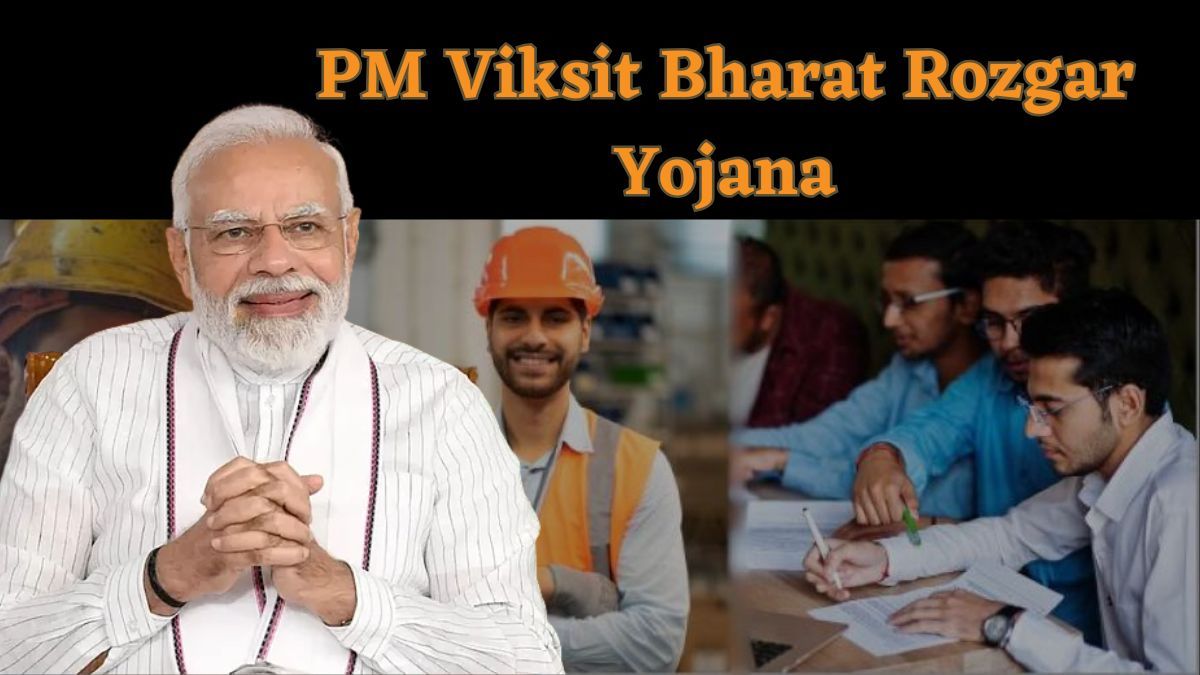
Prime Minister Narendra Modi announced that the Pradhan Mantri Viksit Bharat Rozgar Yojana has successfully added over 7 million first-time workers to India's formal economy. Backed by a ₹99,446 crore budget, the program distributed ₹2,400 crore in direct incentives on Friday, heavily benefiting small businesses and boosting female workforce participation by 30 percent.
NEW DELHI — Prime Minister Narendra Modi announced on Friday, June 19, 2026, that nearly 7 million formal jobs have been generated under the Pradhan Mantri Viksit Bharat Rozgar Yojana (PM-VBRY). Speaking at a high-level national assembly at Vigyan Bhawan, Modi oversaw the electronic distribution of approximately ₹2,400 crore in direct wage incentives to beneficiaries across the country. The milestone underscores an unprecedented push by the government to formalize the national labor market and secure comprehensive social security benefits for youth entering the organized workforce for the first time.
Direct Benefit Transfers Drive Entry into Organized Economy
According to official declarations released by the Ministry of Labour & Employment, the flagship PM-VBRY employment scheme has brought exactly 70 lakh (7 million) first-time employees under the protective fold of the Employees' Provident Fund Organisation (EPFO) since it came into effect on August 1, 2025. The scheme was originally structured in the Union Budget to address entry-level structural barriers for youth.
Data indicates that about 2 million young professionals have successfully crossed the threshold of six months of continuous employment. Out of these, 1 million workers received direct financial incentives under the scheme's provisions on Friday. The total capital disbursed crossed the ₹2,000 crore mark, routed through the Aadhaar Bridge Payment System (ABPS) directly to individual bank accounts.
Dual-Incentive Framework Empowers Both Youth and Businesses
The structural footprint of the PM-VBRY relies on a balanced mechanism that provides relief to both job seekers and their respective corporate entities:
Part A (Employee Focus): First-time formal sector entrants registered with the EPFO who earn gross monthly wages up to ₹1,00,000 are eligible for a direct subsidy equal to one full month's salary, capped at a maximum of ₹15,000. This is delivered in two standard installments—the first after six months of continuous service, and the second at the one-year mark following the completion of an integrated financial literacy module.
Part B (Employer Focus): To encourage corporate expansion, registered business establishments receive up to ₹3,000 per month for every additional employee hired over their baseline, payable for up to two consecutive years.
Manufacturing Expansion: In a targeted move to support industrial production, the government extends employer incentives in the manufacturing sector for an additional two years, offering a total of four years of payroll subsidies.
Targeting Small Enterprises and Strengthening Women's Labor Share
Reviewing the data tracking corporate enrollment shows that the policy has effectively trickled down to small businesses. Statistics from the Press Information Bureau confirm that more than 80 percent of the business establishments taking advantage of the Part B incentives are micro and small enterprises operating with fewer than 25 workers.
Crucially, women account for approximately 30 percent of the total 7 million beneficiaries registered under the scheme. This rise in formal registration indicates a positive shift in female labor force participation across regional industrial hubs. Over 2,000 separate regional operational venues, spanning from major hubs like Pune to emerging tier-2 zones, participated in the national synchronization event.
Official Sources Section
The microeconomic markers, job volume counts, fund allocations, and policy architectures outlined in this report are sourced explicitly from statutory corporate declarations managed by the Employees' Provident Fund Organisation and verified press communications published by the central government.
Quote Section
"The Prime Minister Viksit Bharat Rozgar Yojana is much more than a standard employment scheme," stated Prime Minister Narendra Modi during his address to the delegates. "It is an initiative designed to strengthen the aspirations of young people entering their first jobs while creating a robust bridge between industry and the workforce. This is the identity of a new India where youth get opportunities and employment creation becomes a national campaign."
Why It Matters
For millions of young citizens entering the competitive Indian job market, the PM-VBRY establishes an immediate financial cushion of up to ₹15,000 while ensuring mandatory long-term enrollment in pension and provincial funds. For corporate investors and domestic small enterprises, the ongoing monthly payroll subsidies lower structural operational costs, making it significantly more viable to expand production capacities and compete in the global supply chain.
Key Facts at a Glance
Total Workforce Formalization: Over 7 million first-time employees have been brought into the organized sector and granted formal social security coverage since August 2025.
Massive Capital Infusion: More than ₹2,400 crore was released via direct benefit transfers, with 1 million workers receiving continuous-service incentives.
Small Business Impact: Over 80 percent of the participating corporate entities are small businesses employing fewer than 25 staff members.
Gender Inclusivity: Women represent nearly 30 percent of the total registered workforce pool under the current scheme framework.
Long-Term Target: Backed by an overall budget allocation of ₹99,446 crore, the scheme aims to support the creation of 3.5 crore (35 million) formal jobs over a two-year timeline.
FAQ Section
Who qualifies as a first-time employee under the PM-VBRY guidelines?
Any individual who has not previously been registered with the EPFO and enters an eligible formal establishment with a gross monthly salary of less than or equal to ₹1,00,000 qualifies for the program.
How is the ₹15,000 cash incentive paid out to workers?
The incentive is distributed in two stages via direct bank transfers. The first half is released after completing six months of verified continuous employment. The remaining balance is transferred after twelve months, subject to completing a standard financial literacy course.
What minimum hiring criteria must an employer meet to get the subsidy?
To qualify for Part B corporate incentives, small establishments with fewer than 50 total employees must hire at least two new workers. Larger firms with 50 or more employees must add a minimum of five new workers to their formal payroll.
Source: Official operational reports from the Ministry of Labour & Employment, statistical releases from the Press Information Bureau, and industrial filing data from the Employees' Provident Fund Organisation.