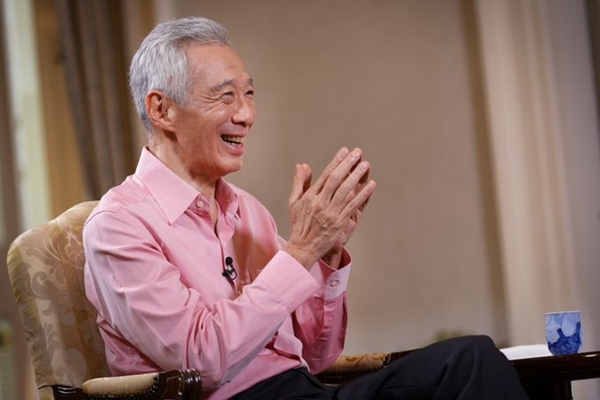
Former Singapore Prime Minister Lee Hsien Loong lauded the exceptional contributions of Indian IIT and IIM graduates to Singapore's economic progress. In a major policy interview, Lee compared these premier Indian institutions to MIT and Harvard, emphasizing that welcoming top-tier global talent is vital for the city-state's long-term competitive edge.
SINGAPORE — Singapore’s Senior Minister and former Prime Minister Lee Hsien Loong has highlighted the vital role played by global professionals, explicitly praising the contributions of IIT-IIM talents in Singapore to the city-state's economic development. In an extensive policy interview broadcast by Channel News Asia, Lee underscored that the concentration of alumni from the Indian Institutes of Technology (IIT) and the Indian Institutes of Management (IIM) constitutes one of the most high-caliber human resource pools in the nation. He emphasized that attracting such top-tier professionals remains a core necessity for maintaining the country's status as a premier global hub.
The statements come at a critical time when international financial centers face growing demographic pressures and a rising domestic debate over immigration. By explicitly validating the quality of IIT-IIM talents in Singapore, the country's political leadership has reaffirmed its commitment to an open economic model that values elite international expertise alongside local workforce development.
Global Talent as an Economic Driver
According to government assessments, Singapore has established one of the largest overseas networks of technical and managerial professionals hailing from India's premier academic institutions. Senior Minister Lee pointed out that the presence of these highly skilled individuals has created robust corporate and technical ecosystems within the country.
"If I can get such a pool, come here and work here, it is a tremendous plus for us," Lee stated during the state media broadcast. He noted that IIT-IIM talents in Singapore have proactively established vibrant alumni associations, regularly organizing high-level professional functions that foster innovation, investment, and cross-border business collaboration.
For multinational corporations and global financial institutions operating out of Singapore's central business districts, the availability of these professionals provides an essential incentive to retain their regional headquarters within the city-state. The integration of high-level technical and managerial competence directly addresses the specialized executive demands of modern artificial intelligence, fintech, and advanced manufacturing sectors.
Comparing Elite Indian Institutions to the Ivy League
In his assessment of global educational standards, Lee drew direct parallels between India’s competitive academic landscape and Western benchmarks. He noted that securing admission into an IIT or an IIM is an extraordinary academic feat, comparable to gaining entry into prestigious global universities such as the Massachusetts Institute of Technology (MIT), Stanford University, or Harvard University.
The intense selectivity of these Indian institutes ensures that the arriving professionals possess exceptional analytical capabilities and problem-solving skills. By integrating these individuals into the domestic economic landscape, Singapore effectively injects world-class capability into its corporate ranks without bearing the primary cost of their foundational higher education.
Balancing Social Integration and Local Sentiments
While strongly advocating for the inclusion of IIT-IIM talents in Singapore, the government recognized the domestic challenges associated with large-scale professional migration. Senior Minister Lee acknowledged that the localized influx of foreign workers is noticeable to citizens, given Singapore's compact geographic footprint.
Managing the inherent tensions between maintaining absolute social cohesion and securing necessary international manpower was described as one of the most intricate policy challenges facing the administration. Government guidelines emphasize that foreign professionals must be systematically integrated into Singapore’s multi-racial, multi-religious social fabric to prevent cultural silos and minimize localized friction.
The state's official position remains that immigration must be tightly managed and calibrated to complement, rather than displace, the domestic workforce. "We should welcome them as we manage the flow," Lee reiterated, noting that an additional workforce increment of qualified engineers, healthcare professionals, and technical experts drastically multiplies overall national productivity.
Official Sources Section
The official perspectives on foreign talent management, immigration demographics, and economic strategy are compiled directly from formal state disclosures, including:
The executive transcripts from the Prime Minister's Office Singapore.
Manpower and economic policy reports from the Ministry of Manpower (MOM).
Strategic broadcast interviews released via Channel News Asia (CNA).
Quote Section
"Securing a place in the IITs and IIMs is comparable to getting into the Massachusetts Institute of Technology, Stanford University, or Harvard University... They bring talent, experience, and a different perspective on things. You can never have enough talent."
— Lee Hsien Loong, Senior Minister of Singapore
Why It Matters
The strategic validation of IIT-IIM talents in Singapore has profound implications for regional investment and workforce planning:
For Investors: Reassures multinational firms that Singapore will maintain a flexible, high-end immigration framework tailored to technical and leadership roles.
For Professionals: Signals a welcoming, merit-based environment for elite global engineering and management talent seeking career advancement in Southeast Asia.
For the Economy: Solves critical executive shortfalls in a market experiencing rapid demographic aging, ensuring that technical infrastructure projects remain fully staffed and viable.
Key Facts at a Glance
Elite Pool: Singapore hosts one of the largest concentrations of elite Indian IIT and IIM alumni outside of India.
Academic Equivalence: The Singaporean government formally equates the rigor of IIT and IIM graduate selections to Ivy League universities and MIT.
Economic Strategy: The targeted recruitment of international talent is designed to boost productivity by supplementing local workforces with specialized technical competencies.
Demographic Factor: Foreign professionals fill vital structural deficits as Singapore approaches its 2030 demographic milestone, where one in four citizens will be aged 65 or older.
FAQ Section
Q1: Why did the Singapore government specifically mention IIT and IIM graduates? A1: The government highlighted these institutions due to their extreme competitive selectivity and the immense economic value their alumni bring to Singapore's tech, banking, and executive business ecosystems.
Q2: How does Singapore balance foreign talent recruitment with local employment? A2: Singapore utilizes a strictly calibrated visa and employment pass framework managed by the Ministry of Manpower to ensure that foreign professionals complement local teams rather than replace them.
Q3: What role do IIT-IIM alumni associations play in Singapore? A3: These networks act as professional hubs, hosting corporate forums, facilitating trade, and helping smoothly integrate newly arrived professionals into Singapore's multi-racial society.
Source: Prime Minister's Office Singapore, Ministry of Manpower Singapore