To prevent malpractices, the National Testing Agency has instituted a comprehensive security overhaul for Sunday's NEET-UG 2026 re-examination. Utilizing Indian Air Force transport, GPS tracking, and armed police escorts, the NTA will secure the testing process for over 22 lakh candidates across 551 cities nationwide.
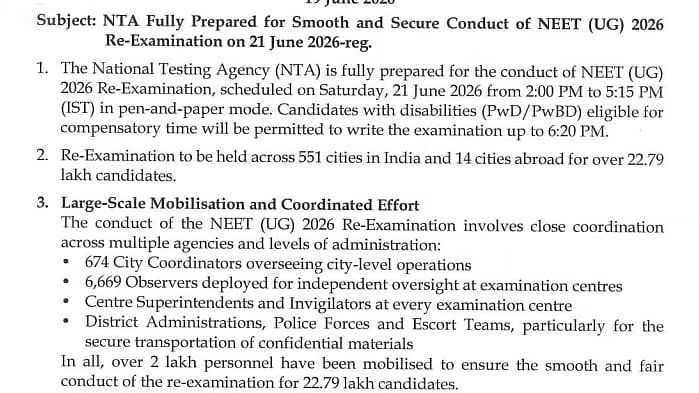
NEW DELHI — In a direct response to recent administrative vulnerabilities, the National Testing Agency (NTA) has established an unprecedented, military-grade security framework for the nationwide NEET-UG 2026 re-examination scheduled for Sunday, June 21, 2026. The pen-and-paper medical entrance test, which will accommodate more than 22.79 lakh candidates across 551 domestic cities and 14 international locations, is undergoing a total logistical overhaul. Moving away from standard courier protocols, the NTA announced that all confidential examination papers are being routed via Indian Air Force (IAF) aircraft and tracked inside GPS-enabled cargo units under continuous armed police escorts. The comprehensive operational restructure follows a zero-tolerance mandate from the Union government aimed at restoring institutional trust.
Technical Surveillance and GPS Logistics Take the Lead
According to official releases from the NTA on Friday, June 19, the agency has completely engineered its supply chain to eliminate transit vulnerabilities. Confidential test material is under continuous 24-hour surveillance using satellite-linked tracking systems. The deployment ensures that any unscheduled halt or unauthorized detour by a transport vehicle instantly alerts centralized command centers managed by district administrators and independent observers.
To complement physical containment, the Ministry of Home Affairs has authorized temporary operational restrictions on communication platforms like Telegram until June 22. This targeted intervention is explicitly designed to disrupt digital networks that have historically been utilized by fraudulent syndicates to circulate edited answer keys or counterfeit question papers.
Inside the Multi-Tiered Frisking and Biometric Network
The NTA has significantly enhanced the security parameters for candidates arriving at the designated venues. More than two lakh personnel—including 674 city coordinators, 6,669 independent observers, invigilators, and personnel from the Indo-Tibetan Border Police (ITBP)—have been mobilized to enforce a strict three-tier screening sequence.
The entrance protocol at all test centers will require:
Metal Detection Scanning: Mandatory high-sensitivity metal detector sweeps to locate hidden communication hardware.
Aadhaar-Linked Verification: Real-time biometric authentication using fingerprint readers and live digital facial recognition software to completely prevent identity impersonation.
Signal Jammer Activation: Deployment of localized signal jammers operating within a 50-meter radius of the exam halls to neutralize all active mobile, Bluetooth, and Wi-Fi networks.
Despite these rigorous checks, the NTA issued a clear directive regarding potential technical failures. If biometric readers malfunction due to connectivity problems, physical injuries, or poor fingerprint quality, candidates will not be denied entrance. Instead, they will be processed through manual identity verification protocols after providing a verified written undertaking.
Protecting Aspirants Against Harsh Summer Conditions
Recognizing that the examination will take place during the intense afternoon window from 2:00 PM to 5:15 PM, the Ministry of Education has mandated structural safeguards to ensure student welfare. All center superintendents have been instructed to secure operational power backup generators to guarantee that fans and lights remain fully active throughout the 3-hour-and-15-minute exam duration.
Furthermore, the NTA clarified that all centers must provide clean drinking water, specialized medical emergency teams, and fully accessible sanitation facilities. While regular candidates are permitted to bring transparent water bottles, diabetic candidates are explicitly allowed to carry necessary medical provisions, including sugar tablets and whole fruits like apples or oranges.
Official Sources Section
The logistical guidelines, security overhauls, and candidate instructions outlined in this report have been cross-verified with official administrative orders issued by the National Testing Agency and the Union Ministry of Education on June 19, 2026.
Quote Section
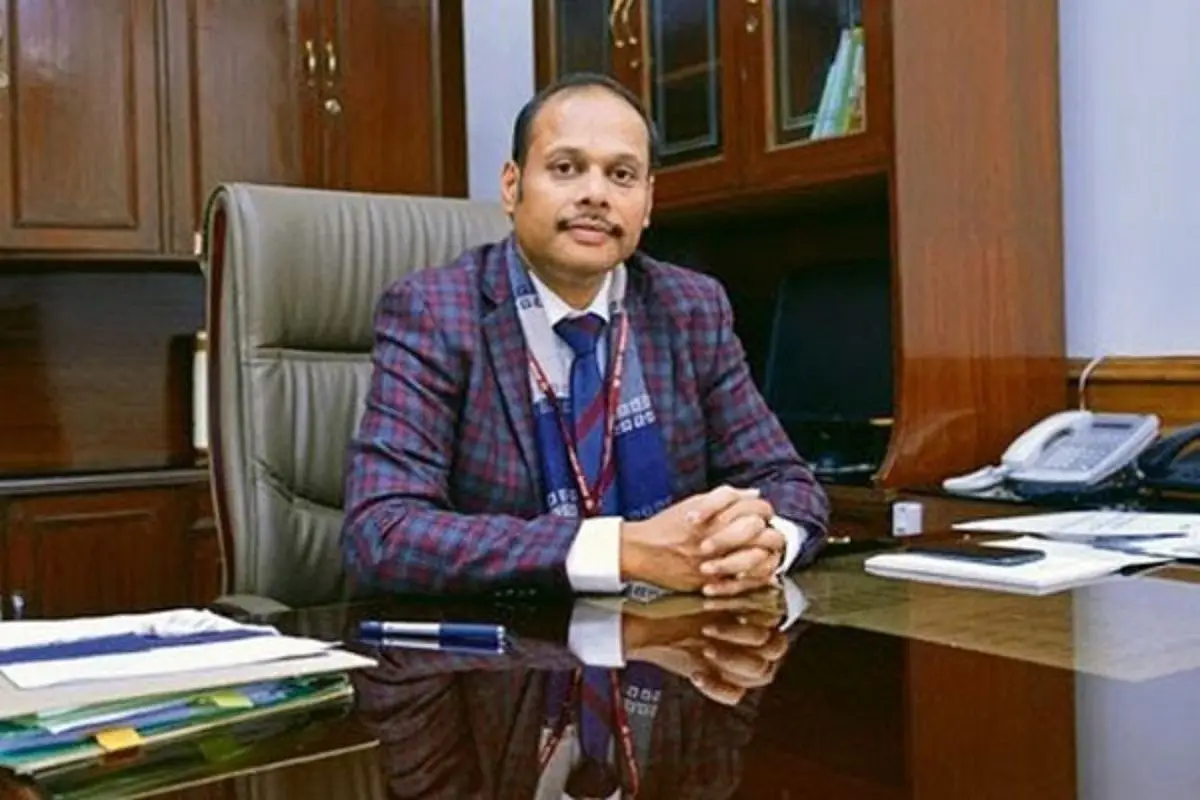
"The NTA has put in place a comprehensive multi-layered security framework to ensure a completely fair, transparent, and secure environment for all aspirants," stated National Testing Agency Director General Abhishek Singh. "We urge both candidates and parents to completely disregard unverified videos or fraudulent claims circulating on social media. The question papers are secured under rigorous state-controlled custody, and any attempt to spread misinformation will be met with immediate cybercrime prosecution."
Why It Matters
For millions of medical aspirants and their families, these unprecedented security measures ensure that months of rigorous academic preparation are protected from unfair competition. For the broader public and India's healthcare system, the absolute integrity of the NEET-UG testing mechanism is vital to ensuring that future medical professionals are selected solely on individual academic merit.
Key Facts at a Glance
Logistics Upgrade: Confidential NEET question papers are being transported utilizing Indian Air Force assets and GPS-monitored vehicles with active police escorts.
Massive Mobilization: Over two lakh specialized personnel, including ITBP forces and independent observers, are stationed across 551 test cities.
Advanced Verification: All entry points utilize mandatory Aadhaar-based biometric checks, facial recognition, and localized signal jammers.
Revised Timeline: The NTA has extended the test duration by 15 minutes, scheduling the pen-and-paper examination from 2:00 PM to 5:15 PM.
Gate Restrictions: Reporting windows open at 11:00 AM, and all entry gates will close strictly at 1:30 PM without exception.
FAQ Section
What documents must candidates carry to the NEET re-exam center?
Candidates are required to bring a clear printed copy of their fresh NEET-UG 2026 admit card, one original valid photo identification document (such as an Aadhaar card or passport), and two passport-sized photographs.
What happens if a candidate's biometric verification fails on Sunday?
The NTA has explicitly stated that no candidate will be denied entry due to technical biometric failures. Staff will conduct a thorough manual identity check, and the student will be permitted to sit for the exam after submitting an official written undertaking.
Are digital watches or electronic calculators permitted inside the hall?
No. All electronic gadgets, including smartwatches, calculators, Bluetooth devices, fitness bands, mobile phones, and metallic accessories, are strictly prohibited and will be confiscated at the outer security perimeter.
Source: National Testing Agency Official Portal, Ministry of Education Government India.