Swiggy shares fell following a board proposal to cap foreign ownership at 49.5% to gain IOCC status, sparking concerns over passive index outflows. Conversely, BlueStone Jewellery gained after reporting a 70% YoY revenue jump to Rs 737 crore, demonstrating a sharp split in new-age technology stock performance.
MUMBAI — Indian new-age technology stocks recorded mixed weekly performance on Friday, July 24, 2026, highlighted by a sharp decline in food delivery giant Swiggy Limited and gains in omnichannel jewelry retailer BlueStone Jewellery and Lifestyle Limited. The split performance unfolded across domestic stock exchanges as broader equity benchmark indices—the S&P BSE Sensex and NSE Nifty 50—reached six-week lows amid rising geopolitical tensions in the Middle East, elevated crude oil prices, and sustained foreign institutional investor outflows.
This development is important today as it underscores growing investor selectivity within India's newly listed technology sector. Market participants are increasingly scrutinizing corporate governance filings, foreign ownership limits, and quarterly profitability over pure top-line revenue expansion.
Foreign Ownership Proposal Triggers Swiggy Sell-Off
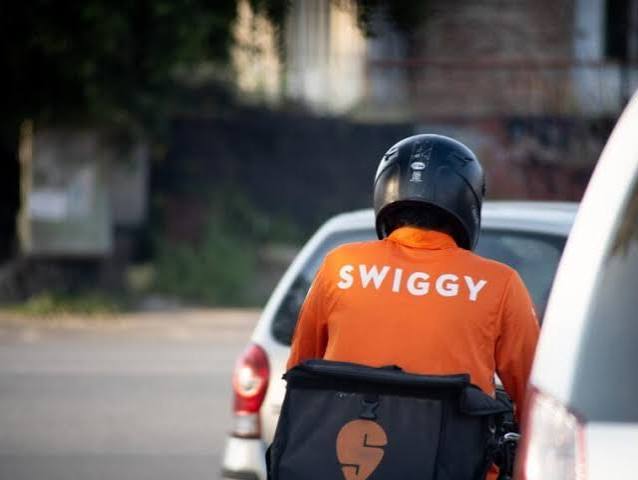
Swiggy Limited experienced downward pressure after regulatory filings submitted to the stock exchanges revealed that its Board of Directors approved a proposal to cap foreign ownership in the company at 49.5 percent, down from 100 percent. The strategic move is designed to establish Swiggy as an Indian-Owned and Controlled Company (IOCC) under domestic Foreign Direct Investment (FDI) guidelines. Achieving IOCC status allows Swiggy’s quick-commerce unit, Instamart, to directly own and manage inventory, enhancing operating margins and supply chain control.
However, market analysts noted that reducing foreign headroom creates immediate headwinds for institutional capital. Financial research reports estimate that lowering the foreign headroom cap could result in Swiggy’s exclusion or weight reduction in major global equity benchmarks, including the MSCI Standard and FTSE indices, potentially triggering passive foreign fund outflows estimated between $460 million and $500 million. Swiggy shares dropped 6.5 percent in trading during the week to close near Rs 250 on the National Stock Exchange of India (NSE).
Strong Q1 Financials Drive BlueStone Rally
In contrast to the broader weakness in new-age consumer internet stocks, omnichannel jewelry retailer BlueStone Jewellery and Lifestyle Limited posted positive weekly gains following its Q1 business update. In its official regulatory submission to the exchange, BlueStone reported a 70 percent year-on-year increase in operating revenue for the June quarter of FY27, reaching Rs 737 crore compared to Rs 493 crore in the corresponding period of the previous fiscal year.
The company also posted a net profit of Rs 6 crore for the quarter, supported by physical store network expansion and steady growth in same-store sales across urban centers. Equity analysts highlighted that consumer demand for organized retail jewelry remained resilient despite higher gold prices, enabling BlueStone to buck the bearish trend observed in the broader technology and consumer-tech space.
Divergent Trends Across the New-Age Tech Basket
The contrasting movements between Swiggy and BlueStone reflect broader divergence across India’s new-age equities. While tech logistics firms such as Shadowfax Tech slid 5.3 percent during the week alongside food delivery and quick-commerce counters, selective consumer and specialized tech companies recorded buying interest.
Market experts attribute this divergence to two key factors:
Regulatory and Index Adjustments: Structuring decisions aimed at local inventory compliance are causing short-term liquidity friction for foreign passive funds.
Profitability Milestones: Companies demonstrating positive net margins and physical unit economics continue to attract domestic institutional inflows even during market corrections.
Impact on Investors and Capital Markets
For retail and institutional investors, the weekly trading pattern highlights the evolving maturity of India's startup public market ecosystem. Following a period where early investors unlocked significant capital post-IPO lock-in expirations, secondary market valuation is increasingly tied to immediate cash flows and clear index inclusion dynamics.
Traders and fund managers are closely monitoring upcoming quarterly earnings releases across the tech sector to evaluate whether operational efficiencies can offset macro volatility driven by crude oil prices and foreign exchange fluctuations.
Official Sources
According to official exchange filings, financial disclosures, and regulatory submissions:
Official Statements
"According to official corporate filings submitted to stock exchanges, board approvals regarding foreign ownership limits remain subject to shareholder consent and statutory regulatory clearances," exchange disclosures noted. Market analysts added in research briefs that while structural changes in quick commerce inventory ownership improve long-term operational control, short-term index rebalancing creates mechanical selling pressure.
Why It Matters
The diverging performance of newly listed technology stocks highlights how policy decisions, foreign holding limits, and quarterly earnings directly impact share prices. As Indian new-age companies adapt to local regulatory requirements, understanding index weighting dynamics and core financial metrics becomes critical for portfolio risk management.
Key Facts at a Glance
Swiggy Share Movement: Declined over 6 percent in weekly trading due to fears of up to $500 million in passive foreign fund outflows.
Foreign Ownership Cap: Swiggy board approved limiting foreign equity to 49.5% to gain Indian-Owned and Controlled Company (IOCC) status for quick-commerce inventory ownership.
BlueStone Outperformance: BlueStone reported a 70% YoY surge in Q1 operating revenue to Rs 737 crore alongside a Rs 6 crore net profit.
Market Environment: Broader benchmark indices Sensex and Nifty fell to multi-week lows amid high crude oil prices and Middle East geopolitical tensions.
Frequently Asked Questions
Why did Swiggy shares drop this week?
Swiggy shares declined after the company's board proposed capping foreign ownership at 49.5 percent. The decision raised concerns about reduced weighting or exclusion from major global indices like MSCI and FTSE, potentially leading to passive foreign fund outflows.
What is the benefit of Swiggy becoming an Indian-Owned and Controlled Company (IOCC)?
Achieving IOCC status allows Swiggy's quick-commerce business, Instamart, to directly hold and manage product inventory, improving supply chain efficiency and operating profit margins.
Why did BlueStone shares gain despite a weak market?
BlueStone reported strong Q1 FY27 financial results, featuring a 70 percent year-on-year increase in revenue to Rs 737 crore and a net profit of Rs 6 crore, driven by robust retail expansion and urban jewelry demand.
Source: National Stock Exchange of India (NSE), BSE India, Securities and Exchange Board of India (SEBI)