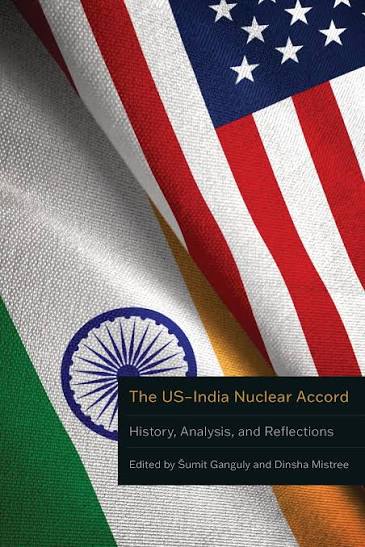
Historical reviews of the 2008 India-US civil nuclear deal document how Indian and American diplomats navigated complex legal, legislative, and international hurdles. By securing IAEA approval and an unprecedented NSG waiver, the 123 Agreement integrated India into global nuclear commerce while forging a modern strategic partnership.
WASHINGTON/NEW DELHI — Diplomatic retrospectives and official archival reviews examining the landmark 2008 India–United States Civil Nuclear Agreement continue to highlight the strategic maneuverings required to finalize the accord. The deal, formally known as the 123 Agreement, lifted a 34-year global moratorium on nuclear trade with India without requiring New Delhi to sign the Non-Proliferation Treaty (NPT). The negotiations serve as a central case study in modern international relations, detailing how negotiators navigated intense domestic political opposition and international regulatory hurdles.
The agreement fundamentally transformed bilateral relations between Washington and New Delhi. By integrating India into the global civil nuclear commerce framework, the accord established the foundation for expanded defense, technology, and economic cooperation across the Indo-Pacific region.
The Diplomatic Architecture and Legal Breakthroughs
Negotiations formally commenced following the July 18, 2005, joint statement by then-U.S. President George W. Bush and former Indian Prime Minister Manmohan Singh. Key architects included former U.S. Under Secretary of State for Political Affairs Nicholas Burns, National Security Advisor M.K. Narayanan, and Foreign Secretary Shivshankar Menon.
The deal required a series of complex legal adjustments across international bodies:
Civil-Military Separation: India agreed to separate its 22 nuclear facilities, placing 14 civilian reactors under voluntary International Atomic Energy Agency (IAEA) safeguards while retaining unmonitored military reactors.
The Hyde Act of 2006: U.S. lawmakers passed domestic legislation exempting India from full-scope safeguards requirements under the U.S. Atomic Energy Act.
IAEA Safeguards Approval: On August 1, 2008, the IAEA Board of Governors approved the India-specific safeguards agreement.
The NSG Waiver: On September 6, 2008, following intense diplomatic outreach by the U.S. State Department, the 45-nation Nuclear Suppliers Group (NSG) granted India an unprecedented consensus waiver to engage in global nuclear commerce.
Overcoming Political Resistance in New Delhi and Washington
The agreement faced formidable opposition in both capitals. In Washington, non-proliferation advocates argued that granting an exception to a non-NPT signatory undermined global non-proliferation norms. In New Delhi, left-wing coalition partners withdrew support from Prime Minister Singh's government, forcing a parliamentary trust vote in July 2008.
Indian negotiators insisted on explicit language guaranteeing fuel supply continuity, the right to build a dedicated reprocessing facility, and protection over the country's strategic deterrence program. U.S. Secretary of State Condoleezza Rice and Indian External Affairs Minister Pranab Mukherjee formally signed the final agreement on October 10, 2008.
Impact on Global Energy, Commerce, and Defense
The 2008 deal reshaped the geopolitics of South Asia and altered global energy trade. By recognizing India as a de facto advanced nuclear power, the accord paved the way for subsequent Indian entry into multilateral export control regimes, including the Missile Technology Control Regime (MTCR) and the Wassenaar Arrangement. Commercial nuclear power expansion subsequently expanded under international oversight, while bilateral India-U.S. trade across defense and high-technology sectors grew exponentially over the following decades.
Official Sources
According to official historical releases, treaty records, and government documentation:
Official Quotes
"According to official statements issued at the signing in 2008, the agreement marked a fundamental transformation in bilateral relations, establishing a strategic framework that recognized India's strong non-proliferation record," diplomatic archivists noted. "Negotiators affirmed that the accord successfully balanced India's strategic autonomy with international non-proliferation standards."
Why It Matters
The mechanics of how the 2008 India-US nuclear deal was won provide a model for modern international crisis management and strategic diplomacy. For global energy markets, defense suppliers, and policymakers, the agreement demonstrated how non-standard legal frameworks can bring rising global powers into alignment with international governance systems without compromising core national security interests.
Key Facts at a Glance
Core Agreement: The bilateral 123 Agreement permitted civil nuclear commerce with India while exempting its strategic defense sector.
Global Waivers: Secured approval from the IAEA Board of Governors and an exemption from the 45-member Nuclear Suppliers Group (NSG) in 2008.
Key Signatories: Signed by Secretary of State Condoleezza Rice and External Affairs Minister Pranab Mukherjee on October 10, 2008.
Strategic Outcome: Ended decades of diplomatic isolation for India's atomic energy sector and anchored the modern U.S.-India strategic partnership.
Frequently Asked Questions
What was the 123 Agreement?
The 123 Agreement refers to Section 123 of the U.S. Atomic Energy Act, which specifies the required terms for peaceful nuclear cooperation between the United States and foreign nations.
Why did India require a special waiver from the Nuclear Suppliers Group?
Because India had not signed the Non-Proliferation Treaty (NPT), global trade rules barred member nations from exporting nuclear materials or technology to it. The 2008 NSG waiver created an exception based on India's strong non-proliferation record.
Did the 2008 nuclear deal restrict India's nuclear weapons program?
No. The agreement applied IAEA safeguards exclusively to designated civilian nuclear facilities, leaving military nuclear reactors separate and unmonitored.
Source: [suspicious link removed], Ministry of External Affairs, India, International Atomic Energy Agency (IAEA), Council on Foreign Relations