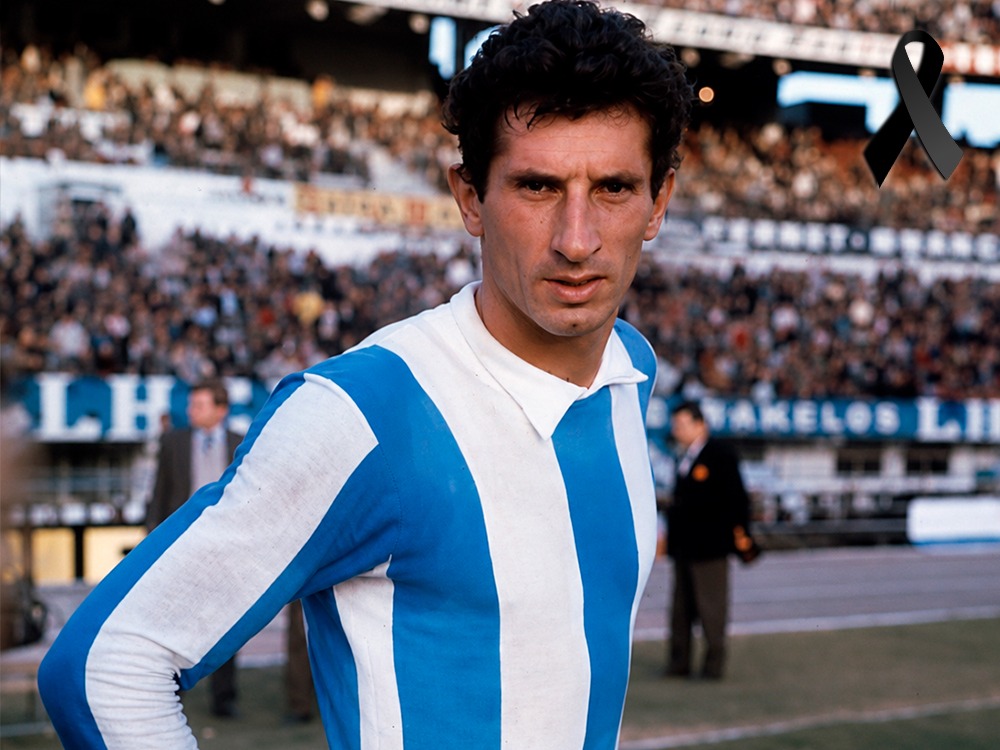
Antonio Rattín, the legendary Boca Juniors captain and former Argentina midfielder, has passed away at age 89. Known for his fierce style, his 1966 World Cup dismissal at Wembley triggered the creation of football's modern yellow and red card system, forever changing how referees manage match discipline and player conduct globally.
The iconic Boca Juniors captain whose 1966 World Cup dismissal forever changed global football rules has passed away in Buenos Aires.
BUENOS AIRES — Antonio Rattín, one of Argentina’s most revered midfielders and a lifelong symbol of Boca Juniors, died on Saturday at the age of 89, the Argentine Football Association (AFA) confirmed. A defensive powerhouse known for his hard-tackling style and leadership, Rattín’s career was defined by a single, seismic moment at the 1966 FIFA World Cup that permanently altered the officiating of the world’s most popular sport.
The Moment That Changed the Game
Rattín is best remembered for his central role in the 1966 World Cup quarterfinal between Argentina and hosts England at Wembley Stadium. In the 36th minute, German referee Rudolf Kreitlein signaled for the captain to leave the pitch for "verbal dissent." At the time, officials did not use cards to communicate disciplinary decisions, relying instead on verbal warnings and gestures.
The dismissal led to a nine-minute standoff, as Rattín argued he did not understand the referee’s decision. Upon eventually exiting the field, Rattín famously crumpled an English corner flag and sat briefly on a red carpet reserved for Queen Elizabeth II. The incident caused widespread confusion and was a catalyst for FIFA to seek a more universal, non-verbal system to manage player conduct.
According to football history, Ken Aston, then head of the FIFA refereeing committee, was inspired by the incident and the universal clarity of traffic light colors. By 1970, yellow and red cards were introduced, a system that now remains standard in professional football globally to bypass language barriers and officiating ambiguity.
A Career Dedicated to Boca Juniors
Beyond the international headlines, Rattín remained a singular figure in Argentine domestic football. He spent his entire 14-year professional career with Boca Juniors, making 382 appearances between 1956 and 1970 and scoring 28 goals. He captained the club to six Argentine league titles and played a pivotal role in their run to the 1963 Copa Libertadores final.
"Rattín was one of us and loved these colours so much that they were the only ones he chose to defend," Boca Juniors stated in an official tribute posted to social media. Following his retirement from playing, he briefly served as the club's coach in 1980 and later transitioned into politics, serving as a member of Argentina’s lower house of Congress.
Official Sources
The death of Antonio Rattín was formally announced by the Argentine Football Association (AFA) and Boca Juniors. Global sporting bodies and historical archives, including the FIFA Museum, have acknowledged his lasting impact on the sport's regulatory evolution.
"With great sorrow, we mourn the passing of Antonio Ubaldo Rattín, an idol and symbol of our institution. We stand with his family and loved ones at this difficult time. Farewell, Rata," officials from Boca Juniors stated.
Why It Matters
Antonio Rattín’s legacy extends far beyond his trophy cabinet. His defiance at Wembley marked the beginning of a historic football rivalry between England and Argentina, which would define subsequent decades of international competition. More importantly, his dismissal proved that the sport’s reliance on spoken language for officiating was inadequate. Every match played today, where a referee produces a yellow or red card, serves as a functional reminder of the structural changes prompted by Rattín's infamous exit in 1966.
Key Facts at a Glance
Legacy: Rattín’s 1966 World Cup dismissal directly inspired the introduction of the yellow and red card system.
Club Loyalty: He spent his entire 14-year playing career (1956–1970) at Boca Juniors.
Career Accolades: Won six Argentine league titles and represented his country in two World Cups (1962 and 1966).
The Incident: He was sent off by referee Rudolf Kreitlein during the 1966 quarterfinal at Wembley, sparking a standoff that changed FIFA regulations.
FAQ
How did Antonio Rattín change the rules of football?
His controversial dismissal in 1966 highlighted the language barrier between referees and players, prompting FIFA to introduce the visual yellow and red card system to ensure clear communication of fouls.
What was Rattín's role in the Argentina-England rivalry?
His defiant behavior at Wembley is often cited by historians as the starting point of the intense competitive rivalry between the two nations, which later peaked during the 1986 World Cup.
Did Rattín play for any other clubs?
No, he is celebrated for his absolute loyalty to Boca Juniors, where he played exclusively from 1956 to 1970.
What did he do after his football career?
Rattín had a brief stint as a coach for Boca Juniors in 1980 before eventually entering politics as a member of the Argentine Congress.
Source: Argentine Football Association (AFA), Boca Juniors, FIFA Museum, Reuters