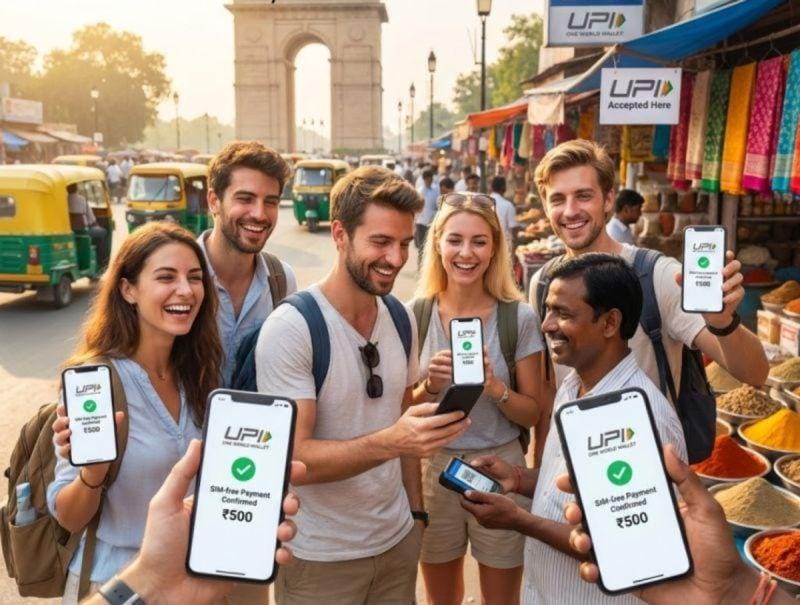
India’s UPI global interoperability now enables international tourists from the US, UAE, Singapore, and six other nations to pay Indian shopkeepers using home-country payment apps.Launched via Bank of Baroda and NIPL, the reverse acceptance framework converts currencies in real time across existing merchant QR codes without requiring local bank accounts.
Foreign travelers visiting India can now pay local shopkeepers, restaurants, and street vendors directly using their existing home-country payment applications, eliminating the need to set up local digital wallets or carry physical cash.
The expansion of global interoperability through the Unified Payments Interface (UPI) infrastructure allows international tourists and visitors to execute point-of-sale transactions across India's micro-retail ecosystem. Enabled via Bank of Baroda’s merchant acquiring network in collaboration with NPCI International Payments Limited (NIPL), the reverse acceptance framework establishes instant currency conversion at the moment of payment.
Global Interoperability Expands Across 9 Nations
The newly launched "UPI Global Reverse Acceptance" framework allows visitors from participating international markets to scan participating Indian UPI QR codes using payment applications native to their home countries.
International visitors originating from the following jurisdictions can access the payment bridge:
Americas: United States
Middle East: United Arab Emirates (UAE), Qatar
Southeast Asia & East Asia: Singapore
Europe: France
South Asia & Indian Ocean: Nepal, Bhutan, Sri Lanka, Mauritius
Under this system, foreign travelers are no longer required to complete local digital KYC procedures to create temporary Indian payment handles or purchase pre-funded rupee wallets upon arrival at international airports.
Technical Framework: How Reverse Acceptance Works
The architecture relies on cross-border payment routing between international digital wallet networks and Indian acquiring banks.
Step-by-Step Transaction Flow
Scan: The international visitor opens their home country’s participating payment app (such as Singapore's PayNow-integrated wallets or UAE digital banking apps) and scans the merchant's QR code.
Dynamic Conversion: The application displays the total purchase price in Indian Rupees (INR) alongside the equivalent debit amount in the visitor's home currency, including real-time exchange rates.
Authentication: The user verifies the transaction within their native application using their standard PIN or biometric security.
Instant Settlement: The cross-border payment gateway routes the transaction through NIPL switches, instantly crediting the Indian shopkeeper’s account in INR while debiting the traveler's foreign bank account.
Official Sources
According to official releases issued by participating banking institutions and payment operators:
Bank of Baroda Executive Statement: Official filings confirm the rollout of cross-border QR interoperability across its nationwide network of merchant QR terminals.
NPCI International Payments Limited (NIPL): Directives outline the integration of cross-border retail payment rails connecting international financial systems to the UPI network.
Reserve Bank of India (RBI): Regulatory frameworks governing international payment settlement rules and real-time cross-border retail remittances apply to all participating switches.
Regulatory and Official Directives
According to officials at Bank of Baroda, the integration strengthens merchant acquiring franchises while eliminating operational friction for inbound international travelers.
"By enabling international visitors to make merchant payments through payment applications they already use and are familiar with, we are enhancing convenience for travelers while creating new business opportunities for our merchants," stated Sanjay Mudaliar, Executive Director of Bank of Baroda.
Organizers stated that the system operates over existing infrastructure, meaning shopkeepers do not need to upgrade hardware or request specialized QR stands to receive foreign payments.
Why It Matters: Impact on Tourism and Retail Economy
The expansion provides structural benefits across the tourism and retail value chains:
For International Visitors: Eliminates high foreign currency withdrawal fees, traditional money exchange counter commissions, and the security risks associated with carrying physical cash during transit.
For Small Merchants and Street Vendors: Opens access to high-spending international tourists who previously avoided small vendors due to cash-only limitations or lack of international credit card POS terminals.
For Digital Infrastructure: UPI transaction processing volume—which grew from ₹0.07 lakh crore in FY17 to approximately ₹314 lakh crore in FY26—expands its addressable consumer base to international inbound visitors without adding card processing overheads.
Key Facts at a Glance
Direct Compatibility: International tourists from 9 countries can pay Indian merchants using their native mobile apps.
No Indian Account Required: Eliminates local wallet creation, physical cash conversion, and temporary Indian SIM/KYC onboarding.
Real-Time FX: Transactions calculate currency conversion instantly at checkout.
Zero Merchant Overhead: Works across existing Bank of Baroda UPI QR code displays without requiring POS card readers.
Frequently Asked Questions
Do international tourists need an Indian mobile number to pay Indian merchants?
No. Tourists use their existing native banking or payment applications registered with their home-country mobile numbers.
Does the Indian merchant receive foreign currency or Indian Rupees?
The Indian merchant receives instant settlement directly in Indian Rupees (INR) into their linked bank account, while the tourist is debited in their home currency.
Do micro-merchants need special POS card machines to accept foreign payments?
No. Merchants accept payments via standard Bank of Baroda UPI QR stickers already displayed at their shops.
Which countries are currently supported under this cross-border integration?
Visitors from the US, UAE, Singapore, France, Qatar, Mauritius, Sri Lanka, Nepal, and Bhutan can access interoperable payments.
Sources: National Payments Corporation of India (NPCI), Reserve Bank of India Payment Systems Directive, Bank of Baroda Official Media Release