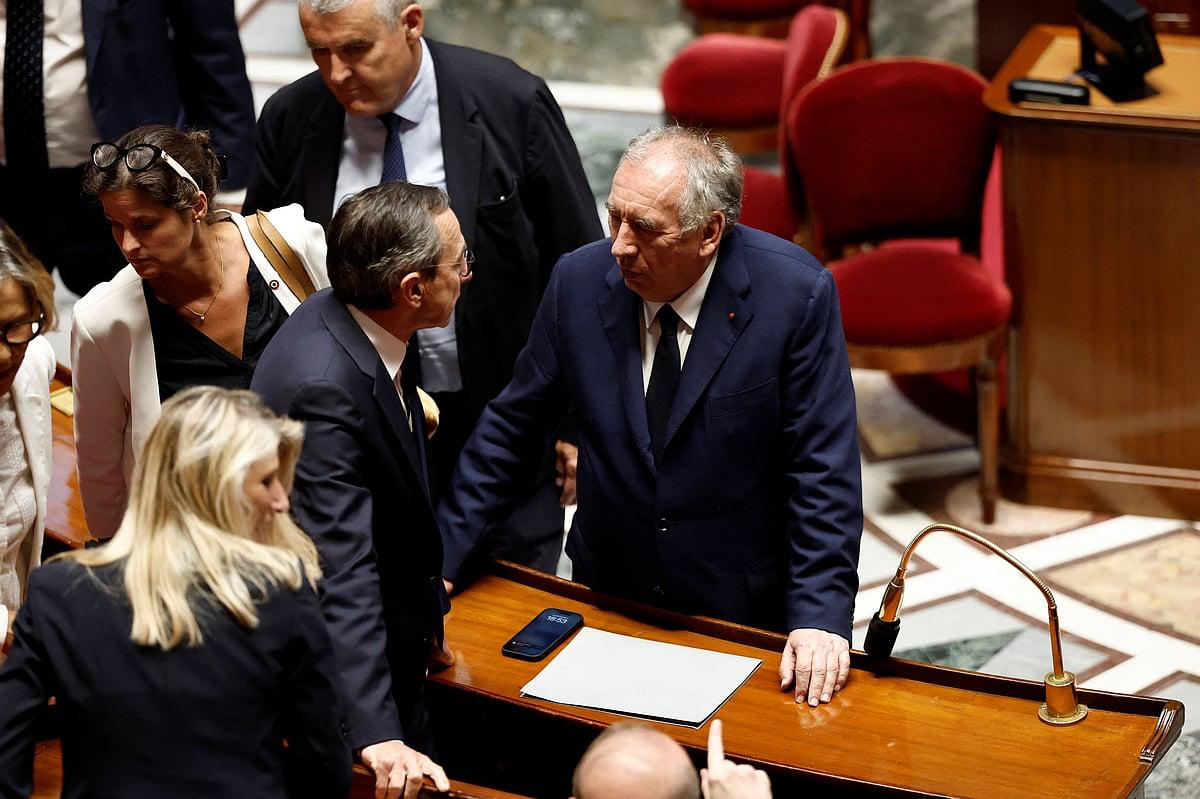
France has plunged into a fresh political crisis after its parliament voted overwhelmingly to oust Prime Minister François Bayrou, deepening tensions within the eurozone’s second-largest economy. The vote, held on September 8, 2025, was triggered by Bayrou’s controversial budge...
France has plunged into a fresh political crisis after its parliament voted overwhelmingly to oust Prime Minister François Bayrou, deepening tensions within the eurozone’s second-largest economy. The vote, held on September 8, 2025, was triggered by Bayrou’s controversial budget proposals aimed at curbing the country’s ballooning national debt. With 364 votes against and only 194 in favor, Bayrou’s government collapsed just nine months after he took office, leaving President Emmanuel Macron scrambling to appoint a successor.
The fallout from this vote is expected to reverberate across France’s political landscape, financial markets, and European alliances, as Macron faces calls for snap elections and even resignation.
Key Highlights from the Confidence Vote
Prime Minister François Bayrou lost the confidence of parliament with 364 votes against him and 194 in support.
Bayrou will tender his resignation on September 9, as confirmed by his office.
The vote was called by Bayrou himself in an attempt to rally support for a budget proposal that included €44 billion in savings.
Macron must now appoint his fifth prime minister in less than two years, underscoring the instability of his second term.
Bayrou’s Budget Gamble and Political Fallout
Bayrou’s proposed budget aimed to tackle France’s debt, which stands at 114 percent of GDP—nearly double the EU’s ceiling of 3 percent. His plan included scrapping two national holidays and freezing welfare payments and pensions. However, opposition parties from both the far-left and far-right united against him, viewing the vote as an opportunity to challenge Macron’s leadership.
Bayrou’s impassioned plea to lawmakers warned of the existential threat posed by unchecked debt, stating that “submission to debt is the same as submission to arms”. Despite his warnings, the vote revealed deep dissatisfaction with the government’s direction and its perceived disconnect from public priorities such as cost of living, security, and immigration.
Macron’s Dilemma: What Comes Next
President Macron now faces a narrowing set of options. He could:
Appoint a new prime minister from his centrist minority ruling group or the conservative ranks, though this risks repeating past instability.
Pivot to the left and nominate a moderate socialist or technocrat to build broader consensus.
Call a snap parliamentary election, a move demanded by opposition leaders Marine Le Pen and Jean-Luc Mélenchon but one Macron has so far resisted.
Regardless of the choice, forming a stable government with a parliamentary majority remains unlikely. Finance Minister Eric Lombard has already warned that any new government will likely dilute Bayrou’s deficit reduction plan.
Economic and Social Repercussions
Financial markets reacted cautiously, anticipating paralysis and potential credit rating downgrades. Fitch Ratings is set to review France’s sovereign rating on September 12, followed by Moody’s and S&P Global in October and November.
France’s debt servicing costs are projected to rise from €30 billion in 2020 to over €100 billion by 2030.
Social unrest is brewing, with the “Bloquons Tout” movement planning sit-ins and protests starting September 10. Trade unions have called for nationwide demonstrations on September 18.
Conclusion
The ousting of Prime Minister François Bayrou marks a critical juncture in France’s political and economic trajectory. With mounting debt, fractured alliances, and rising public discontent, President Macron must navigate a complex and volatile landscape. His next move will not only shape France’s domestic future but also its standing in Europe and beyond.
Sources: MSN News, France24, CNN