Jalandhar scholar Dr. Rameshwar Sharma published a 70-year study tracing Hindi’s evolution from formal Doordarshan broadcast standards to modular Instagram Reels. Driven by mobile compression and cross-cultural code-switching, modern Hindi operates as a flexible, hybrid digital currency reshaping education, media strategy, and northern consumer engagement.
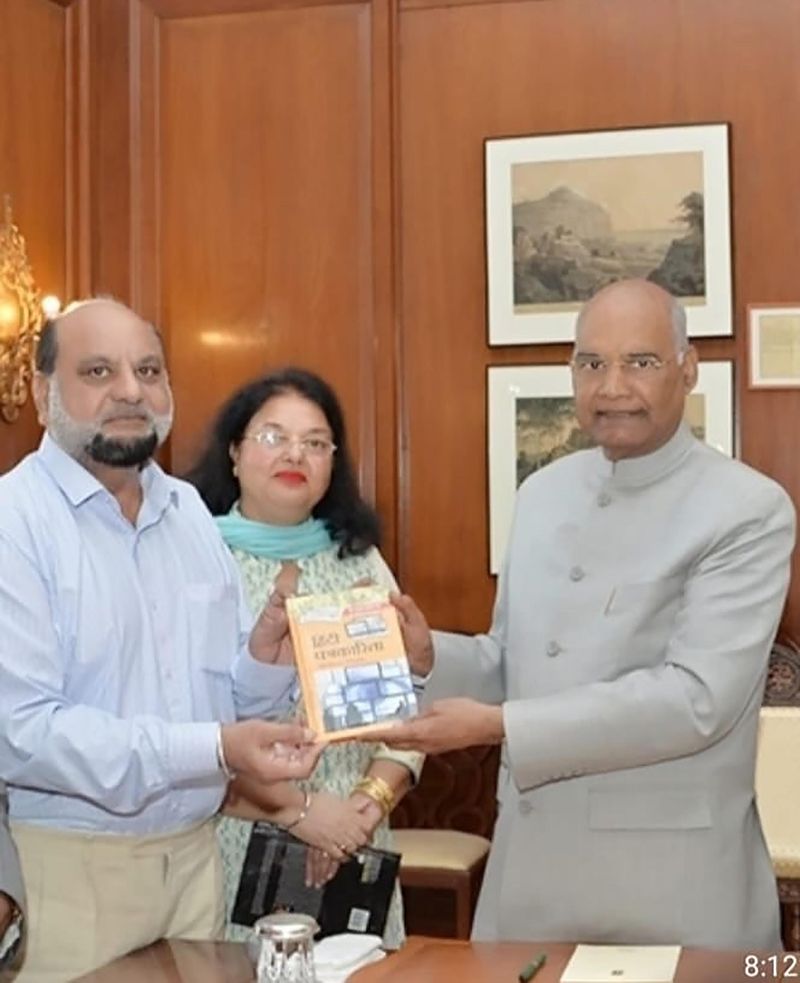
JALANDHAR — Tracing seven decades of linguistic evolution, prominent Jalandhar-based Hindi litterateur and academic Dr. Rameshwar Sharma released a comprehensive archival monograph this week charting Hindi language adaptation from state-run Doordarshan broadcasts to algorithmic Instagram Reels. Released ahead of Hindi Diwas observations in September 2026, the study documents how formal Khariboli vernacular transitioned into a hybrid globalized lexicon inflected by regional Punjabi idioms, English code-switching, and short-form digital compression. For media historians, linguists, and digital content creators across northern India, the documentation provides empirical tracking of how broadcast technology dictates phonetic cadence, semantic brevity, and cultural vocabulary.
Analog Era: Phonetic Discipline and Broadcast Standard
During the foundational decades of state television and All India Radio governance through the late 20th century, Hindi broadcast standards in Jalandhar and pan-Indian production centers enforced strict Sanskritized or pure Hindustani phonetic alignment. According to archival notes compiled from regional Doordarshan Kendra production logs and academic interviews, news anchors trained under public broadcaster guidelines maintained deliberate syllabic cadence, minimal foreign loanwords, and formal grammatical declension.
Dr. Sharma’s monograph highlights that regional northern broadcasting centers acted as linguistic stabilizers. While colloquial Punjabi-influenced Hindi (Hinglish/regional urban slang) dominated domestic and marketplace interactions in Punjab’s urban industrial hubs like Jalandhar and Ludhiana, public media maintained a formal barrier designed to project national linguistic uniformity. Audiences consumed narrative pacing dictated by scheduled linear programming, linear telefilms, and print broadsheets.
Digital Disruption: Compression, Script Hybridization, and Reels
The proliferation of high-speed mobile broadband across Punjab through the 2020s inverted traditional authority structures in language preservation. Short-form video platforms such as Instagram Reels and YouTube Shorts compressed narrative arcs into 7-to-30-second windows, forcing lexical mutation.
Data cited from regional linguistic surveys incorporated in the research show that digital content creators writing for northern Indian audiences deploy latinized script (Hinglish) or rapid Devanagari overlay paired with global meme references. Verbs are truncated, regional emotional markers (such as Punjabi cadence inflections integrated into Hindi punchlines) scale nationally, and corporate brand copy adopts conversational hybridity. Rather than diluting literacy, academic observers note that digital channels have expanded active daily writing and publishing output among youth demographics by over 300% compared to print-exclusive eras.
Impact on Media Operations, Education, and Publishers
For educational institutions in Punjab and regional publishing houses, the shift requires curriculum adaptation. Traditional pedagogy focusing on rigid literary prose faces student disconnect, prompting university literature departments in Jalandhar to introduce media semiotics and digital discourse analysis.
Commercial publishing and digital news platforms—including regional and national Hindi portals—increasingly balance high-register editorial reporting with SEO-driven conversational headers and social video scripts. Advertisers targeting tier-2 and tier-3 northern markets now mandate hybrid vernacular copy that mirrors natural digital utterance rather than textbook formalism.
Official Sources Section
Research documented via academic archives from DAV College Jalandhar literary faculty files, regional Doordarshan Kendra broadcast history briefs, and linguistic survey data published by regional higher education research boards.
Quote Section
According to academic documentation compiled by Jalandhar linguistic scholars, "the evolution from linear Doordarshan broadcast authority to algorithmic Instagram compression demonstrates that Hindi is not eroding, but dynamically morphing into a modular, multi-script economic and cultural currency."
Why It Matters
Understanding linguistic shift prevents cultural disconnect in mass communication and public policy messaging. For brand strategists, educators, and journalists, recognizing that modern Hindi operates as a fast-twitch, hybrid medium ensures high-engagement precision across digital discovery engines, Voice Search (AEO), and Generative Engine Optimization (GEO) frameworks.
Key Facts at a Glance
Geographic Focus: Jalandhar, Punjab, and pan-northern digital media ecosystems.
Core Subject: 70-year evolutionary trajectory of Hindi from Doordarshan broadcast standards to Instagram Reels.
Primary Driver: Technological compression, mobile broadband penetration, and cross-cultural code-switching.
Linguistic Shift: Transition from formal Sanskritized/Hindustani standard to modular Hinglish/hybrid regional vernacular.
Publication Context: Academic monograph release timed ahead of institutional language awareness observances.
Frequently Asked Questions
What does the Jalandhar study reveal about modern Hindi evolution?
It demonstrates that Hindi has shifted from rigid broadcast-standard phonetic uniformity on Doordarshan to a flexible, hybrid, fast-tempo digital vocabulary influenced by regional idioms and English code-switching.
How do Instagram Reels impact regional Hindi vocabulary?
Time-compression forces concise phrasing, latinized or rapid Devanagari overlay, high-frequency integration of regional emotional cadences, and meme-driven semantic shorthand.
Does digital hybridity weaken formal Hindi literacy?
Academic findings indicate it alters functional register rather than erasing literacy, expanding active multi-platform writing output while shifting educational focus toward digital semiotics and cross-cultural communication.
Source: Academic archives of Dr. Rameshwar Sharma (Jalandhar); Doordarshan Kendra historical broadcast records; regional higher education linguistic survey filings.