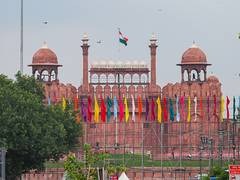
Ahead of the Independence Day celebrations, Delhi Police has deployed 15,000 to 20,000 personnel and over 1,000 CCTV cameras around the Red Fort. Advanced measures include facial recognition systems, anti-drone technology, and fingerprint screening via the Abhigyan app to secure the site for dignitaries and citizens.
Comprehensive Multi-Layered Security Deployment
Ahead of the 80th Independence Day celebrations on August 15, 2026, the Delhi Police detailed an extensive and rigorous security apparatus centered around the historic Red Fort in New Delhi. With Prime Minister Narendra Modi scheduled to hoist the national flag and address the nation from the ramparts of the monument, law enforcement agencies have placed the high-profile venue under an impenetrable multi-layered security cover.
The strategic blueprint encompasses a dual approach combining intensive human deployment with cutting-edge technical surveillance. Authorities anticipate roughly 25,000 guests, including high-ranking dignitaries, foreign diplomats, ministers, and invited citizens, to attend the national event. Consequently, access points have faced strict regulatory controls, and the monument has remained closed to general visitors since mid-July under Archaeological Survey of India (ASI) directives.
Human Deployment and Tactical Units
According to official updates, between 15,000 and 20,000 security personnel from multiple divisions have been assigned to secure the perimeter and interior zones.
DCP North Raja Banthia confirmed that the human grid integrates forces from the Delhi Police’s Traffic Unit, North District teams, local police, PCR units, Special Branch, and the Special Cell. To fortify tactical responses, numerous paramilitary companies, National Security Guard (NSG) commandos, specialized hit teams, snipers, and National Disaster Response Force (NDRF) contingents have been positioned at vantage points. Quick Reaction Teams (QRTs) and watchtower personnel remain on continuous high alert to manage contingencies.
Advanced Technology and Surveillance Integration
Complementing human forces, the Delhi Police has scaled up technical infrastructure to track potential threats in real time. More than 1,000 closed-circuit television (CCTV) cameras have been installed across the Red Fort complex and intersecting approach roads.
The surveillance grid utilizes sophisticated video analytics, including Facial Recognition Systems (FRS), automatic number plate recognition, and intrusion detection software. Furthermore, police are utilizing the Abhigyan application on handheld devices for rapid fingerprint screening against a massive database of recorded offenders. To address modern security challenges, anti-drone systems have been deployed across the airspace perimeter to neutralize unauthorized aerial objects.
Official Sources Section
Information regarding the security deployment was officially provided through administrative and law enforcement briefings:
Delhi Police Department: DCP North Raja Banthia outlined the specific bifurcation of human and technical assets during a media briefing.
Government Intelligence Briefings: Law enforcement statements emphasized that the operational blueprint was formulated following comprehensive assessments of intelligence inputs concerning potential regional threats.
Archaeological Survey of India (ASI): Regulatory notifications confirmed the continuous closure of the Red Fort to the public to facilitate structural and safety preparations.
"Over a thousand cameras have been installed at the Red Fort and surrounding areas specifically for Independence Day. We have control rooms staffed by highly trained personnel dedicated to monitoring these feeds..." — Raja Banthia, DCP North, Delhi Police
Why It Matters
The implementation of stringent security measures at the Red Fort is crucial for maintaining public safety during one of India's most significant national holidays. For citizens, commuters, and travelers visiting or transiting through the national capital, these arrangements mean heightened security checks, localized traffic diversions, and restricted movement around North Delhi. Businesses and commuters are advised to plan transit routes ahead of time, while the integration of AI-driven surveillance underscores a broader shift toward tech-enabled policing at mass public gatherings.
Key Facts at a Glance
Event: 80th Independence Day celebrations at the Red Fort on August 15.
Personnel Deployed: Approximately 15,000 to 20,000 security and paramilitary personnel.
Surveillance Infrastructure: Over 1,000 CCTV cameras integrated with Facial Recognition Systems and anti-drone defenses.
Expected Attendance: Roughly 25,000 VIPs, VVIPs, and special invitees.
New Security Tech: Implementation of the Abhigyan application for rapid suspect identification via fingerprint scanning.
FAQ Section
Why is the Red Fort closed to the public ahead of August 15?
In compliance with Archaeological Survey of India orders, the Red Fort remains closed to tourists to allow security forces and event organizers to establish multi-layered safety infrastructure.
How many security personnel are guarding the venue?
Between 15,000 and 20,000 personnel drawn from the Delhi Police, paramilitary forces, and specialized tactical units have been deployed.
What technologies are being used for crowd screening?
Police are utilizing over 1,000 CCTV cameras with facial recognition, anti-drone systems, and the Abhigyan mobile app for instant biometric and criminal database verification.
How will traffic and travel be affected around North Delhi?
Travelers can expect extensive barricading, regulated vehicle movement, and specific traffic diversions managed by the Delhi Police Traffic Unit across approach routes.
Source: Deccan Chronicle, ANI News, The Economic Times, Hindustan Times, The New Indian Express