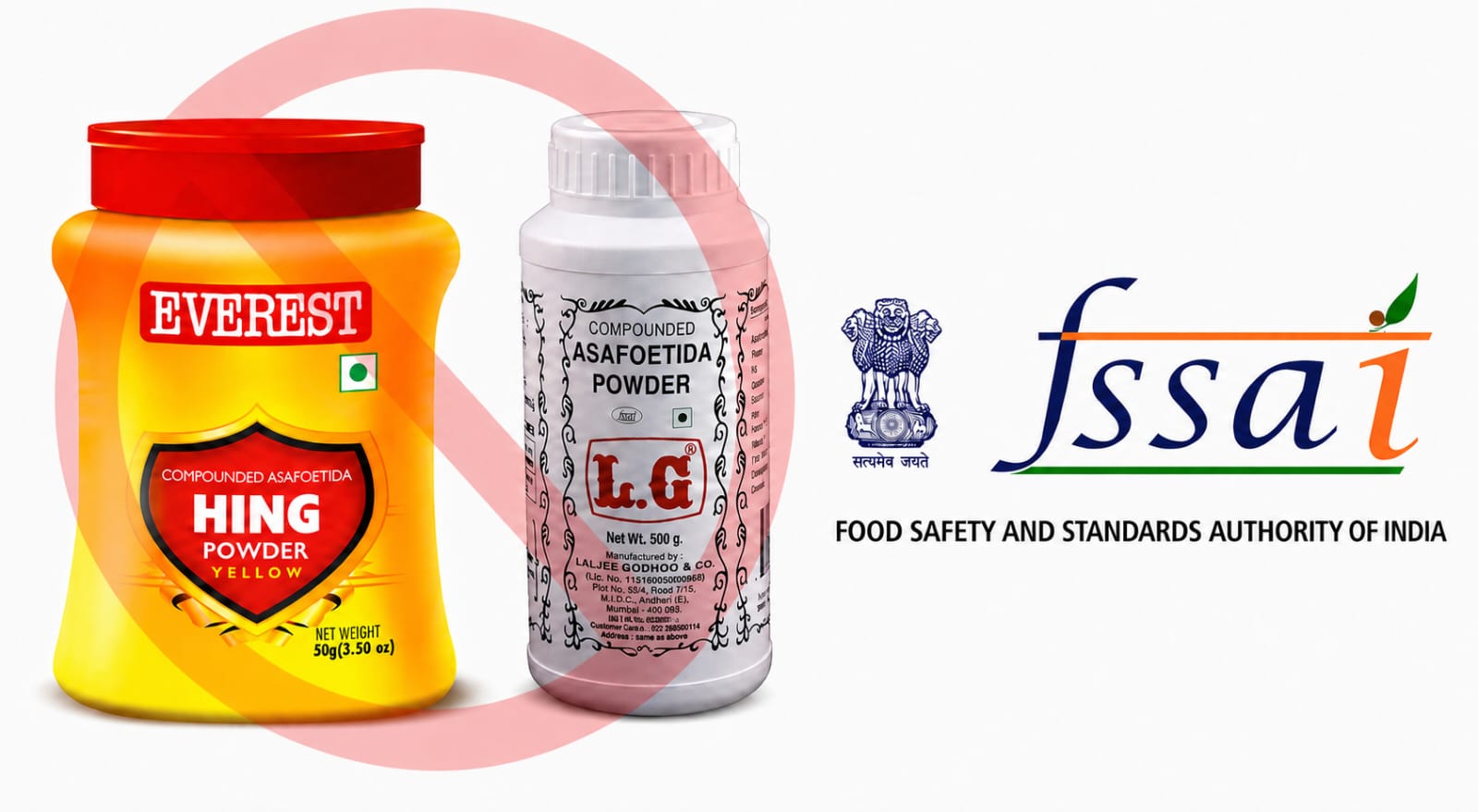
The Food Safety and Standards Authority of India (FSSAI) has banned the sale of compounded hing from Everest Food Products and Laljee Godhoo & Company with immediate effect. Lab tests revealed Everest products contained insufficient raw asafoetida, while Laljee Godhoo samples showed excessive starch content up to 32%.
NEW DELHI — The Food Safety and Standards Authority of India (FSSAI) has ordered an immediate nationwide ban on the sale and manufacturing of compounded asafoetida (hing) produced by two of India's major spice brands, Everest Food Products and Laljee Godhoo & Company, after laboratory testing revealed multiple safety and quality non-compliance issues.
Laboratory Tests Reveal Severe Adulteration and Quality Shortfalls
According to official orders issued by the FSSAI, market surveillance and legal sample collection from facilities in Mumbai and Umaragam (Gujarat) indicated widespread non-compliance with the Food Safety and Standards (Food Products and Food Additives) Regulations, 2011.
Regulatory standards dictate that compounded hing must contain at least 5% alcohol-soluble extract by weight to guarantee authentic raw material proportions. Laboratory analysis of Everest Food Products' samples showed alcohol-soluble extract levels dropping to between 0% and 3.29%—reflecting up to a 30% to 40% deficit in actual raw asafoetida content.
In the case of Laljee Godhoo & Company, testing of raw hing batches revealed excessive starch content. FSSAI mandates that starch content must not exceed 1% by weight, yet sample tests of six raw varieties used by the firm registered starch levels ranging from 15% to 32%.
| Company | Key Product Involved | Primary FSSAI Violation Identified | Mandated Quality Metric vs. Actual Test Finding |
| Everest Food Products | Compounded Hing Powder (All Variants) | Sub-standard, misbranded, low raw ingredient content | Alcohol-Soluble Extract: Required ≥ 5%; Found 0% to 3.29% |
| Laljee Godhoo & Co. | Compounded Hing Powder & Lump Variants | Sub-standard, adulterated with excess fillers | Starch Content: Maximum allowable 1%; Found 15% to 32% |
Extended Surveillance Flags Labeling Non-Compliance in Spice Mixes
The enforcement action comes amid heightened regulatory scrutiny across the packaged food industry. In addition to prohibiting Everest Hing, the regulator cited prior compliance issues in Everest Garam Masala, Chicken Masala, and Egg Curry Powder. Test reports identified non-declaration of salt levels exceeding 5% and omissions regarding total spice content percentage on product labels.
Both manufacturers have been instructed to recall affected batches from retail networks and submit comprehensive action plans outlining corrective measures to achieve compliance under the Food Safety and Standards Act, 2006.
Official Statements
"In view of the contraventions, the sale of compounded asafoetida and all its variants by Everest has been prohibited with immediate effect until further orders," stated the Food Safety and Standards Authority of India in its regulatory directive.
Regarding Laljee Godhoo, the regulator noted: "The samples of Compounded Hing/Compounded Asafoetida (Powder and Lump) were found to be sub-standard and not conforming to prescribed requirements under FSS Regulations, 2011".
Why It Matters
Asafoetida is an essential culinary staple used daily across millions of households and commercial kitchens in India. Regulatory intervention against prominent market players underscores strict oversight regarding food adulteration, mislabeling, and ingredient dilution, ensuring consumers receive unadulterated food products that match stated nutritional and technical standards.
Key Facts at a Glance
Immediate Sale Prohibition: FSSAI banned the sale and manufacturing of Everest Hing and Laljee Godhoo Hing variants until further regulatory notice.
Deficient Extract Levels: Everest samples contained between 0% and 3.29% alcohol-soluble extract, failing the mandatory 5% minimum requirement.
Excessive Starch Adulteration: Raw materials from Laljee Godhoo recorded up to 32% starch content, far exceeding the 1% legal cap.
Mandatory Action Plans: Both companies are required to submit corrective action plans and conduct product recalls prior to any potential resumption of sales.
FAQ Section
Why did FSSAI ban Everest Hing and Laljee Godhoo Hing?
The food safety regulator banned sales after laboratory test results classified samples as sub-standard, misbranded, and adulterated due to low asafoetida extract levels and excessive starch content.
Is the ban permanent or temporary?
The ban remains in effect until further notice. Both manufacturers must submit detailed action plans demonstrating complete compliance with FSSAI standards before sales can resume.
Are other products from these brands affected by the ban?
While FSSAI flagged labeling non-compliance in Everest Garam Masala, Chicken Masala, and Egg Curry Powder, the current sales prohibition specifically targets compounded hing products.
What should consumers do if they purchased these products?
Retailers have been advised to remove affected stock from shelves, and consumers are urged to check regulatory recall advisories regarding sub-standard batches.
Sources: Food Safety and Standards Authority of India (FSSAI), Indiatimes