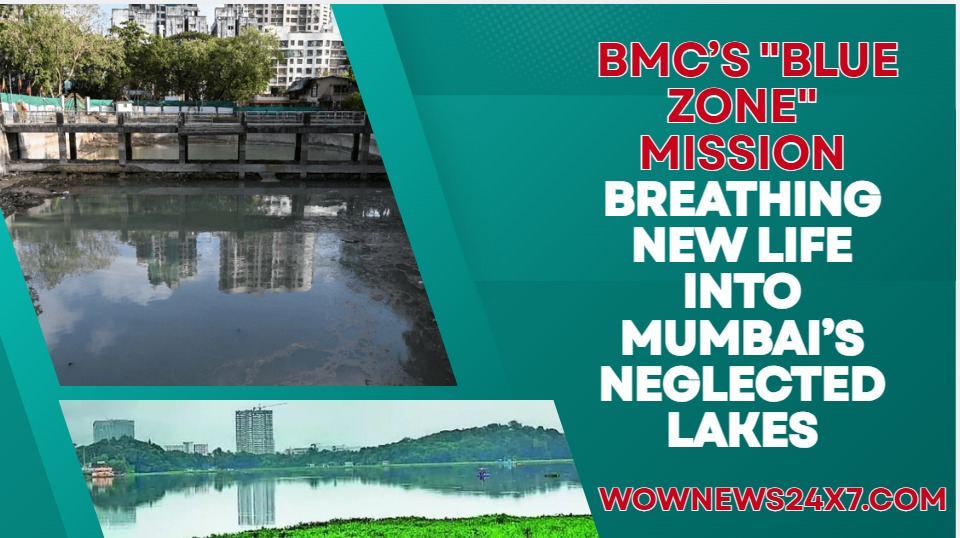
Facing severe water shortages and extreme heat, the BMC has launched a major rejuvenation drive for Mumbai's historic lakes, including Bhujale and Kamal Talao. By desilting, cleaning, and restoring these waterbodies, the civic body aims to improve groundwater levels, mitigate urban heat effects, and provide sustainable recreational spaces for Mumbaikars.
In a strategic move to combat the dual challenges of intense heatwaves and a dwindling water supply, the Brihanmumbai Municipal Corporation (BMC) has launched a significant campaign to rejuvenate several historic lakes and waterbodies across the city. As Mumbai grapples with severe water scarcity and falling reservoir levels, civic authorities are prioritizing the restoration of these natural "blue zones" to bolster the city's climate resilience and urban infrastructure.
Rejuvenating Mumbai’s Historic Waterbodies
The BMC has officially commenced rejuvenation work on several key sites, most notably the Bhujale Talao and Kamal Talao in the western suburbs. These historic waterbodies, once vital sources of potable water during the 20th century, had fallen into a state of neglect and siltation.
According to civic officials, the restoration plan includes:
Desilting: Massive extraction of accumulated sediment to increase water holding capacity. Preliminary efforts at Bhujale Talao have already seen the removal of 90 metric tonnes of silt.
Pollution Control: Diverting sewage inflows to ensure the lakes remain ecologically healthy.
Aesthetic and Recreational Upgrades: Developing walking tracks, gardens, and recreational facilities around the lake perimeters to transform them into accessible public spaces.
Ecological Restoration: Improving water quality to support local biodiversity, including migratory birds and aquatic life.
Addressing the Broader Crisis
This initiative is part of a city-wide mandate to revive "lost" natural waterbodies. With Mumbai’s Development Plan (DP) historically indicating the presence of approximately 300 lakes, the BMC administration has launched a survey to identify which of these sites can be restored. Satellite imagery analyzed by the World Wide Fund for Nature (WWF) recently identified 68 existing natural lakes in the city, providing a roadmap for the BMC’s "blue zone" expansion.
Simultaneously, in response to falling reservoir levels and delayed monsoon concerns, BMC Commissioner Ashwini Bhide has directed municipal departments to prioritize the revival of traditional wells across Mumbai. These measures, combined with broader infrastructure maintenance and rainwater harvesting efforts, aim to enhance the city’s sustainable water management practices.
Why This Matters
Environmental experts emphasize that natural lakes act as "heat sinks" that moderate urban micro-climates, significantly mitigating the urban heat island effect caused by extensive concreting. Beyond temperature regulation, these waterbodies are critical for:
Flood Mitigation: Enhancing the city's ability to absorb heavy monsoon rainfall.
Groundwater Recharge: Replenishing aquifers that have been depleted by rapid urbanization.
Biodiversity: Creating essential habitats in an increasingly concrete-dominated landscape.
While projects like the Powai Lake cleanup—which aims to divert 18 million litres of sewage per day—have faced some public debate regarding tree transplantation, the overarching sentiment from both the administration and citizen groups is that restoring these waterbodies is a long-overdue necessity for Mumbai’s ecological and water security.
Key Facts at a Glance
Priority Projects: Rejuvenation is currently underway at Bhujale Talao, Kamal Talao, and Bandra Talao.
Objective: To improve water storage, combat the urban heat effect, and create recreational green spaces.
Total Potential: BMC reports suggest over 300 potential natural lake sites exist within city limits that could be tapped for restoration.
Current Status: Restoration involves dewatering, desilting, sewage diversion, and peripheral beautification.
FAQ
Why is the BMC rejuvenating these lakes now?
The initiatives are a response to a combination of falling water stocks in primary reservoirs and rising urban temperatures, which necessitate more robust, decentralized water management.
Will these lakes provide drinking water?
While historic lakes were once sources of potable water, current rejuvenation efforts primarily focus on climate regulation, flood mitigation, and recreational utility.
What is the "3-30-300" rule mentioned by activists?
It is a globally recognized urban planning standard for greenery: three trees visible from every home, 30% neighborhood canopy cover, and a park within 300 meters of every residence.
How can citizens support these initiatives?
Civic bodies encourage residents to participate in local environment committee meetings and monitor the progress of waterbody restoration in their wards.
Source: Indian Express, Mid-day, Hindustan Times, The Times of India