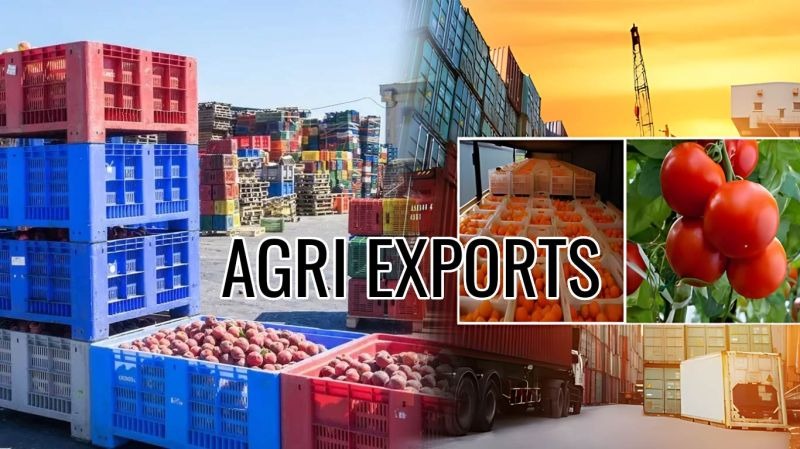
APEDA Chairman Abhishek Dev announced that India’s next phase of agricultural export growth will be driven by Free Trade Agreements (FTAs) with the UK and EU, tech-backed agri-startups, and doubling registered FPOs to 3,000. These initiatives aim to modernize supply chains and expand global market access.
NEW DELHI — India's agricultural export ecosystem is entering a structured expansion phase, driven by the implementation of modern Free Trade Agreements (FTAs), rising agri-startups, and the aggressive onboarding of Farmer Producer Organisations (FPOs). Abhishek Dev, Chairman of the Agricultural and Processed Food Products Export Development Authority (APEDA), confirmed on June 17, 2026, that these three strategic pillars will serve as the primary engines to maximize the country's outbound shipment potential. The targeted structural approach aims to establish a resilient, high-margin international trade model capable of sustaining growth amid global geopolitical shifts.
The policy framework comes as India’s total agricultural and processed food exports achieved a baseline of $53 billion in the previous fiscal year, preserving the nation's position among the top 10 global agricultural exporters. By shifting away from raw commodity distribution and focusing on value-added processed items, the state-backed push is designed to expand rural incomes while diversifying India's macro trade balances.
Free Trade Agreements Acting as Market Levelers
In an exclusive briefing, APEDA Chairman Abhishek Dev categorized India's newly concluded FTAs with highly developed markets including the United Kingdom and the European Union as major "game changers" for domestic trade networks. Historically, Indian food processors encountered steep tariff disparities when competing against other developing nations in Western European consumer hubs.
The progressive liberalization of tariff lines under the modern FTA architecture establishes a level playing field, particularly for the processed food sub-sector. To ensure local suppliers capitalise immediately on these zero-duty entry windows, APEDA's decentralized regional desks have launched localized compliance programs. These initiatives educate rural exporters on rules-of-origin documentation and sanitary certification frameworks, preventing technical trade rejections at European border gates.
Agri-Startups and FPOs Modernize the Supply Chain
Beyond cross-border trade diplomacy, the structural overhaul prioritizes technology integration and grass-roots farmer grouping. Through its foundational Bharti startup program, APEDA has extended financial and regulatory support to more than 100 specialized agri-startups during its initial operational cycle. A select cohort of these tech-driven firms is scheduled to showcase automated sorting, packaging, and shelf-life extension innovations at New Delhi's Bharat Mandapam later this month.
| Strategic Sector Parameter | Current Operational Status | Multi-Year Target Baseline |
| Total Export Volume Value | $53 Billion registered | Targeted to scale past 15% share |
| Active FPO Registrations | 1,400 certified entities | Scheduled to hit 3,000 this year |
| Bharti Startup Support | Over 100 innovative firms | Broad commercial market scaling |
| Product Diversity Range | ~500 items exported globally | Expanding across 790 scheduled lines |
Concurrently, the agency is fast-tracking the direct integration of FPOs into standard global value chains. The authority currently commands an institutional roster of 1,400 certified FPO members, with a hard operational target to double that footprint to 3,000 entities by the close of the current calendar year. To support this, a dedicated FPO export promotion scheme will launch within the next 90 days, cutting out predatory intermediate brokers and routing export profits directly back to village cooperative banks.
Official Sources Section
The operational directives, trade metrics, and institutional targets discussed are formalized through policy papers released by the Ministry of Commerce & Industry. Comprehensive data sets regarding trade volumes, certified export lines, and FPO registration frameworks conform to official listings indexed on the APEDA Statutory Trade Portal.
Quote Section
"According to officials and public data sets released by the chairman's desk, agricultural products currently represent approximately 12 percent of India's aggregate merchandise export values, with that proportion expected to climb significantly as high-value shipments from the Northeast and landlocked agrarian states continue to expand."
Why It Matters
The shift from bulk raw commodity trading toward high-value, tech-enabled agricultural processing carries immediate practical significance for India's rural economy. For individual smallholders, direct FPO export linkages ensure higher crop realizations and insulate household incomes from localized domestic market crashes. On a macro level, expanding the product basket to nearly 500 distinct items shields the country's foreign exchange earnings from climate-induced disruptions to single crops like rice or wheat, guaranteeing long-term financial stability for the agricultural sector.
Key Facts at a Glance
Primary Catalysts: APEDA has identified Free Trade Agreements, agri-startups, and FPOs as the primary drivers of India's next farm export phase.
Tariff Liberalization: Newly implemented trade compacts with the UK and EU are projected to significantly reduce entry costs for premium processed food lines.
FPO Scale-Up: Registered exporter FPOs are scheduled to rise from 1,400 to 3,000 units this year, supported by a dedicated promotional scheme.
Basket Diversification: India's international agri-export portfolio has expanded to include nearly 500 distinct products, up from 280 a decade ago.
Frequently Asked Questions
How do Free Trade Agreements help ordinary Indian farmers?
FTAs eliminate or drastically reduce import customs duties levied by foreign nations on Indian produce. This makes Indian goods cheaper and more competitive in overseas supermarkets, leading to larger purchase orders and better prices for farming cooperatives at home.
What role do agri-startups play in the export process?
Agri-startups introduce specialized cold-chain logistics, real-time farm-to-port traceability software, and innovative eco-friendly packaging. These technologies help prevent spoilage during long-distance maritime transit, ensuring local products meet strict international quality standards.
How can a local Farmer Producer Organisation get certified for global trade?
Cooperatives can apply directly through the official APEDA web interface. Certified entities gain access to state financial assistance schemes, global buyer-seller meets, and specialized training programs focused on international market requirements.
Source: