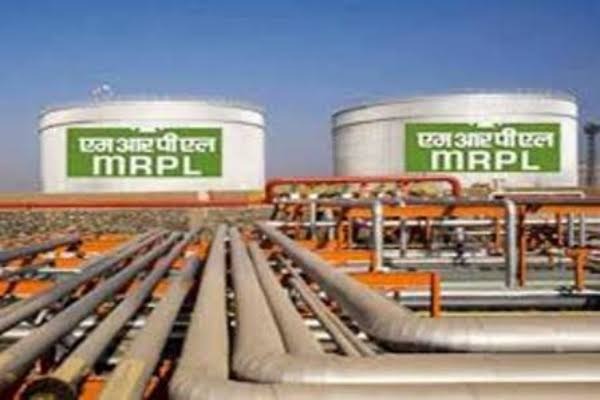
Mangalore Refinery and Petrochemicals announced that its facility operated at 108% capacity over the past six months. Disclosed in September 2026, executives noted that soaring local diesel demand is driving refiners to prioritize high-speed diesel production over jet fuel to optimize margins and support domestic consumption.
Mangalore Refinery and Petrochemicals reports a 108% capacity utilization rate as surging local diesel demand drives output shifts.
Mangalore-headquartered public sector refiner Mangalore Refinery and Petrochemicals Limited (MRPL) announced through official corporate executive statements in September 2026 that its coastal Karnataka refinery has maintained an average capacity utilization rate of 108% over the past six months. According to company leadership, robust domestic high-speed diesel consumption is compelling regional downstream processors to recalibrate product yields. By prioritizing middle distillate output over aviation turbine fuel (ATF), the refinery is capturing favorable crack spreads while directly supporting heavy industrial freight, agricultural power generation, and commercial transport networks across India.
Recalibrating Refinery Product Yields
According to official briefings released by MRPL executives, complex refining configurations allow operators to adjust hydrocracker conversion severity and fractionation cut points. When domestic diesel demand outpaces regional consumption projections, refiners intentionally alter feedstock routing to optimize diesel yields over jet fuel. This tactical optimization ensures that processing units capture higher regional margins while preventing localized fuel supply bottlenecks across retail and industrial distribution channels.
Energy sector analysts and commodity market observers noted that Indian refiners frequently adjust product slates in response to seasonal agricultural cycles and industrial requirements. While jet fuel export demand remains steady, domestic diesel consumption commands priority across coastal and inland distribution networks, making high-speed diesel production a primary operational driver for complex refineries like MRPL. Operating above the nominal nameplate capacity threshold of 15 million metric tonnes per annum (MMTPA) further enhances fixed-cost absorption for the firm.
Market Impact and Industrial Implications
For institutional investors, energy traders, and commercial transport operators, flexible product slates ensure a reliable, uninterrupted fuel supply across retail and industrial channels. Strategic yield adjustments help refiners optimize profitability despite volatile global crack spreads. Market participants continue to track periodic throughput updates and margin guidance from domestic energy providers.
Official Sources Section
Details concerning refinery capacity utilization, product yield adjustments, diesel demand trends, and refining strategies are based on official corporate updates, executive briefings, and operational reports released by Mangalore Refinery and Petrochemicals Limited.
Quote Section
According to officials, the refinery's capacity utilization has maintained an impressive 108% over the past six months, with higher local diesel demand pushing refiners to produce more diesel instead of jet fuel to optimize operating margins.
Why It Matters
Flexibility in refining operations ensures that domestic fuel supplies match shifting industrial and commercial demand patterns. For energy markets, prompt yield adjustments stabilize pricing, prevent regional fuel shortages, and strengthen national energy security.
Key Facts at a Glance
MRPL maintained an average refinery capacity utilization of 108% over the past six months.
Higher local diesel demand is driving refiners to prioritize diesel output over jet fuel production.
Corporate statements regarding throughput performance and product shifts were officially released in September 2026.
Flexible hydrocracker operations enable complex refineries to adapt quickly to seasonal industrial fuel requirements.
FAQ Section
What was MRPL's average capacity utilization over the past six months?
The refinery's capacity utilization averaged 108% over the preceding six-month period.
Why are refiners shifting production from jet fuel to diesel?
Surging domestic diesel demand and attractive regional margins are prompting refiners to tilt product yields toward high-speed diesel.
Where can stakeholders access official corporate disclosures regarding MRPL?
Official operational reports, executive statements, and regulatory filings are published regularly on the official website of the National Stock Exchange of India and BSE India.
Source: National Stock Exchange of India, BSE India, MRPL Investor Relations