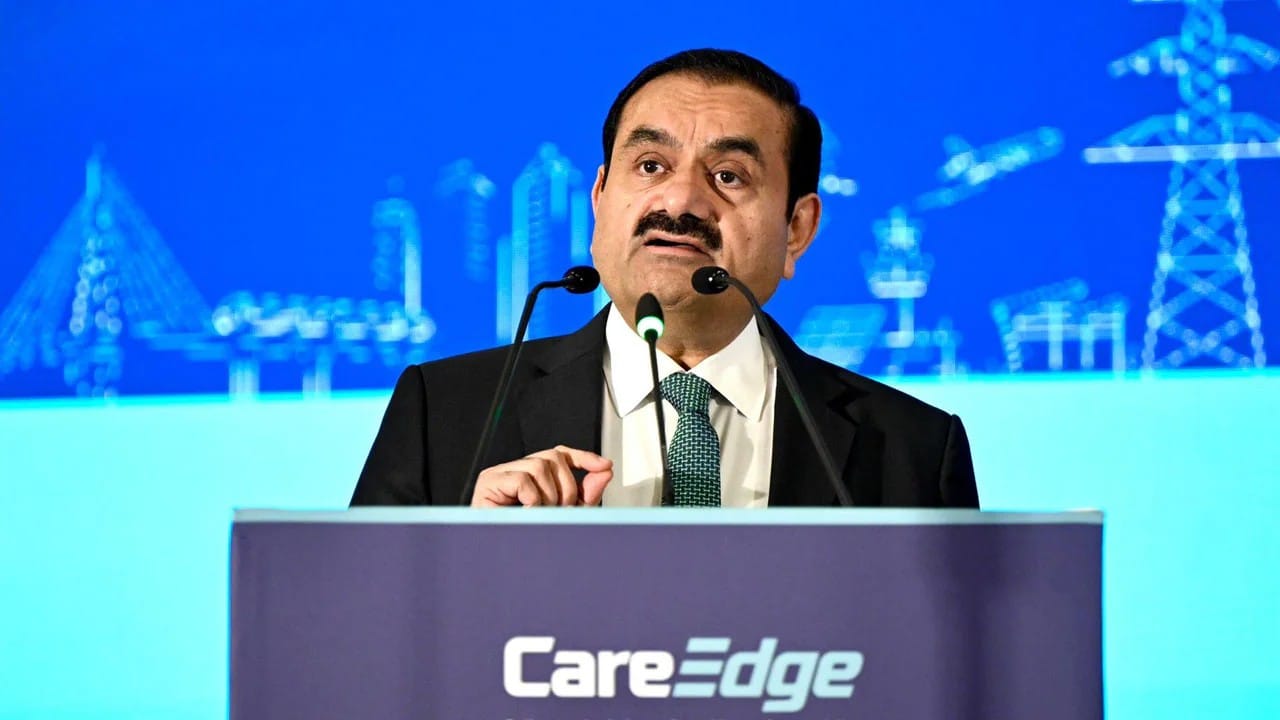
Adani Group Chairman Gautam Adani called for a comprehensive overhaul of credit rating models at the CareEdge Summit in Mumbai, arguing that conventional financial frameworks fail to capture the wider economic value of complex, interconnected infrastructure like Mundra, Vizhinjam, and Khavda.He urged agencies to develop wider lenses without lowering standards.
Adani Group Chairman Gautam Adani has urged credit-rating agencies to fundamentally overhaul their assessment models for large-scale infrastructure, stating that conventional financial frameworks fail to capture the broader economic value of interconnected national assets.
Delivering the keynote address at the CareEdge Group Annual Summit in Mumbai on Monday, August 31, 2026, Adani argued that India's evolving infrastructure landscape requires dynamic analytical models that look beyond standalone cash flows to measure ecosystem multipliers, industrial convergence, and long-term strategic resilience. The appeal highlights a growing friction between traditional credit evaluation metrics and the complex, multi-layered utility platforms currently being developed to support national growth.
Limitations of Conventional Credit Metrics
According to official statements from the summit, traditional credit-rating methodologies were largely formulated during an era when infrastructure projects evolved incrementally, demand was easily identifiable, and asset boundaries were strictly defined. These models rely heavily on single-asset discounted cash flow (DCF) projections that evaluate execution and financial risks in isolation.
Adani noted that while these legacy metrics are generally adequate for "replacement infrastructure" or standard capacity expansion, they fall short when applied to modern, highly integrated projects. Traditional linear models frequently misjudge projects that create speculative or future demand, ignoring how interconnected networks can cross-subsidize and de-risk one another over time.
Defining the Three Tiers of Infrastructure
To bridge the gap between financial risk assessment and real-world economic impact, Adani categorized modern infrastructure into three distinct classifications:
Replacement Infrastructure: Facilities focused on maintaining, updating, or replacing aging capacity, where traditional rating models remain effective.
Growth Infrastructure: Projects adding capacity in established sectors with visible demand, which require frameworks that account for broader ecosystem effects and multiplier values.
Platform Infrastructure: Complex, multi-layered networks that generate new markets, industrial clusters, and capabilities rather than merely satisfying pre-existing demand.
Case Studies: Mundra, Vizhinjam, and Khavda
To illustrate the limitations of current rating systems, Adani cited three major projects executed by his conglomerate:
Mundra Port (Gujarat): Started on a marshy coastline with no industrial ecosystem, Mundra evolved into a multimodal maritime gateway linked to rail, logistics hubs, power generation, and industrial zones. Linear financial models initially struggled to capture its compounding economic flywheel.
Vizhinjam International Seaport (Kerala): India's first deep-draft mega transshipment port faced prolonged skepticism over execution complexity and capital risk. Despite initial headwinds, the port became the fastest in India to handle two million TEUs, underscoring the strategic importance of sovereign resilience over short-term financial parameters.
Khavda Renewable Energy Park (Gujarat): Spanning roughly 538 square kilometers with a targeted 30-GW capacity by 2029, the Khavda project converges clean energy generation with artificial intelligence, advanced manufacturing, and digital infrastructure. Evaluated strictly as a power-generation asset, Adani argued the project risks being chronically under-rated despite serving as a crucial foundation for India's future AI economy.
Official Sources Section
Information for this report is based on official announcements, corporate keynotes, and industry addresses from the following sources:
Quote Section
"India does not need lower standards. India needs wider lenses," stated Adani Group Chairman Gautam Adani during his keynote address in Mumbai. "Transformational infrastructure can be constrained not only by a lack of ambition or capital, but also by the frameworks through which its risks are assessed. Why should the world's first truly comprehensive Credit Framework for Integrated Platform Infrastructure not come from India? Why should CareEdge not lead it?"
Why It Matters
The debate over credit rating frameworks carries profound practical implications for institutional investors, project developers, and sovereign planners. If rating agencies adopt broader analytical models that recognize "ecosystem multipliers" and industrial convergence, capital-intensive mega-projects may secure more favorable financing terms. Conversely, rigid adherence to single-asset cash flow models risks choking financing for futuristic, capital-heavy digital and green energy ecosystems necessary for long-term national competitiveness.
Key Facts at a Glance
Core Proposal: Development of a comprehensive global credit framework for "integrated platform infrastructure" to assess multi-layered economic value.
Target Audience: Credit-rating agencies, financial institutions, and policy planners evaluating large-scale national assets.
Featured Projects: Mundra Port, Vizhinjam International Seaport, and the 30-GW Khavda renewable energy park.
Core Distinction: Emphasized that the proposal seeks dynamic risk-assessment models rather than a dilution of credit standards or regulatory oversight.
FAQ Section
What is platform infrastructure according to the Adani Group?
Platform infrastructure refers to large, interconnected assets—such as multimodal ports or massive renewable energy hubs—that create new markets, industrial clusters, and economic ecosystems rather than merely serving existing consumer demand.
Why are traditional credit models considered inadequate for modern projects?
Conventional discounted cash flow models isolate individual assets and evaluate them based on standalone short-term cash flows, frequently failing to capture the compounding economic value generated by multi-layered networks.
Is the proposed framework a call for lower regulatory standards?
No. Industry leaders have explicitly stressed that the appeal is not for relaxed scrutiny or compromised financial discipline, but for sophisticated "wider lenses" capable of accurately evaluating complex project risks and long-term strategic resilience.
How do projects like Khavda connect energy with artificial intelligence?
The Khavda renewable energy park is designed to supply the massive, continuous clean power required to run future data-generation facilities, cooling systems, and advanced AI manufacturing ecosystems.
Source: CareEdge Ratings, Adani Group Media Releases