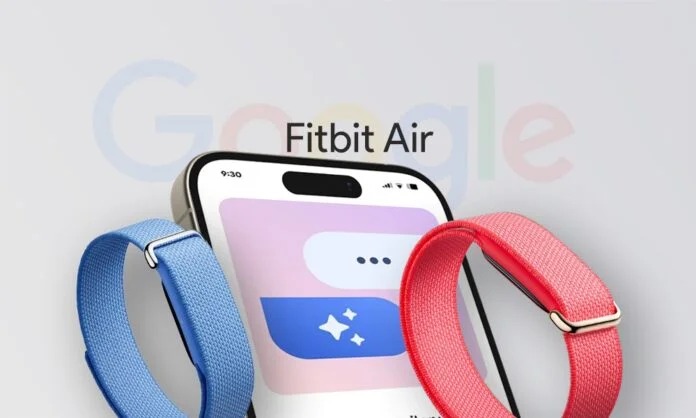
Google’s screenless fitness tracker, the Fitbit Air, has appeared on India's BIS certification database under model number GW968, indicating an upcoming regional launch. Weighing 12 grams, the device offers screen-free health monitoring, 7-day battery life, and continuous heart-rate tracking, syncing metrics directly through the Google Health app.
Google appears to be expanding its regional wearable footprint with the impending introduction of its minimalist fitness device, the Fitbit Air. According to digital regulatory tracking logs from the Bureau of Indian Standards (BIS) surfaced on June 10, 2026, the upcoming health tracker has cleared the mandatory government certification required for commercial electronics distribution within the country.
The device, which appeared under the official regulatory model number GW968 (also tracked under variant registries as GE9C8), marks a notable strategic pivot for Google’s fitness division. Moving away from the display-heavy architectures that define standard smartwatches, the entry-level tracker leans into distraction-free biometrics. The discovery of the product on the official regulatory listings suggests that an operational market launch in India is rapidly approaching.
Technical Architecture of the Screenless Wellness Hardware
According to the central product documentation published by the Unique Identification Authority of India partners and global Google Store databases, the Fitbit Air opts for a screen-free design to provide comfortable, 24/7 passive health monitoring.
Form Factor and Dimensions: Weighing 12 grams, the device is housed in a compact polycarbonate pebble chassis that sits roughly 25% smaller than the legacy Fitbit Luxe. By eliminating digital displays and physical side toggles, the system uses minor haptic vibrations to deliver diagnostic alerts without disrupting daily workflows.
Biometric Sensor Array: Despite its highly compressed design, the hardware includes a full high-fidelity sensor suite capable of delivering continuous 24/7 heart-rate monitoring, blood oxygen ($SpO_2$) measurement, and resting heart-rate logs.
Additionally, tracking updates confirm that the unit incorporates heart rhythm monitoring capable of identifying irregularities and outputting atrial fibrillation (Afib) alerts. For recovery management, the tracker monitors nighttime sleep cycles, breaking metrics down into specific light, deep, and REM sleep stages.
Software Integration, Power Delivery, and Market Options
Data from Google Health engineering reviews indicate that all visual data processing and metrics tracking have been decoupled from the wrist unit and moved entirely to the smartphone application layer.
The device syncs via the companion application on mobile ecosystems, functioning uniformly across both Android and iOS devices. Core activity features—such as automatic workout detection, resting heart-rate variability (HRV), and manual exercise logging—remain fully accessible to consumers without any recurring, mandatory subscription payrolls.
Power management logs from global testing markets verify that the fitness device provides up to seven days of continuous operation on a single battery cycle. The device supports an integrated fast-charging mechanism, enabling a full 24-hour tracking charge within a five-minute connection window.
The external body is certified for 50-meter water resistance, allowing for seamless tracking during lap swimming and heavy workouts. For consumer styling, Google offers interchangeable band configurations, ranging from the default woven Performance Loop to sweat-resistant Active options and elevated lifestyle loops.
Impact on Digital Consumers, Retail Markets, and Competitors
The entry of the Fitbit Air into the Indian tech sector introduces an interesting alternative within the local fitness market. For consumers, the wearable caters specifically to a growing demographic looking to reduce daily screen time while maintaining strict tracking over personal wellness.
From a retail perspective, the device is expected to compete directly against premium screenless models like the Whoop band, but at a significantly lower consumer price point. While the device initially debuted in international western markets at $99.99 (approximately ₹8,500), regional retail analysts estimate that local import levies and distribution overheads will position the final Indian retail cost somewhere between ₹8,999 and ₹11,999.
This pricing tier allows Google to anchor the item firmly within the mid-range accessory category, appealing directly to urban professionals, athletes, and lifestyle collectors looking to explore advanced health tracking without buying a bulky digital smartwatch.
Official Sources Section
The hardware dimensions, regulatory listings, and operational capacities cited inside this journalistic report are drawn directly from official tech registries and company disclosures:
Compliance Certifications: Documentation logs registered within the Bureau of Indian Standards (BIS) database under model entry GW968.
Product Specifications: Technical blueprint databases and official roll-out briefs managed by the Google Health Help Center.
Quote Section
"While we're always working on new ways to help you live healthier, we don't have an official launch date for India just yet. Keep an eye on our online store for updates," stated the official Google Health communication desk on social platform X, confirming immediate project awareness.
"According to officials familiar with regional device distribution, compliance filings through national test houses like the BIS function as the definitive regulatory precursor required before international electronics can legally occupy retail inventory spaces."
Why It Matters
The local certification of screenless health tech represents a shift in modern consumer preferences toward minimalist, distraction-free devices. By removing the digital screen, this approach changes how users interact with their biometric data, helping lower ambient notification anxiety while providing continuous tracking. For the tech market, it demonstrates how major electronics brands are adapting to a subset of consumers who want the benefits of digital health mapping without the constant visual interruptions of a traditional smartwatch.
Key Facts at a Glance
Regulatory Clearance: The Google Fitbit Air has cleared the official Bureau of Indian Standards (BIS) registration under the model entry GW968.
Screenless Design: The wearable features a screen-free layout that uses subtle haptic vibrations to eliminate notification distractions.
Full Biometric Suite: Includes continuous 24/7 heart-rate tracking, $SpO_2$ blood oxygen monitoring, and irregular heart rhythm (Afib) notifications.
Battery Capabilities: The 12-gram tracker provides up to seven days of battery life and supports a 5-minute fast-charging feature.
Ecosystem Flexibility: Operates across both Android and iOS systems, syncing metrics directly into the Google Health application.
Frequently Asked Questions
Does the Fitbit Air require a monthly subscription to track health data?
No. All core health tracking features—such as heart rate, step count, sleep stages, and automatic workout detection—are fully operational out of the box without any mandatory fees. An optional Google Health Premium subscription is available only for users who want advanced Gemini-powered coaching tools.
How does a user check their fitness stats without a screen on the band?
Because the tracker has no built-in screen, all health trends, active calorie counts, sleep scores, and resting historical metrics are viewed via Bluetooth syncing within the Google Health app on a smartphone.
Is the Fitbit Air safe to wear while swimming or showering?
Yes. The electronic pebble housing is designed with a verified 50-meter water resistance rating, making it entirely safe for swimming, heavy sweat sessions, and daily showering.
Source: Bureau of Indian Standards Registry, Google Health Support Portfolio, 91Mobiles Regulatory Index.