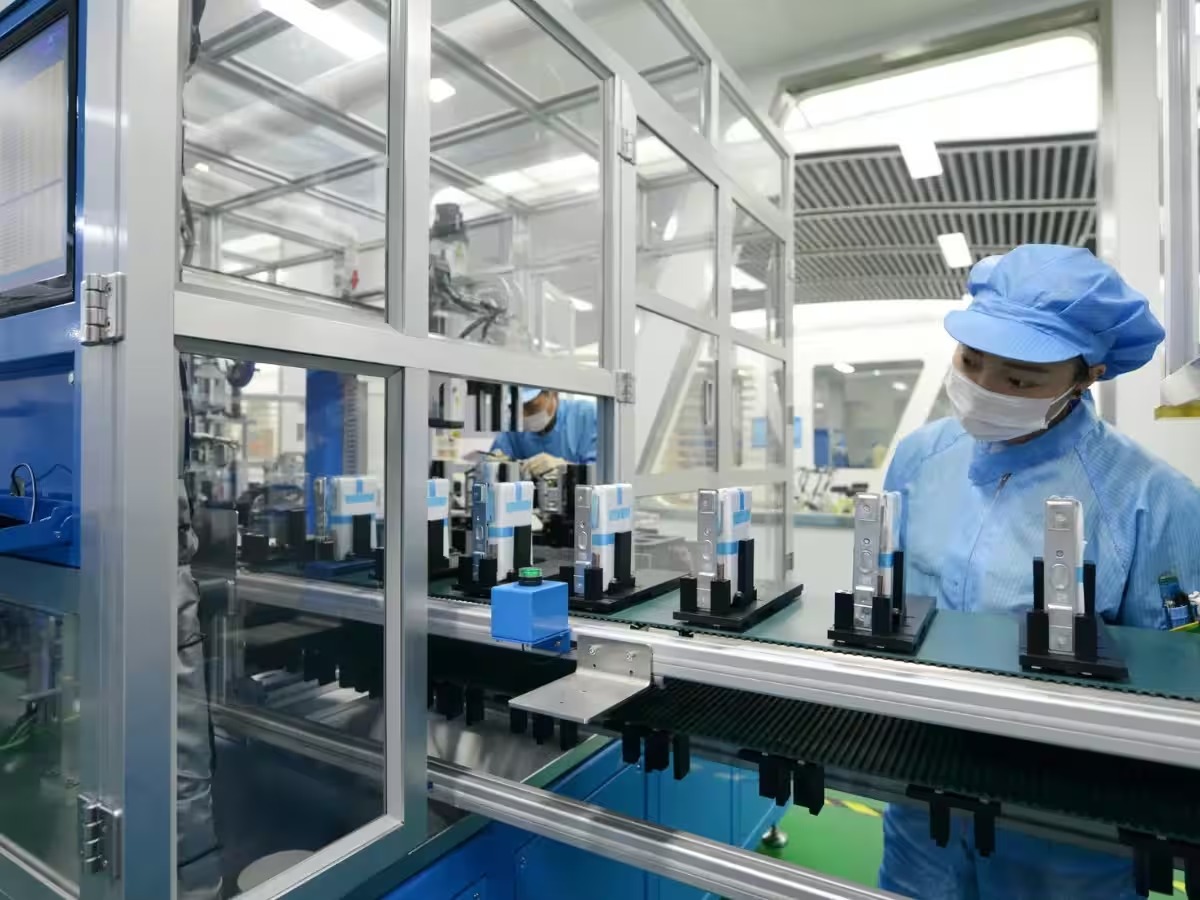
The Indian government has extended customs duty concessions for advanced electronics and lithium-ion battery manufacturing machinery until March 31, 2029. The strategic five-year policy covers 85 types of battery assembly equipment alongside specialized displays for automotive and medical hardware, aiming to aggressively boost domestic high-tech industrial localization.
NEW DELHI — In a major fiscal intervention to solidify India’s position in the global hardware supply chain, the Central Government has officially extended basic customs duty concessions on critical machinery and sub-components utilized in high-tech manufacturing until March 31, 2029.
The extensive policy package, implemented with immediate effect by the Ministry of Finance, reshapes the tariff landscape for lithium-ion battery production, automotive electronics, and specialized mobile components. By replacing older short-term clauses with a comprehensive five-year operational roadmap, the administration seeks to de-risk high-stakes domestic capital expenditure and accelerate advanced technology localization.
Expanding Support for Lithium-Ion Battery Capital Goods
A core pillar of the updated tariff structure is the complete overhaul and expansion of the customs duty exemptions given to specialized manufacturing equipment. The Central Board of Indirect Taxes and Customs (CBIC) has substantially broadened the eligible equipment pool, substituting previous restrictive lines with an inclusive registry spanning 85 distinct machinery categories.
The sweeping custom concessions now apply to capital equipment required across the entire life cycle of modern lithium-ion cell assembly, including:
Industrial material mixing, precision electrode coating, and pressing systems
Automated slitting, winding, and cell-stacking lines
Electrolyte filling, ultra-precise laser welding, and automated formation testing
Supporting plant utilities like solvent recovery, air dust collection, and effluent treatment systems
By eliminating high tariff overheads on advanced capital goods that cannot yet be fabricated domestically at scale, the policy directly reduces the initial set-up financial strain on conglomerates currently executing major clean energy grid arrays and electric vehicle (EV) battery programs.
Targeted Incentives for Automotive and Industrial Displays
The government's strategic intervention extends beyond battery factories into premium display hardware. Under a separate executive notification, customs duty relief has been locked in for five core structural inputs mandatory for assembling display modules deployed inside automotive smart dashboards, industrial interfaces, and medical diagnostics equipment.
The specific display sub-components granted exemption include:
Bare display cells
Flexible Printed Circuit Assemblies (FPCAs)
Backlight units
Structural module frames
Anisotropic Conductive Film (ACF)
To protect existing localized mobile phone component infrastructure, officials explicitly clarified that this display sub-assembly waiver does not extend to consumer smartphones, smartwatches, or home television units, where localized assembly ecosystems are already highly mature.
Additionally, the notification addresses wireless consumer tech by dropping input barriers on six specific elements required to manufacture inductive wireless charging coils for mobile phones, highlighting nano-crystalline structures, neodymium iron boron magnets, and PET liners.
Official Sources Section
Regulatory implementation details were anchored across notifications officially declared by the Central Board of Indirect Taxes and Customs, operating directly under the guidance of the Ministry of Finance. All listed capital goods and component classifications correspond precisely to standard First Schedule Customs Tariff guidelines to allow quick customs processing at inbound ports.
Executive and Industry Commentary
"By extending customs duty concessions on critical manufacturing parts until March 2029, the government has provided vital long‑term visibility and cost relief to companies planning investments in sophisticated production lines," stated a senior trade policy advisor closely tracking the CBIC implementation. "This continuity is especially important for capital‑intensive projects in battery cells, where payback cycles stretch over several years."
According to officials representing domestic electronic manufacturing services (EMS) providers, "The transition from piece-meal annual extensions to a clear multi-year horizon helps boards confidently authorize heavy machinery investments, correcting long-standing structural duty inversions."
Why It Matters
For consumer technology markets and automotive buyers, the extension curbs rising manufacturing input costs, preventing price inflation on local electric vehicles and smart appliances. For global supply chain investors, it offers a predictable, stable regulatory runway to scale up capital deployments across South Asia without fear of sudden trade tariff changes.
Key Facts at a Glance
Exemption Horizon: Customs duty waivers and concessions are formally guaranteed until March 31, 2029.
Battery Inclusions: Broadened to cover 85 separate types of lithium-ion cell processing and safety machinery.
Display Focus: Targeted exclusively toward automotive, medical, and advanced industrial application displays.
Wireless Tech: Input duties removed for essential components powering localized phone wireless charging hardware.
Frequently Asked Questions
Which electronics are excluded from the new display duty exemptions?
The updated display module component exemptions do not apply to equipment or inputs destined for smartphones, smartwatches, televisions, or smart meters.
How does this policy affect the domestic electric vehicle market?
By lowering import costs on 85 types of specialized battery manufacturing equipment, it reduces setup costs for local cell production, making domestic EV battery packs more affordable.
Is there an domestic source alternative required to claim the concession?
The custom concessions specifically target high-end manufacturing inputs and machinery that are not currently available or produced at scale within India.
Source: Statutory notifications released via the official portals of the Central Board of Indirect Taxes and Customs, industrial advisory notes from the Ministry of Heavy Industries, and economic data archives at the Ministry of Finance.