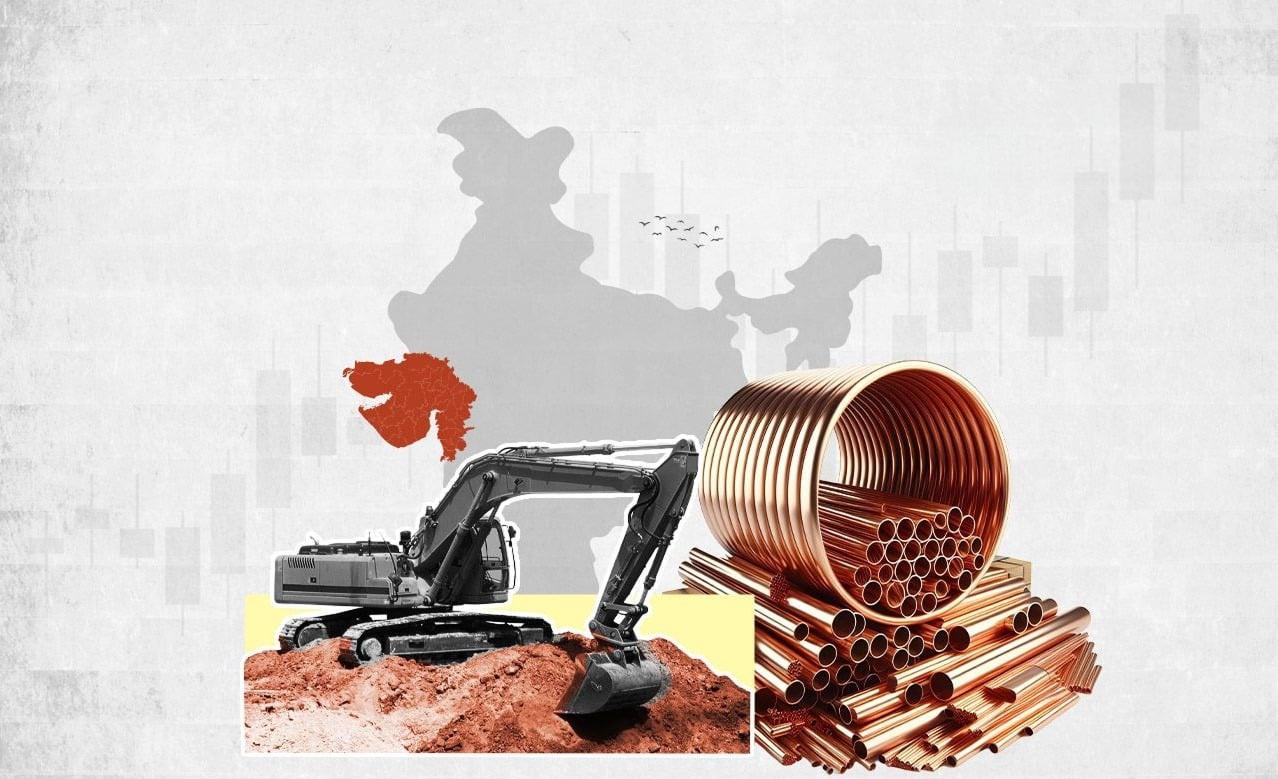
Gujarat is leading India's push for copper self-reliance through major projects like Kutch Copper’s $1.2 billion Mundra plant. Aiming for a 1 MTPA capacity by 2030 alongside Hindalco's Dahej facility, this growing industrial hub uses global supply partnerships to secure the vital raw materials needed for India’s green transition.
MUNDRA — India’s strategic push to secure its clean energy supply chain has reached a critical turning point as massive infrastructure investments in Gujarat aim to systematically replace heavy raw material imports. Driven by a fast-growing electric vehicle (EV) network and national renewable energy targets, India’s domestic copper consumption is rising rapidly. This demand has turned the western industrial hub of Gujarat into the focal point for the nation's metal self-reliance strategy.
Historically dependent on refined copper shipments from overseas to fuel its electronics and grid infrastructure, India is currently overseeing a rapid expansion of local processing capacity. Spearheaded by multi-billion-dollar metallurgical projects along the Kutch coastline, this regional industrial boom is designed to structurally insulate Indian manufacturers from global supply shocks, while positioning the country as an emerging player in the global green-metals transition.
The Mundra Megaproject and India’s Strategic Deficit
The cornerstone of India's import-substitution push is the massive greenfield complex built by Kutch Copper Limited (KCL), a direct subsidiary of the Adani Group’s flagship incubator, Adani Enterprises Limited. Located strategically near the deep-water hub of Mundra Port, the $1.2 billion facility is designed to become the world's largest single-location custom copper smelter complex by 2030, targeting a final capacity of 1 million tonnes per annum (MTPA).
The first phase of the Mundra development adds an initial 500,000 tonnes of annual capacity. Working alongside Hindalco Industries’ existing mega-smelter in Dahej, Gujarat, the combined output of these facilities aims to cover more than three-quarters of the country's total refined copper needs. This domestic expansion helps offset the long-term structural gap left by the 2018 closure of Vedanta's Tuticorin smelter in Tamil Nadu, which abruptly transformed India into a net importer of refined copper.
Overcoming Global Ore Pressures and Supply Tie-Ups
While expanding local refining capacity helps shield the country from imports of finished metal, Indian processors must still secure steady access to raw copper concentrate. Global mining supplies remain highly constrained due to unexpected operational halts in South America and intense buying competition from processing plants in China.
To navigate these raw material bottlenecks and stabilize initial production runs, Indian operators are actively building a more diverse network of global supply partnerships.
As part of this long-term supply strategy, Kutch Copper Limited signed a strategic Memorandum of Understanding (MoU) with Australia’s Caravel Minerals Limited. The agreement outlines potential equity investments and a life-of-mine offtake deal covering up to 100% of the copper concentrate produced at the Caravel Copper Project in Western Australia. This cross-border framework secures a reliable supply of up to 71,000 tonnes of payable copper annually, leveraging the bilateral India-Australia Free Trade Agreement to bypass volatile spot-market pricing.
Fueling the Green Energy Transition
The rapid growth of the copper industry in Gujarat is closely tied to India’s broader green transition goals. Clean energy systems require significantly more copper than traditional fossil-fuel infrastructure, making the metal an essential resource for decarbonization.
Electric Mobility: Electric vehicles use up to nearly four times more copper than conventional internal combustion engine cars due to extensive wiring, high-capacity battery packs, and electric motor rotors.
Solar and Wind Farms: Photovoltaic solar plants and offshore wind installations consume between 3 to 5 metric tonnes of copper per megawatt of capacity to link generators with transformers and transmission grids.
Grid Upgrades: The
Ministry of Poweris rolling out nationwide high-voltage grid upgrades, creating steady domestic demand for heavy-gauge copper wire rods and industrial cables.
Official Sources Section
According to official filings on the Ministry of Environment, Forest and Climate Change clearance portal, the integrated Mundra complex is designed around circular economy principles. Beyond producing primary copper cathodes and rods, the facility uses automated systems to extract valuable byproducts from the treated anode slime. The site is engineered to recover up to 50 tonnes of gold, 500 tonnes of silver, and 288 tonnes of selenium annually, creating auxiliary revenue streams from domestic industrial waste.
Quote Section
"India is poised to become a significant hub for copper and its products in the coming decades. This metal plays a vital role in the transition to net zero," stated Dr. Vinay Prakash, Managing Director of Kutch Copper Limited, following the company's entry into the International Copper Association.
"According to officials from the Ministry of Mines, supporting domestic processing hubs through stable long-term raw material partnerships is essential for safeguarding India's industrial manufacturing targets against global market shifts."
Why It Matters
The growth of a major copper processing hub in Gujarat has direct practical implications for multiple sectors:
For EV Manufacturers: Localized refining creates a more reliable, domestic supply of high-grade copper wires, protecting automotive supply chains from long shipping delays and international trade restrictions.
For Green Energy Developers: Steady domestic copper production helps stabilize component pricing for solar panels and wind turbines, keeping renewable energy projects on track.
For the Trade Balance: Processing copper domestically helps reduce India's import bills, saving foreign exchange reserves and strengthening the overall position of the rupee.
For Industrial Towns: The development of large-scale refining complexes creates long-term jobs in engineering, logistics, and secondary manufacturing across industrial corridors.
Key Facts at a Glance
Scale of Ambition: The Mundra copper project involves an initial $1.2 billion capital expenditure, aiming to reach a 1 MTPA capacity by 2030 to fulfill up to half of India's copper needs.
Byproduct Recovery: The integrated plant is built to recover significant volumes of valuable secondary products, including gold, silver, and sulphuric acid.
Strategic Partnerships: Recent international agreements, such as the MoU with Australia's Caravel Minerals, help ensure a steady supply of raw concentrate amidst tight global markets.
Industrial Synergy: Around 40% of the refined copper produced at the Mundra facility is slated for internal use within green energy and transmission manufacturing projects.
FAQ Section
1. Why is copper considered critical for India’s clean energy goals?
Copper is the premier non-precious conductor of electricity. Because renewable energy installations and electric vehicles require much more extensive wiring and electrical infrastructure than fossil-fuel alternatives, securing a stable copper supply is essential for lowering carbon emissions.
2. How does the closure of older plants affect India’s copper market today?
The 2018 closure of the Sterlite copper plant in Tuticorin removed roughly 400,000 tonnes of domestic smelting capacity, turning India into a net importer of refined copper. The newer processing projects in Gujarat are designed to erase this supply deficit.
3. Are Indian copper plants able to source all their raw ore domestically?
No. India has limited domestic copper ore resources, meaning local refiners rely heavily on importing raw copper concentrates from major mining regions in Latin America, Australia, and parts of Africa.
Source: Ministry of Mines, Adani Enterprises Investor Relations, Ministry of Environment, Forest and Climate Change, International Copper Association Regulatory Reports.