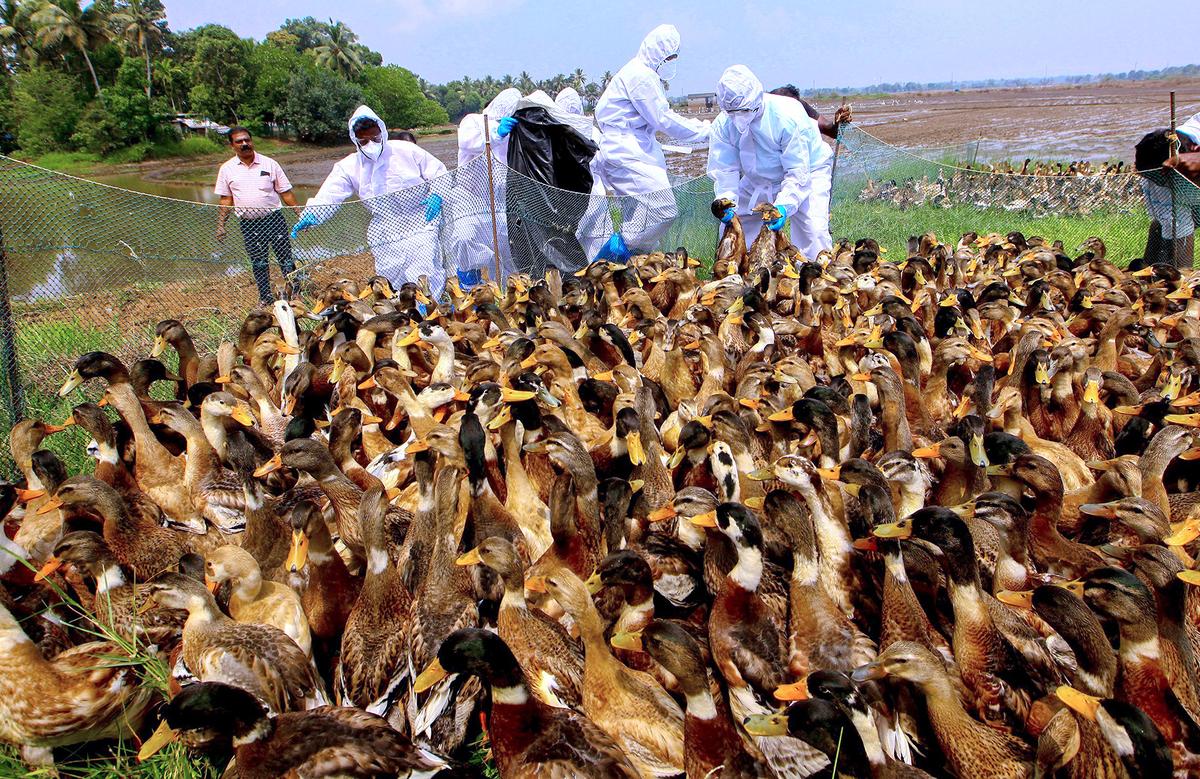
India reports 11 H5N1 bird flu outbreaks on Kerala poultry farms, killing over 54,000 birds mainly ducks, with 30,000 more culled to halt spread. Authorities enforce culling, biosecurity, and border checks amid low human risk, echoing past waves and raising supply concerns per WOAH data.
India faces a fresh avian influenza crisis as 11 outbreaks of highly pathogenic H5N1 bird flu struck poultry farms in southern Kerala last month, prompting swift action from authorities. Over 54,100 birds, mostly ducks, died from the virus, with another 30,289 culled to curb spread, according to the World Organisation for Animal Health (WOAH). This marks the first such incidents in poultry since May, raising concerns over supply disruptions and potential zoonotic risks amid global bird flu surges.
Outbreak Details
The outbreaks emerged in Kerala's Alappuzha and Kottayam districts starting December 9, confirmed by December 22 through lab tests on affected farms and backyard setups. Primarily impacting ducks, the H5N1 strain triggered rapid mortality, leading to emergency zones and movement bans on poultry products. Indian veterinary teams activated the National Action Plan, emphasizing detection, culling within 1-km radii, and biosecurity upgrades to prevent recurrence.
These events echo prior waves in states like Andhra Pradesh, where similar H5N1 cases in March 2025 culled over 600,000 birds, highlighting seasonal vulnerabilities tied to migratory patterns and farm hygiene gaps.
Response Measures
Authorities imposed strict protocols, including farm disinfection, worker PPE mandates, and surveillance in border areas like Tamil Nadu's Nilgiris and Coimbatore. Poultry transport from Kerala stands banned, with checkposts screening vehicles and advising twice-monthly tool sanitization. Compensation at Rs 120 per kg supports farmers, alongside awareness drives to report sudden bird deaths early.
Human health remains low-risk, with no confirmed transmissions despite global alerts; enhanced fever monitoring occurs near sites.
Key Highlights
-
Massive Culling Operations: 30,289 birds humanely destroyed as precaution after 54,100 natural deaths, mainly ducks, to contain H5N1 in infected zones.
-
Geographic Focus: Strikes hit 11 sites across Alappuzha and Kottayam, first poultry cases post-May, linked to poor biosecurity in mixed flocks.
-
Border Vigilance Boost: Tamil Nadu deploys teams at eight Kerala checkposts, bans live bird imports, mandates farm hygiene to shield major hubs like Namakkal.
-
National Plan Activation: Follows 2021 guidelines with ring culling, waste disposal, post-surveillance, and no vaccination policy for HPAI strains.
Broader Implications
The episode disrupts local poultry supply, potentially hiking prices, while global H5N1 spread fuels export worries for India's meat sector. Experts urge sustained surveillance in migratory hotspots and community reporting for proactive control. Poultry stakeholders ramp up disinfectants like formalin and isolate new birds, aiming for quick recovery.
Sources: World Organisation for Animal Health (WOAH), Reuters, Devdiscourse