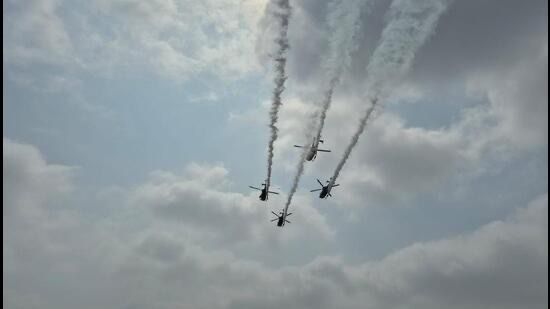
In the wake of an Indian Army directive for a one-time safety check on its fleet of Advanced Light Helicopters (ALH) Dhruv following a reported defect in the tail drive shaft (TDS), Hindustan Aeronautics Limited (HAL) has underscored the critical importance of stringent maintenance practices for...
In the wake of an Indian Army directive for a one-time safety check on its fleet of Advanced Light Helicopters (ALH) Dhruv following a reported defect in the tail drive shaft (TDS), Hindustan Aeronautics Limited (HAL) has underscored the critical importance of stringent maintenance practices for continued airworthiness. The company is working closely with the Indian Army and has deployed expert teams to identify the root cause of the issue, emphasizing that such routine checks are essential parts of safe helicopter operations.
Key Highlights: Safety Check and HAL’s Response
The safety check was prompted by an incident on September 4, 2025, when the Army detected damage to a TDS — a vital transmission component responsible for transferring engine power to the tail rotor, crucial for directional stability.
HAL clarified that the One-Time Check (OTC) issued is a standard maintenance procedure triggered by the defect alert and not indicative of systemic failure across the fleet.
The manufacturer stressed that adherence to all maintenance directives is mandatory and fundamental for the helicopters’ safety and operational reliability.
Expert teams from HAL have been deputed to collaborate with the Indian Army in detailed investigations to ascertain cause and recommend corrective actions.
HAL’s official statement refuted misleading media reports that suggested widespread design flaws, asserting that the fleet remains broadly airworthy under strict maintenance regimes.
Technical and Operational Background
The ALH Dhruv, an indigenously designed multi-role helicopter, has logged over 4.5 lakh flying hours since induction, serving Indian Army, Air Force, Navy, Coast Guard, and civil operators.
The helicopter has operated across diverse and challenging environments, including high altitudes in the Himalayas and maritime conditions along the Indian coastline.
Several ALH helicopters had been grounded previously following the January 5, 2025 fatal crash of a Coast Guard aircraft near Porbandar, linked to a swashplate fracture; however, Army and Air Force variants were cleared for operations in May 2025 after rigorous inspections.
The ongoing investigations focus on transmission components, structural integrity, and maintenance consistency to enhance safety and performance further.
Maintenance: A Pillar of Airworthiness
HAL emphasizes that helicopter safety is intrinsically tied to scrupulous maintenance, timely component replacements, and adherence to prescribed inspection schedules.
The LTC’s TDS-related defect highlights the importance of continuous monitoring and upgrading of maintenance protocols to preempt mechanical failures.
HAL has taken proactive measures by augmenting technical capability and infrastructure to support faster turnaround for maintenance and overhaul activities.
The company’s concerted efforts include collaborations with agencies such as the Centre for Military Airworthiness and Certification (CEMILAC) and Directorate General of Aeronautical Quality Assurance (DGAQA).
Impact on Operations and Future Outlook
The Indian Army’s prompt fleet-wide safety check has increased confidence in airworthiness and preparedness of its helicopter units, reducing operational risks.
HAL’s transparent communication and technical diligence aim to uphold trust among defense stakeholders and the public.
Steps are underway to integrate feedback from these checks toward design improvements and enhanced quality control in future ALH production batches.
The continuous modernization of India’s defense aviation assets, including upgrades to ALH and the introduction of new platforms, benefits from the lessons learned through such maintenance-driven protocols.
Conclusion
HAL’s spotlight on maintenance following the Army-ordered safety check of the ALH Dhruv fleet reaffirms the essential role of rigorous upkeep in aviation safety. The collaboration between HAL and armed forces experts, along with clear communication about the nature of the issue, stands as a testament to India’s commitment to operational excellence and the sustained reliability of its indigenous defense technologies. This episode underscores that proactive maintenance management is indispensable to the safe and effective deployment of critical military assets.
Sources: Hindustan Times, The Print, Business Standard, SSB Crack, Defense News