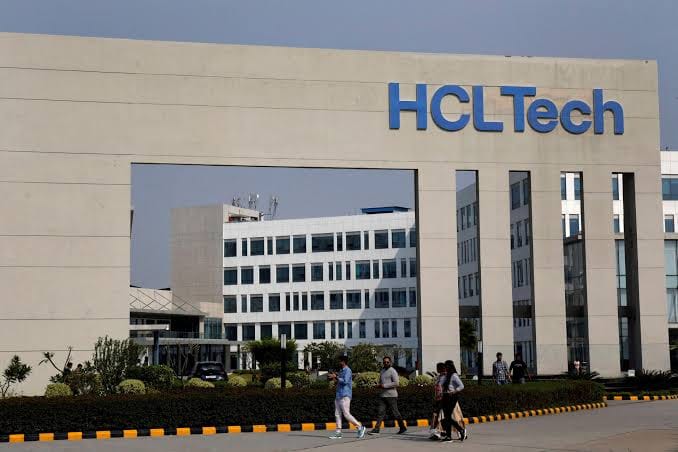
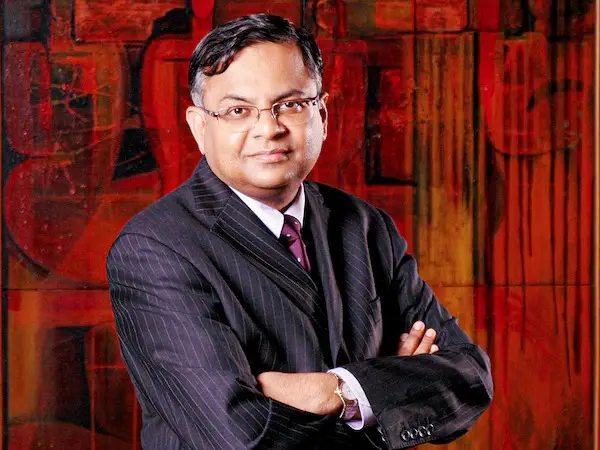
In a retrospective post marking 50 years of operations, HCL co-founder Ajai Chowdhry recounted how six young founders pooled Rs 1.87 lakh in 1976 to start Microcomp in New Delhi. Partnering with UP Electronics Corporation, they formed Hindustan Computers Limited, establishing a cornerstone for India's modern IT industry.
NEW DELHI — As Hindustan Computers Limited (HCL) marks five decades in business, co-founder Ajai Chowdhry revisited the company's origin, detailing how six entrepreneurs built one of India's premier technology conglomerates with an initial capital of Rs 1.87 lakh in 1976.
The reflection, shared by Chowdhry on social media platform X on August 12, 2026, details the early operational challenges and strategic partnerships that established the foundation of the modern Indian computer industry. The development comes at a pivotal milestone for HCL, highlighting how early private enterprise initiatives shaped India's current global IT stature.
Origin of Microcomp and the Struggle for Capital
According to public statements made by Ajai Chowdhry, six young professionals—Shiv Nadar, Arjun Malhotra, Yogesh Vaidya, Subhash Arora, D.S. Puri, and Chowdhry—resigned from their corporate jobs at DCM Data Products in 1976 to pursue computer manufacturing. At the time, venture capital and startup ecosystems were non-existent in India, and public familiarity with computing hardware remained extremely limited.
To secure initial working capital, the six co-founders pooled personal savings, took personal loans, and sold private assets, including a personal automobile, raising a total seed capital of Rs 1.87 lakh. The enterprise initially operated under the name Microcomp from a small residential rooftop apartment (barsati) located in the Golf Links neighborhood of New Delhi.
The primary objective of Microcomp was to design and assemble microprocessors and computers domestically. However, the founders faced regulatory constraints, as private enterprises during that era required specific government-issued manufacturing licenses to produce commercial electronic hardware.
Strategic Partnership with UP Electronics Corporation
To navigate manufacturing restrictions, the founders sought a joint venture partner holding the required industrial approvals. Microcomp entered into a collaborative agreement with UP Electronics Corporation, a state government enterprise that possessed the requisite manufacturing license.
According to Chowdhry's official post, the merger of Microcomp's technological design capabilities with the government entity's regulatory license led to the formal creation and incorporation of Hindustan Computers Limited (HCL) in 1976.
Early Commercialization and Market Pitch Expansion
Before establishing full-scale assembly lines, the founding team initiated commercial outreach using pre-production promotional materials. Representatives carried product brochures and physical mock-ups of planned hardware to prospective corporate and institutional buyers across India.
Initial institutional orders were secured from academic centers, including the Indian Institute of Technology (IIT) Kharagpur and IIT Madras. Subsequent commercial expansion focused on industrial hubs such as Coimbatore, Tamil Nadu, where HCL competed against established computer providers like DCM DP.
Chowdhry detailed a competitive pitch at Premier Mills in Coimbatore, where HCL secured a landmark commercial contract over larger corporate competitors. That initial victory in southern India generated momentum, yielding sequential orders across regional manufacturing businesses. Within four years of its founding in Delhi, HCL expanded operations internationally, establishing a subsidiary in Singapore in 1980.
Impact on Industry and Corporate Heritage
The historical context of the HCL founding story illustrates the transformation of India's industrial landscape from state-regulated hardware manufacturing to an export-driven technology sector. Today, HCL Group operates as a multi-billion-dollar global enterprise encompassing software services, hardware infrastructure, and healthcare technology, employing over 200,000 workers worldwide.
For modern entrepreneurs, corporate investors, and industry analysts, the HCL founding story serves as a documented case study in early-stage Indian enterprise risk management, bootstrapping strategies, and public-private operational alignment.
Official Sources Section
Statements regarding the founding history, financial allocations, and organizational development of HCL are drawn from public statements issued by co-founder Ajai Chowdhry, historical documentation from the HCL Group, and public records from state industrial bodies.
Public social media disclosure by Ajai Chowdhry (Co-founder, HCL) on August 12, 2026.
Official corporate archives and corporate history documentation from
HCL GroupHistorical public enterprise filings of
U.P. Electronics Corporation Limited
Quote Section
Reflecting on the competitive early sales operations in Tamil Nadu, Ajai Chowdhry stated:
"We started selling a computer that was still being designed. We had a brochure and a mock-up of the machine. That was it."
"I still remember sitting in the reception area of Premier Mills while the DCM team made its pitch. We went in second. And we won."
According to officials familiar with HCL's history, the company's initial partnership with state authorities provided the essential framework needed to scale indigenous hardware manufacturing in post-independence India.
Why It Matters
The narrative shared by Ajai Chowdhry highlights how early private innovation, combined with state regulatory licensing, laid the groundwork for India's $200-plus billion information technology industry. For current technology founders, investors, and policymakers, HCL's initial bootstrap model offers historical context on overcoming capital scarcity and regulatory barriers in emerging technology sectors.
Key Facts at a Glance
Founding Year and Capital: Established in 1976 in New Delhi with a pooled seed capital of Rs 1.87 lakh.
Original Co-Founders: Shiv Nadar, Ajai Chowdhry, Arjun Malhotra, Yogesh Vaidya, Subhash Arora, and D.S. Puri.
Government Alignment: Partnered with UP Electronics Corporation to secure essential electronics manufacturing licenses.
First Academic Clients: IIT Kharagpur and IIT Madras were among the first institutions to place orders.
Global Footprint: Expanded internationally to Singapore in 1980, growing into a global firm with over 200,000 employees today.
FAQ Section
What is the origin of the name HCL?
HCL stands for Hindustan Computers Limited. The entity was created in 1976 through a joint venture between the startup team behind Microcomp and the state-owned UP Electronics Corporation.
Who were the original founders of HCL?
HCL was founded by six professionals: Shiv Nadar, Ajai Chowdhry, Arjun Malhotra, Yogesh Vaidya, Subhash Arora, and D.S. Puri.
How much capital was used to launch HCL in 1976?
The six co-founders accumulated Rs 1.87 lakh by pooling personal savings, taking personal loans, and liquidating personal assets such as a car.
Where was HCL's first office located?
HCL's precursor company, Microcomp, operated out of a small rooftop barsati apartment in the Golf Links area of New Delhi.
When did HCL expand outside India?
HCL established its first overseas presence in Singapore in 1980, four years after its initial establishment in India.
Sources: HCL Group Official Website, U.P. Electronics Corporation Limited Portal