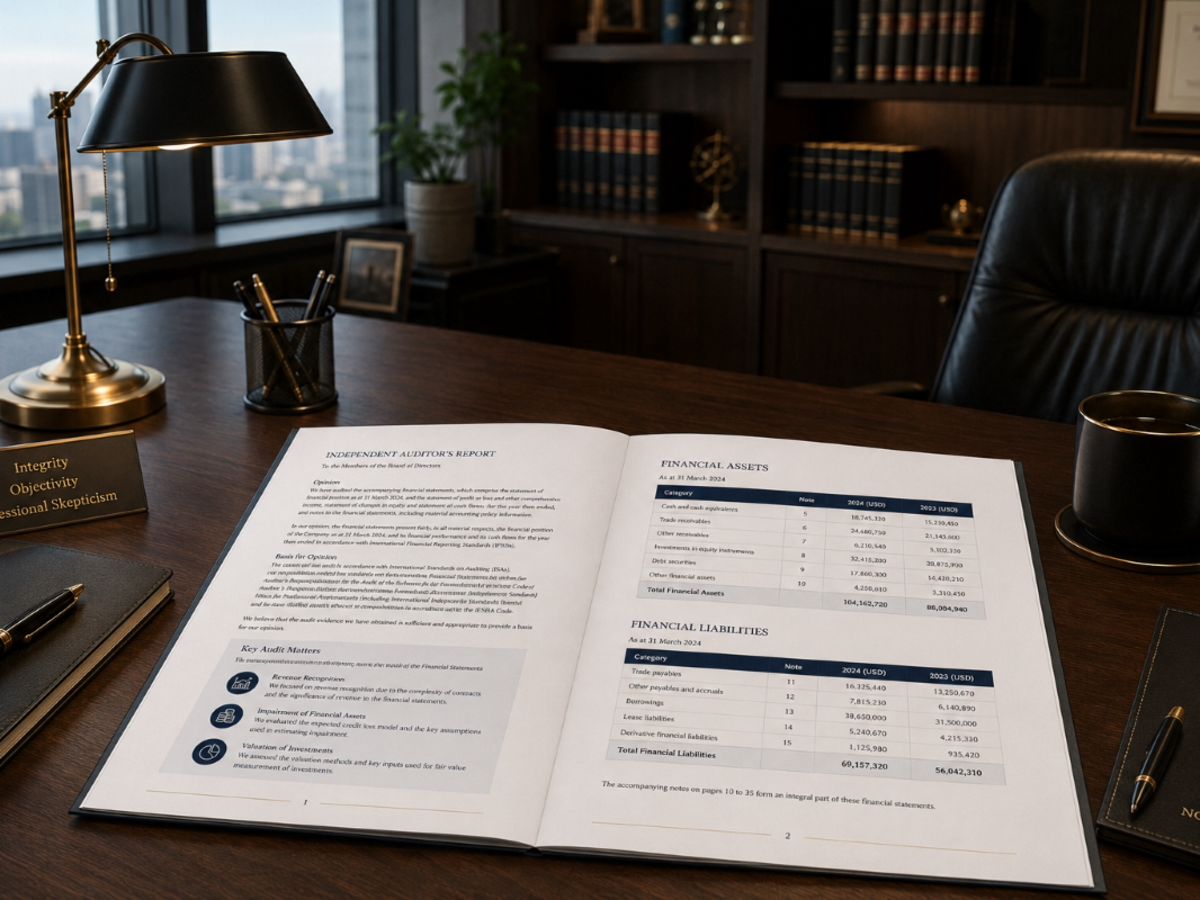
Companies are masking weak balance sheets by classifying major liabilities as equity rather than debt. Buried within private shareholders' agreements, hidden buyback clauses legally force these firms to repurchase shares later, transforming supposed equity into hidden debt obligations that hide real financial risks from public markets.
MUMBAI — Global equity markets are facing an increasing risk of hidden leverage as companies deploy sophisticated structural maneuvers to mask their true financial vulnerabilities. Public accounting reports filed across major stock exchanges indicate that a specific balance sheet trick has emerged as a primary tool for corporate window dressing. By manipulating how incoming investments are recorded, corporations are successfully making fundamentally weak balance sheet positions appear strong to public market participants.
The mechanism relies on a highly technical classification loophole within standard financial report guidelines. According to market analysis published by The Economic Times, corporate entities are intentionally hiding long-term debt liabilities inside their reported equity columns. This misclassification allows distressed enterprises to present highly optimized leverage metrics to retail investors, obscuring looming fiscal distress until severe liquidity shortages force a default.
The Anatomy of the Misclassification Trick
The corporate balance sheet trick relies on shifting the reporting classification of cash injections from the debt register to the equity register.
Under normal accounting practices, an organization's balance sheet clearly separates permanent capital (equity) from borrowed capital (liabilities). However, companies facing tight credit metrics use structured shareholder agreements to blur these distinct regulatory lines. By executing agreements that look like equity on the surface but carry strict future repayment rules, a firm can keep a clean debt-to-equity ratio while silently accumulating major future financial obligations.
Unmasking the Power of Hidden Shareholders' Agreements
The primary tool used to execute this balance sheet trick is the fine print contained within individual corporate shareholders' agreements, which are often kept separate from primary public financial disclosures.
The Role of Mandatory Buyback Clauses
When a company secures an investment, it files the incoming capital as equity, giving casual observers the impression that the business has expanded its stable asset base without borrowing. The underlying distortion is buried within a hidden buyback clause.
This hidden clause legally forces the company to repurchase those exact shares from the investor at a fixed price under specific timelines or operational conditions. Because the company is legally obligated to return the principal capital, the transaction does not function as permanent risk capital. Instead, it constitutes a mandatory future repayment, meaning the capital should legally and structurally be classified as debt.
Auditing Failures and the Risk of Hidden Losses
The persistent threat of balance sheet manipulation highlights why traditional public filing reviews often fail to protect capital markets from corporate defaults.
"According to market regulators and accounting oversight boards, structural financial engineering inside secret side-agreements makes it incredibly difficult for standard screening tools to flag hidden risks. A deep review of non-public legal contracts is often required to expose the true condition of corporate books."
In a notable case uncovered by corporate auditors, a company's weak balance sheet was only exposed after reviewers meticulously parsed the secondary shareholders' agreement. The discovery of a mandatory buyback clause forced the company to acknowledge that its reported equity was actually a massive debt obligation. Financial experts warn that while physical fraud like fake invoices frequently attracts public scrutiny, the biggest financial risks stem from hidden assumptions that keep major losses entirely off public debt logs.
Why It Matters
For retail shareholders, individual market traders, and public market investors, this corporate accounting trick poses an invisible risk to capital preservation. When an enterprise hides its liabilities inside equity columns, standard stock metrics like debt-to-equity ratios become completely unreliable, leaving investors exposed to sudden insolvencies.
For institutional analysts and regulatory compliance departments, uncovering these hidden structural agreements is essential for accurate risk management. To avoid these hidden pitfalls, modern investment funds must look past surface-level balance sheet summaries and demand full visibility into all secondary legal contracts to determine if a company's financial base is genuinely secure.
Key Facts at a Glance
The Reclassification Trick: Underperforming corporations are artificially boosting weak balance sheets by registering massive financial obligations as equity rather than debt.
The Repayment Loophole: Companies mask long-term debt by inserting hidden buyback clauses into private agreements, forcing them to repurchase shares at a later date.
The Data Distortion: This classification maneuver skews standard leverage metrics, making a heavily indebted company look financially stable to the public.
The Audit Challenge: Traditional financial screens often miss these hidden liabilities because the buyback clauses are buried in separate corporate documentation.
Frequently Asked Questions
How does recording debt as equity help a weak corporate balance sheet?
It artificially lowers the company's reported debt-to-equity ratio. This makes the business appear financially stable and less risky, allowing it to maintain investor trust and attract cheaper funding.
What makes a mandatory buyback clause change equity into debt?
True equity is permanent risk-capital with no repayment guarantees. A mandatory buyback clause legally obligates the company to return the investor's money at a set date, transforming the arrangement into a structural loan.
Why do standard balance sheet reviews fail to catch this accounting trick?
Because the primary balance sheet ledger only displays the final capital classification. The hidden rules and buyback triggers are tucked away inside separate shareholders' agreements that casual observers rarely read.
Official Sources Section: