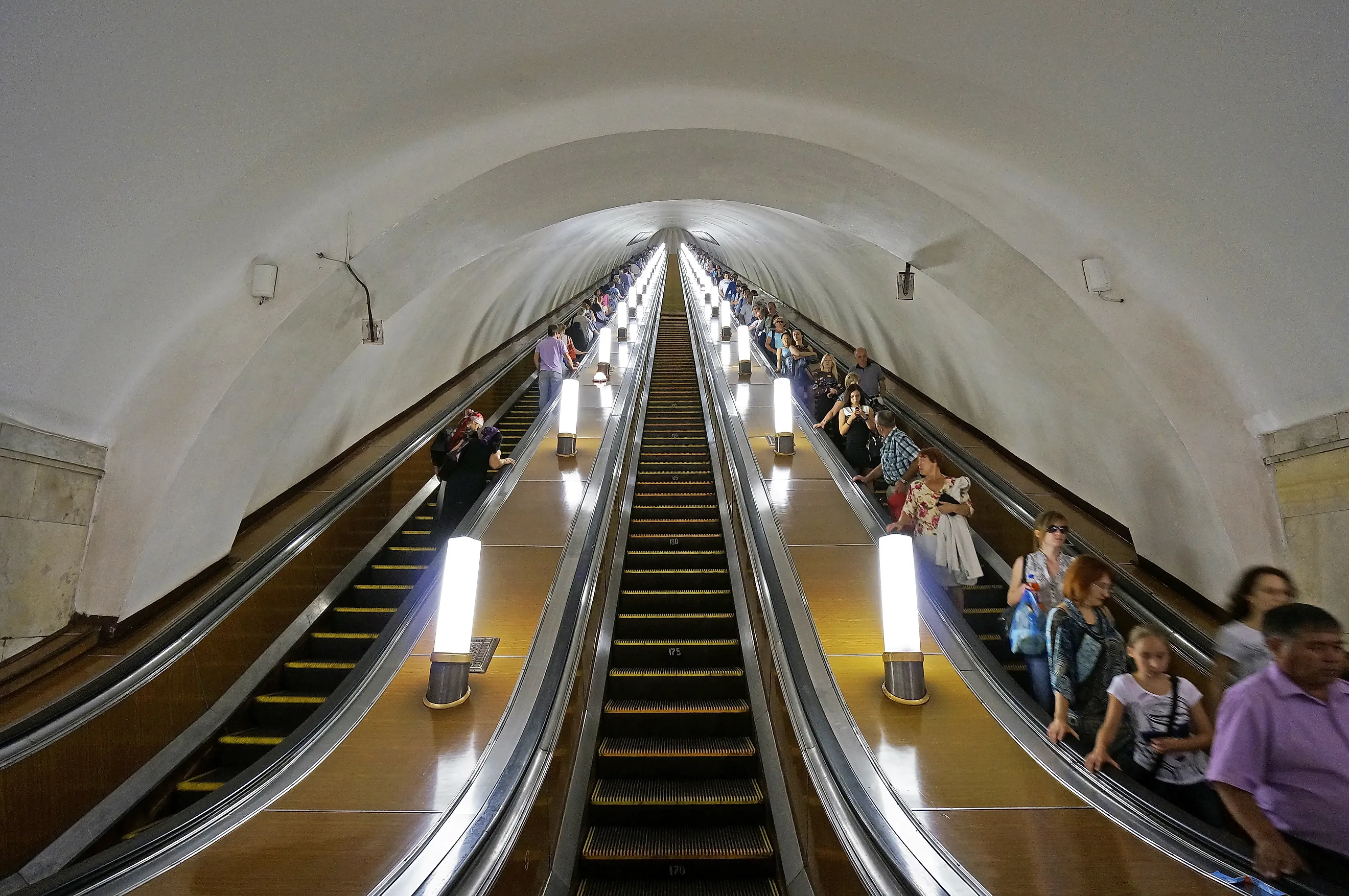
The world's deepest metro stations reflect remarkable civil engineering built to navigate difficult urban geography and river corridors. Led by Chongqing's Hongyancun Station at 116 meters and Kyiv's historic Arsenalna Station at 105.5 meters, these subterranean systems use high-speed elevators and multi-tier escalators to connect urban commuters deep underground.
CHONGQING, China — Global transit authorities and urban infrastructure operators continue to push the boundaries of civil engineering as deep-underground mass transit systems expand across major mountain and river cities. From China’s mountainous terrain to historical Eastern European rail networks and North American transit corridors, transit systems are descending deeper below the surface to bypass geographical barriers, existing urban foundations, and riverbeds.
According to data compiled from global municipal transit corporations and international engineering studies, the title of the deepest metro station in the world currently belongs to the Hongyancun Metro Station on Chongqing Rail Transit's Line 9 and Line 5 in China, reaching a maximum depth of 116 meters (381 feet) below street level. The record highlights a broader global trend of deep-level tunneling driven by urban density and challenging topographies.
Top Global Rankings for Deepest Metro Stations
Subterranean station design varies depending on local soil conditions, river crossings, and surrounding elevation. Infrastructure assessments from municipal transit authorities highlight several notable record-holders across the world:
1. Hongyancun Station (Chongqing Rail Transit, China)
Depth: 116 meters (381 feet) below ground level.
Context: Located in Chongqing's Yuzhong District, Hongyancun station was constructed across steep riverbank terrain. Passengers descend using high-speed elevators or an eight-stage escalator system to reach the lower platform levels, taking up to eight minutes from surface entrances.
2. Arsenalna Station (Kyiv Metro, Ukraine)
Depth: 105.5 meters (346 feet) below ground level.
Context: Opened in 1960 on Kyiv's Sviatoshynsko-Brovarska Line, Arsenalna held the world record for over six decades. The station’s extreme depth was necessitated by the high riverbanks of the Dnipro River, requiring passengers to take two lengthy escalator rides to access the platform.
3. Pyongyang Metro System (Pyongyang, North Korea)
Depth: Approximately 110 meters (360 feet) below ground level.
Context: Built between 1969 and 1972, the Pyongyang underground network was constructed deep below the surface to function both as daily transit infrastructure and as a civil defense shelter.
4. Hongtudi Station (Chongqing Rail Transit, China)
Depth: 94.47 meters (309.9 feet) below ground level.
Context: Serving as an interchange hub between Line 6 and Line 10, Hongtudi was previously China's deepest station before the completion of Hongyancun.
5. Admiralteyskaya Station (Saint Petersburg Metro, Russia)
Depth: 86 meters (282 feet) below ground level.
Context: Constructed through soft marshland and river delta geology beneath Saint Petersburg, the station required heavy soil freezing and structural tunneling techniques during its multi-decade development.
Engineering Challenges and Infrastructure Innovation
Constructing deep-level mass transit stations requires specialized structural engineering, advanced ventilation control, and high-capacity vertical transportation systems.
Engineers face distinct technical constraints at extreme depths:
Air Pressure Management: Descending more than 100 meters via high-speed express elevators subjects commuters to notable atmospheric pressure fluctuations, similar to aircraft descent rates.
Emergency Evacuation Routes: Municipal safety protocols require high-redundancy stairwells, pressurized smoke-extraction shafts, and back-up power feeds to manage fire safety deep underground.
Groundwater Ingress Control: Deep excavation near major rivers—such as the Dnipro in Kyiv or the Jialing in Chongqing—requires continuous waterproofing and heavy reinforced concrete lining.
Practical Impact on Commuters, Commerce, and Urban Planning
The development of deep subterranean transit platforms impacts daily urban mobility, real estate development, and municipal transit spending.
For daily commuters, navigating the deepest metro stations in the world introduces extra travel time. At stations like Hongyancun and Arsenalna, entering the station and reaching the train platform can add five to ten minutes to total journey times purely for vertical transit. To mitigate this, operators increasingly rely on high-capacity express elevators alongside long escalators.
For urban planners and investors, building deep underground preserves historical surface structures and avoids complex land acquisition in densely populated city centers. In cities with severe terrain variations, deep stations provide viable rail links where surface or elevated tracks are topographically impractical.
Official Sources Section
According to official engineering reports, transit agency releases, and municipal disclosures:
Operational specifications and station dimensions published by Chongqing Rail Transit Corporation.
Technical heritage documentation and structural records maintained by the Kyiv Metro Official Portal.
Engineering analyses and international transit surveys documented by the International Association of Public Transport (UITP).
Quote Section
According to transit engineering experts and municipal development officials monitoring deep-subterranean transit infrastructure:
"According to officials, constructing mass transit stations at depths exceeding 100 meters is driven by necessity when navigating complex topography, high-density urban corridors, and river systems. Advanced vertical transport and pressurized ventilation systems remain crucial to ensuring commuter safety and operational efficiency."
Why It Matters
Understanding the engineering behind the deepest metro stations in the world illustrates how modern transit networks adapt to geography and urban density. As urban centers expand, subterranean infrastructure development provides a vital blueprint for expanding transit access without disrupting existing surface communities or historical landmarks.
Key Facts at a Glance
Deepest Station: Hongyancun Station in Chongqing, China, leads global rankings at 116 meters (381 feet) deep.
Longest-Standing Record Holder: Kyiv’s Arsenalna Station held the top spot for over 60 years at a depth of 105.5 meters.
Primary Drivers: Topographical elevation shifts, riverbed navigation, and dense urban surface infrastructure necessitate deep excavations.
Transit Impact: Vertical travel time via escalators or high-speed elevators can add 5 to 10 minutes to commuter trips.
Frequently Asked Questions (FAQ)
What is the deepest metro station in the world?
The Hongyancun Metro Station in Chongqing, China, holds the record as the deepest metro station in the world, reaching a maximum depth of 116 meters (381 feet) below street level.
How long does it take to reach the platform at the world's deepest metro stations?
At extreme depths like Hongyancun (China) or Arsenalna (Ukraine), descending via escalators or elevators takes between 5 and 10 minutes depending on the transport mode chosen.
Why are some metro stations built so far underground?
Extreme depths are usually required due to local geography, such as steep hills, deep riverbeds, soft soil conditions, or the need to tunnel beneath existing deep foundations in densely built urban centers.
Which station is the deepest metro station in North America?
Washington Park Station on the MAX Light Rail network in Portland, Oregon, is the deepest transit station in North America, sitting approximately 79 meters (260 feet) below the surface.
Source: Chongqing Rail Transit, Kyiv Metro, International Association of Public Transport (UITP)