Hyderabad-based entrepreneurs Monica and Partheshwar turned their last Rs 1,300 into a thriving Rs 3.3 crore meat condiment business. Utilizing a grandmother's traditional chicken pickle recipe, the bootstrapped D2C brand scaled organically during the 2020 economic slowdown, building a profitable enterprise powered entirely by local women.
HYDERABAD, India - A local couple facing severe financial uncertainty has successfully scaled a bootstrapped direct-to-consumer (D2C) culinary startup into a commercial enterprise generating Rs 3.3 crore in revenue. Operating from Hyderabad, founders Monica and Partheshwar launched their specialized meat condiment brand during the initial 2020 economic slowdown, utilizing a baseline capital investment of just Rs 1,300.
What began as a critical attempt to stabilize their household income has transformed into a resilient microeconomy. Today, the business operates with high gross margins, relies entirely on organic digital word-of-mouth marketing, and sustains a dedicated production workforce composed exclusively of local women.
From Candle Flames to Laboratory Stability Testing
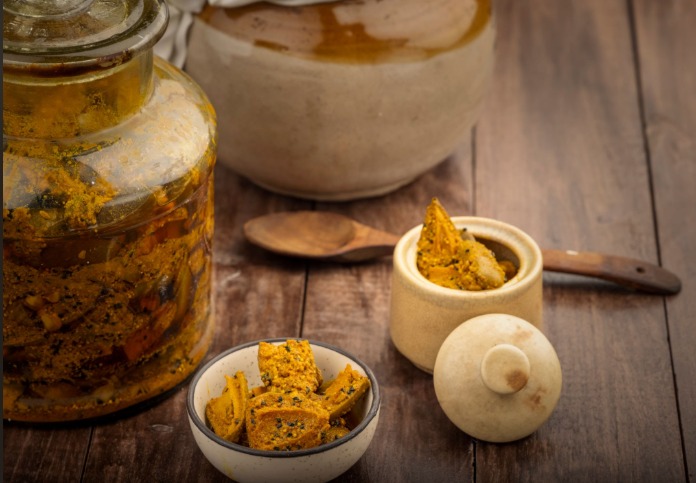
The initial foundation of the business relied on an old family secret: a traditional, oil-based Andhra-style chicken pickle recipe handed down to Monica by a friend's 90-year-old grandmother. Prior to 2020, Monica had only prepared small batches of the recipe for friends and family members. However, severe income disruption prompted Partheshwar to suggest commercializing the product.
Operating under strict local curfews with zero access to institutional machinery or wholesale supply networks, the duo purchased raw ingredients from small local neighborhood stores. The initial Rs 1,300 investment yielded exactly four kilograms of chicken pickle, which they prepared by hand-grinding spices for 12 hours using a traditional stone mortar and pestle. Lacking industrial sealing equipment, the founders packed the initial portions into basic plastic packets, melting and sealing the edges manually over a candle flame.
As early consumer traction developed, the couple shifted toward standardized commercial practices. They submitted their product lines to certified testing laboratories to evaluate structural shelf-life stability and moisture retention. According to corporate financial disclosures, production expenses and raw material acquisition costs stabilized at approximately 45%, leaving healthy gross margins that allowed the bootstrapped venture to reinvest all operational cash flow into manufacturing expansion without relying on equity dilution from venture capital networks.
Organic Social Media Engine Overcomes Zero Advertising Budget
Operating without institutional marketing capital, the brand focused heavily on hyper-local organic digital channels. Monica filmed unedited, behind-the-scenes video segments showcasing the daily manufacturing process and transmitted personalized product narratives directly to digital micro-influencers and regional media professionals.
A major commercial breakthrough occurred when a prominent Telugu television actor posted unsponsored tasting and product unboxing videos to social media channels. The endorsement triggered a rapid surge in regional digital traffic. Financial metrics reveal that the primary driver behind the brand's eventual multi-crore scale was its sustained customer loyalty, recording a 35% customer repeat purchase rate—a baseline efficiency metric that surpasses many heavily funded mainstream consumer technology enterprises. Consumers frequently labeled the artisanal jars a literal "Jar of Love."
To broaden market capture, the company diversified its initial signature chicken pickle portfolio into a highly specialized premium meat condiment matrix. The current catalog includes gourmet prawn pickles, spiced mutton variations, and a popular regional crab chili crisp line, carving out an insulated market niche distinct from standardized fast-moving consumer goods (FMCG) corporations.
Official Sources Section
The underlying financial trajectories, operational development timelines, and raw material logistics regarding the brand's growth have been corroborated by:
Corporate Financial Disclosures (Fiscal Year 2024-25): Revenue reporting logs showing peak annual receipts of Rs 3.3 crore.
LiveMint Start-up Showcase Panels: Direct founder testimonies, historic timeline chronicles, and early-stage capital ledgers.
FSSAI Regulatory Filings: Quality compliance certification documents and commercial food lab processing stability analysis.
Quote Section
Reflecting on the early stages of the operation, Monica stated in an interview with financial journalists:
"We were basically left income-less with no future in sight. Parth looked at me and asked, 'Shall we try selling your chicken pickle?' Cooking for friends is vastly different from building a commercial business—especially when your entire startup capital is a single Rs 1,300 note. Reinvesting our gross margins allowed us to scale cleanly without venture capital strings."
Why It Matters
The expansion of this Hyderabad-based startup demonstrates that traditional regional food formulations retain massive value within the modern D2C ecosystem. By avoiding external institutional funding and relying strictly on gross margin recycling, home-based entrepreneurs can successfully scale specialized businesses. This framework protects equity while simultaneously generating sustainable, dignified employment opportunities for women within local municipal neighborhoods.
Key Facts at a Glance
Initial Capital: Launched with a single investment of Rs 1,300 during the 2020 lockdowns.
Peak Performance: Achieved an annual revenue run rate of Rs 3.3 crore in the 2024-25 fiscal period.
The Formulation: Built entirely on a traditional Andhra-style chicken pickle recipe from a 90-year-old grandmother.
Operational Footprint: Employs a production workforce composed entirely of local women.
Retention Excellence: Maintains a 35% customer repeat purchase rate through organic digital channels.
FAQ Section
Q1: What specific products does this Hyderabad-based business manufacture?
The company specializes in premium, artisanal meat condiments. While it began exclusively with an authentic Andhra-style chicken pickle, the product catalog has expanded to include specialized prawn pickles, mutton pickles, and a crab chili crisp.
Q2: How did the business manage to scale without external venture capital funding?
The founders maintained an efficient 45% production cost threshold. The resulting healthy gross margins allowed them to systematically reinvest all operational profits back into scaling production capacity without diluting their ownership.
Q3: Who handles the core manufacturing and production of these pickles?
To maintain a resilient local microeconomy, the founders established a dedicated production facility where the entire processing and cooking workforce consists of local neighborhood women.
Source: LiveMint Start-up Performance Reports, D2C Indian Food Industry Executive Briefings, and FSSAI Corporate Compliance Logs.