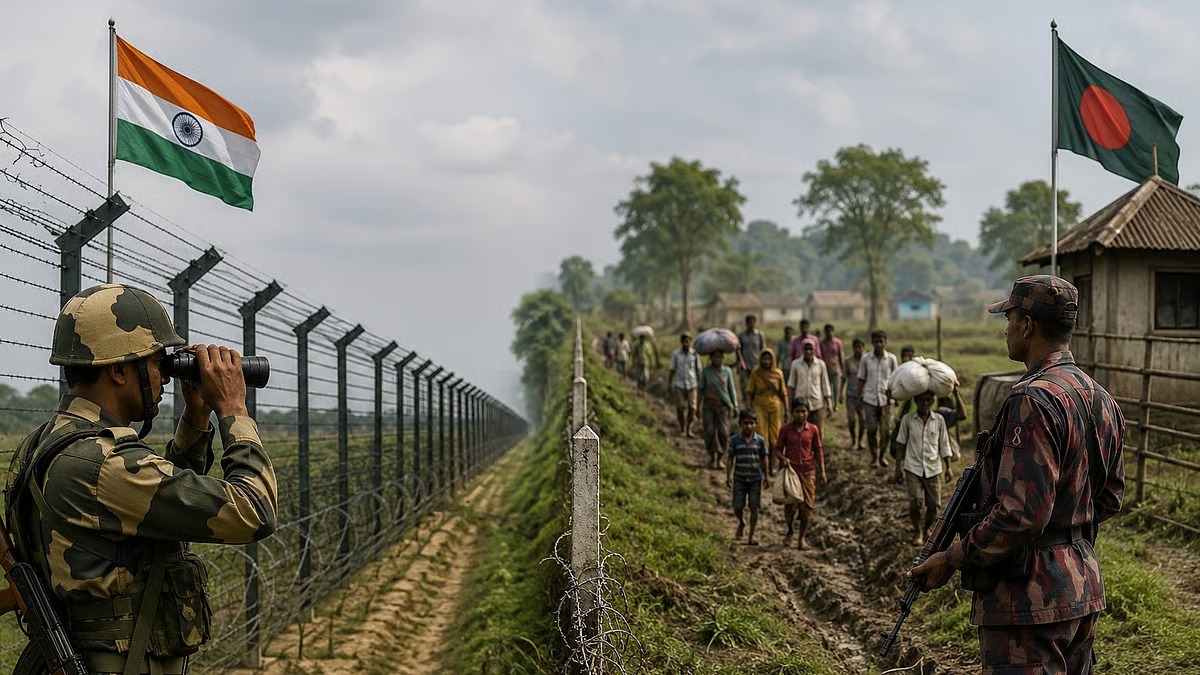
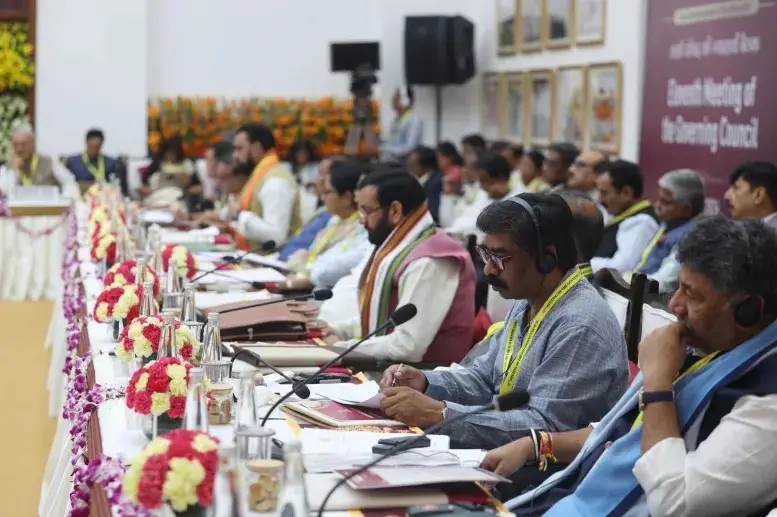
India and Bangladesh have issued a comprehensive joint statement following the 57th Director General-level border talks in New Delhi. The border forces finalized agreements to strengthen anti-smuggling night patrols, construct single-row perimeter fencing, and streamline official repatriation channels to manage illegal migration smoothly.
NEW DELHI — Amid evolving geopolitical alignments in South Asia, senior defense and administrative officials from India and Bangladesh have released a comprehensive joint statement following the successful conclusion of high-level border security negotiations. The four-day Director General-level border coordination conference, held at the Border Security Force (BSF) headquarters in New Delhi, yielded a formalized record of discussions aimed at reducing localized friction along their shared 4,096-kilometer frontier. The strategic bilateral talks concluded late Thursday as both sovereign nations committed to expanding real-time intelligence exchanges to counter cross-border crimes and unauthorized infrastructure development.
Addressing Border Migrations and Repatriation Procedures
The core diplomatic agenda for the 57th edition of the bi-annual summit focused closely on managing irregular population movements and the controversial issue of border "push-ins" or "pushbacks". The Bangladeshi delegation, led by Border Guard Bangladesh (BGB) Director General Major General Mohammad Ashrafuzzaman Siddiqui, raised concerns regarding recent unilateral actions along the West Bengal frontier. The BGB characterized unauthorized population transfers as humanitarian violations that deviate from established international law.
In response, the Indian delegation, headed by BSF Director General Praveen Kumar, clarified India's administrative position. Officials from India maintained that all repatriation measures targeting undocumented individuals are executed strictly under domestic legal codes and long-standing, structured bilateral mechanisms.
To prevent zero-line standoffs, where individuals remain stranded in no-man's-land during citizenship verifications, both border forces agreed to speed up formal consular communication lines managed by their respective ministries of external affairs.
Technical Measures and Single-Row Fencing Expansion
Aside from migration controls, the joint statement detailed critical technical agreements to bolster structural security across non-feasible fencing zones, which currently span roughly 860 kilometers of riverine and marshy gaps. The BSF and BGB finalized a mutual inspection timeline to monitor unauthorized structural builds within 150 yards of the international boundary line.
The agreed-upon parameters of the security framework include:
Single-Row Fencing Clearance: Bangladesh approved the accelerated construction of single-row barbed wire fences by Indian contractors in high-vulnerability sectors.
Joint Patrol Interventions: Both forces will double the frequency of synchronized night patrols across smuggling corridors used by narcotics and weapons networks.
Non-Lethal Weaponry Mandate: To minimize loss of life, both commanders renewed their commitment to using non-lethal weapons as the primary defense mechanism against civilian border crossers, unless directly fired upon.
Curbing Insurgency and Attacks on Security Personnel
The Indian delegation placed high priority on the rising incidence of physical assaults targeting BSF personnel and Indian civilians. According to tracking metrics reviewed during the sessions, transnational cattle rustlers and illegal loggers have increasingly clashed with perimeter guards.
The BGB committed to deploying extra personnel along its internal boundaries to dismantle makeshift staging camps used by Indian Insurgent Groups (IIGs) operating out of remote jungle tracts in the Chittagong Hill Tracts. Both parties emphasized that stabilizing these borders is a prerequisite to safeguarding regional trade and protecting the nearby transit lines that link India's northeastern states to maritime ports.
Official Institutional Frameworks
The coordination talks are governed by the Joint India-Bangladesh Guidelines for Border Authorities, an institutional pact dating back to 1975. Administrative delegates from the Ministry of External Affairs (MEA) and the Bangladesh Prime Minister’s Office actively participated to ensure that operational decisions mirror wider trade and diplomatic strategies.
The administrative decisions are designed to align with broader infrastructure goals managed by the Ministry of Home Affairs (MHA), which is actively establishing 11 new integrated land ports to streamline legitimate cross-border commerce.
Official Statement From Security Organizers
"According to officials authorizing the joint record of discussions at the Border Security Force (BSF), the bilateral engagement has reinforced functional trust between the two primary frontier-guarding organizations. Organizers stated that the elimination of safe havens for transnational criminal syndicates remains a shared sovereign objective, and both nations will utilize newly established confidence-building measures to systematically de-escalate flashpoints before they disrupt border tranquility."
Why It Matters
Establishing a clear and orderly border framework prevents localized policing incidents from escalating into broader diplomatic stalemates between New Delhi and Dhaka. For businesses reliant on cross-border supply chains and residents living in front-line agricultural villages, a predictable security arrangement reduces logistical disruptions, minimizes curfews, and secures local economies against volatile disruptions.
Key Facts at a Glance
Summit Milestone: The New Delhi talks marked the 57th bi-annual Director General-level coordination conference.
Key Mandate: India and Bangladesh issued a joint statement to coordinate on migration and border management.
Infrastructure Push: Progress was cleared for the deployment of single-row fencing across sensitive frontier zones.
Operational Tactics: Synchronized night patrols will be stepped up to disrupt weapons and narcotics smuggling.
Security Pledge: Bangladesh agreed to intensify operations against insurgent factions inside its territory.
FAQ Section
What is the primary focus of the India-Bangladesh border joint statement?
The joint statement outlines a mutual agreement between the BSF and BGB to enhance real-time coordination, address undocumented migration, speed up nationality verifications, block cross-border crime syndicates, and finish crucial single-row security fencing.
What exactly are "push-ins" and how are they being handled?
"Push-ins" refer to the unauthorized movement or deportation of individuals suspected of being illegal immigrants across the international boundary. The two countries are resolving this by moving away from sudden frontier pushbacks, relying instead on formal legal channels and official consular verification before any repatriation takes place.
Why are these border security talks held bi-annually?
Mandated under the historic 1975 bilateral guidelines, these bi-annual meetings alternating between New Delhi and Dhaka ensure that high-level commanders can directly sync operational strategies, iron out local disputes, and maintain stable diplomatic relations between the neighboring nations.
Source: Official conference briefings from the Border Security Force (BSF), media transcripts from the Ministry of External Affairs (MEA), and statutory border updates from the Ministry of Home Affairs (MHA).