In a significant development reinforcing the strong economic ties between India and Singapore, both countries have agreed to fast-track the review of key trade agreements. This move comes at a pivotal time when global trade dynamics are being reshaped by tariff policies and regional economic shif...
In a significant development reinforcing the strong economic ties between India and Singapore, both countries have agreed to fast-track the review of key trade agreements. This move comes at a pivotal time when global trade dynamics are being reshaped by tariff policies and regional economic shifts, emphasizing the urgent need for enhanced cooperation. The decision aims to strengthen bilateral trade, diversify markets, and foster deeper collaboration across multiple sectors.
Key Highlights Of The Trade Pact Review
India and Singapore have committed to a time-bound, accelerated review of the Comprehensive Economic Cooperation Agreement (CECA) and the ASEAN Trade in Goods Agreement (ATIGA).
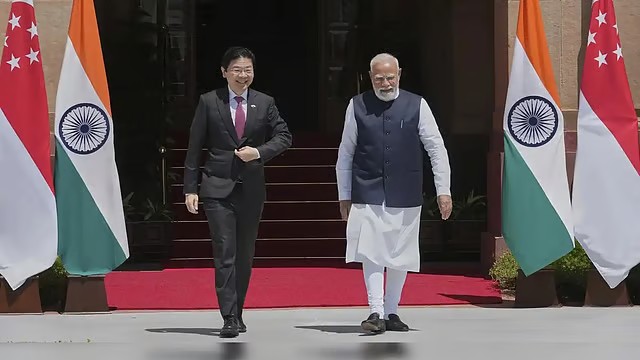
The initiative coincides with Singapore Prime Minister Lawrence Wong’s maiden visit to India, marking 60 years of diplomatic relations between the two nations.
The accelerated review is part of a broader strategy to offset the impact of global tariff disruptions, notably the recent 50% tariffs imposed by the United States on Indian goods.
Singapore remains India’s largest trading partner in Southeast Asia and an important source of investment, underscoring the critical nature of these trade discussions.
Alongside trade pact reviews, new agreements covering technology, digital payments, skills development, green hydrogen exports, and infrastructure are being explored.
The Strategic Importance Of Fast-Tracking Trade Agreement Reviews
The decision to fast-track bilateral agreement reviews reflects both countries’ recognition of the pressing need to adapt to evolving global trade challenges. The recent rise in tariffs by major economies like the US has underscored the vulnerability of traditional trade routes and necessitated proactive measures to safeguard economic growth. For India, diversifying export markets and strengthening regional partnerships through agreements like CECA and ATIGA are essential to sustaining trade momentum. Similarly, Singapore sees this as a vital step in reinforcing its role as a major financial and trade hub in Asia.
Benefits For The Bilateral Relationship
Enhanced Market Access: Updated trade agreements could remove barriers and simplify regulations, enabling smoother trade flows and expanding market opportunities for businesses on both sides.
Investment Expansion: Singapore is a top source of foreign direct investment in India, and stronger trade ties may generate further capital inflows supporting infrastructure and industrial growth.
Technology And Skill Collaboration: Both nations are exploring joint initiatives in cutting-edge fields such as digital payments, artificial intelligence, and semiconductor manufacturing to create new growth engines.
Green Energy Cooperation: Proposed projects include exporting solar energy and green hydrogen from India to Singapore, supporting sustainability goals and innovative energy solutions.
Infrastructure Partnerships: Projects like PSA International’s container terminal in Maharashtra highlight avenues for logistical and shipping synergy.
Contextualizing The Renewal Within Regional And Global Trade Trends
The India-Singapore accord fits into a larger pattern of reshaping trade relationships in Asia amid geopolitical and economic shifts. The US-China trade tensions, rising protectionism, and global supply chain disruptions have motivated regional players to solidify and modernize their trade frameworks. Additionally, the ASEAN bloc, which includes Singapore, is a vital partner for India in expanding economic integration in Southeast Asia. Renewing and fast-tracking trade agreements now is critical to keeping pace with these evolving dynamics and ensuring competitiveness.
Looking Ahead: What To Expect Post Review?
As the review process unfolds, stakeholders anticipate clearer provisions on tariff rationalization, non-tariff barriers, regulatory harmonization, and dispute resolution mechanisms. Enhanced cooperation in digital trade, data flows, and innovation will likely be key focus areas. Furthermore, bilateral dialogues will examine facilitating enhanced mobility for professionals, boosting tourism, and promoting educational partnerships, strengthening people-to-people ties as a complementary pillar to trade.
Conclusion
The decision by India and Singapore to expedite the review of their CECA and ATIGA agreements is a notable leap towards reinforcing their robust economic partnership in a rapidly changing global trade environment. By proactively addressing trade barriers and deepening cooperation across sectors such as technology, green energy, and infrastructure, both countries are positioning themselves for sustainable growth and resilience. This renewed focus on bilateral relations underscores the importance of regional alliances as engines of economic progress in the 21st century.
Source: The Hans India, NewsBytes, The Hindu BusinessLine, Economic Times, Money Control