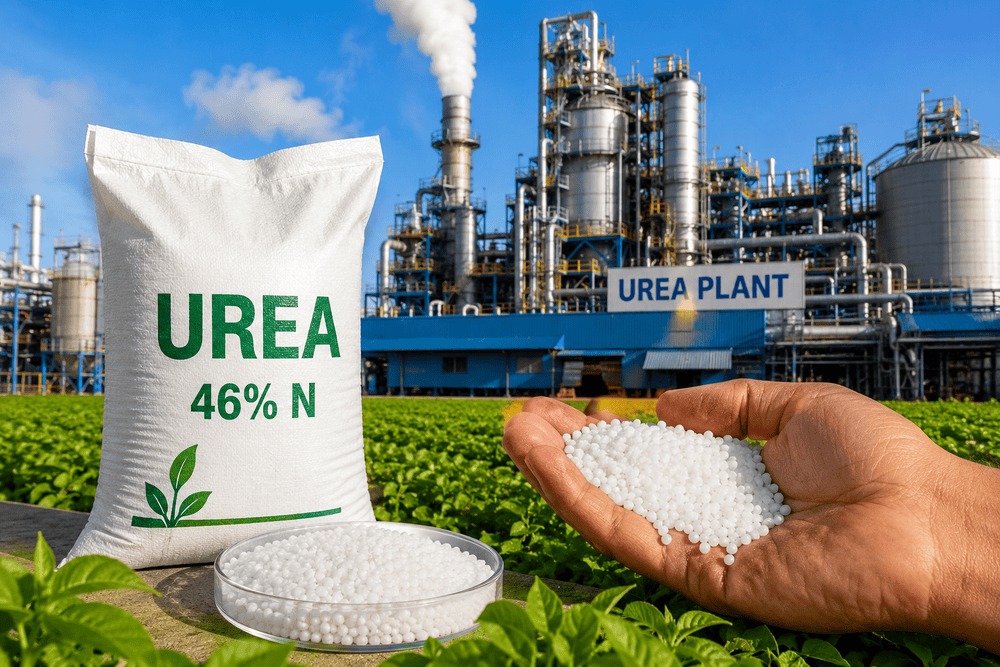
The Union Cabinet has approved the National Investment Policy for Urea-2026 (NIPU-2026) to boost domestic fertilizer production and reduce import reliance. Alongside this industrial push, the government confirmed that urea will remain affordable for farmers at a fixed price of 242 rupees per 45-kg bag, ensuring national food security.
The Union Cabinet has launched the National Investment Policy for Urea-2026 to enhance self-reliance in fertilizer production while maintaining affordable prices for farmers.
NEW DELHI – The Union Cabinet, chaired by Prime Minister Narendra Modi, officially approved the National Investment Policy for Urea-2026 (NIPU-2026) on Wednesday, July 15, 2026. This landmark policy shift aims to strengthen India’s fertilizer security by incentivizing the construction of new gas-based urea manufacturing units across the country, effectively reducing the nation's reliance on imported fertilizers.
Amidst these industrial reforms, the government reaffirmed its commitment to the farming community, confirming that urea will continue to be supplied to farmers at the statutorily fixed Maximum Retail Price (MRP) of 242 rupees for a 45-kg bag. This price point remains exclusive of neem coating charges and applicable taxes.
Driving Self-Sufficiency in Fertilizer Production
The NIPU-2026 is designed to overhaul the domestic urea sector by separating fixed and variable costs, providing greater transparency for manufacturers. By introducing a viable Return on Equity (RoE) band—set with a floor of 12% and a ceiling of 16%—the government intends to attract fresh investments into both brownfield and greenfield projects.
According to the Press Information Bureau, these strategic measures are estimated to generate savings of over 250 crore rupees for each new plant established under the 2026 framework compared to previous investment policies. Furthermore, the policy includes mechanisms to mitigate foreign exchange risks, ensuring a stable environment for industrial growth.
Commitment to Farmer Welfare
While the NIPU-2026 focuses on long-term production capacity, the government’s immediate priority remains the accessibility and affordability of urea for the agricultural sector. Official data from the Department of Fertilizers confirms that the MRP of 242 rupees per 45-kg bag is a statutorily mandated price, ensuring that the country’s farmers are insulated from volatile international market fluctuations. The government covers the difference between the delivered cost of urea and the regulated MRP through direct subsidies to manufacturers and importers.
Official Sources
According to official announcements made by the Union Cabinet and confirmed by Union Information and Broadcasting Minister Ashwini Vaishnaw, the policy approval was one of seven major decisions taken on July 15, 2026. The government emphasized that this policy is a strategic move to achieve the vision of 'Atmanirbhar Bharat' (Self-Reliant India) by closing the gap between domestic production and consumption.
Why It Matters
The introduction of NIPU-2026 is critical for India's economic and food security. By encouraging new gas-based manufacturing units, India can reduce its significant import bill, which fluctuates based on global supply chains and price movements. For the agricultural sector, the continued subsidy ensures that essential inputs remain affordable, supporting stable crop yields and farmer livelihoods throughout the Kharif and Rabi seasons.
Key Facts at a Glance
New Policy: The National Investment Policy for Urea-2026 (NIPU-2026) was formally approved to incentivize domestic urea production.
Farmer Price: Urea continues to be sold to farmers at the subsidized, fixed rate of 242 rupees for a 45-kg bag.
Economic Impact: The policy aims to reduce import dependence and generate significant cost savings for new manufacturing plants.
Financial Incentives: New projects will benefit from a Return on Equity (RoE) band of 12% to 16%.
FAQ
How does the new urea policy benefit farmers?
The policy ensures the long-term availability of urea through increased domestic production while maintaining the current affordable fixed price of 242 rupees per bag for farmers.
Why was the National Investment Policy for Urea-2026 needed?
Previous investment policies expired in 2019. The new policy addresses the need for modern, transparent cost structures to attract private and public investment to close the gap between domestic production and demand.
Will the subsidy burden on the government decrease?
By increasing domestic production, the government aims to reduce reliance on costly imports, which is expected to lower the overall fertilizer subsidy bill in the long term.
Source: Press Information Bureau, Department of Fertilizers, Ministry of Chemicals and Fertilizers, PM India.