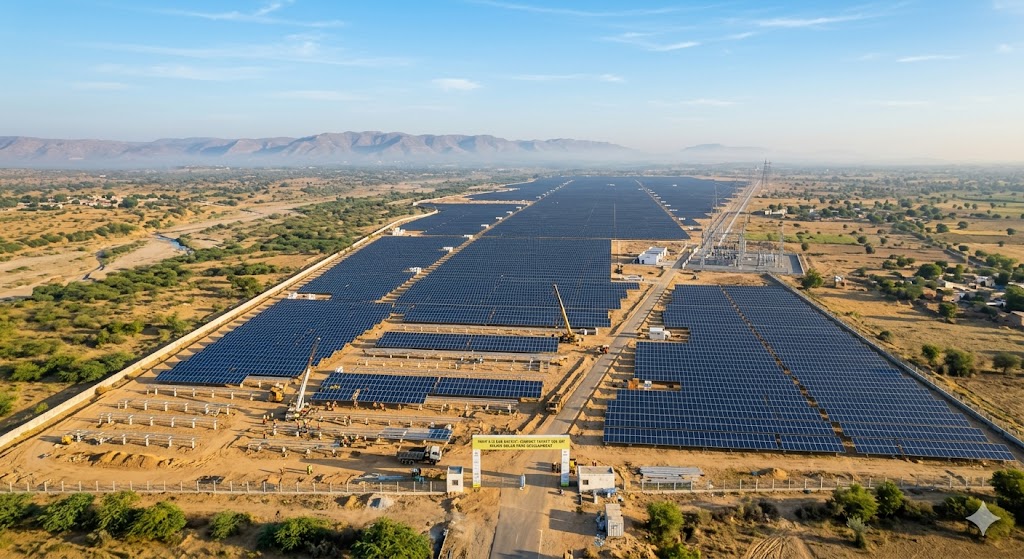
NEW DELHI – India's ambitious journey toward a low-carbon future requires a dramatic escalation in its solar power deployment, according to recent industry forecasts and government data analysis. To achieve its stated non-fossil energy capacity target of 500 gigawatts (GW) by 2030, the nation must install an average of 50 GW of new solar capacity every year for the remainder of the decade.
This conclusion represents a significant acceleration from current installation rates, highlighting the vast scale of physical infrastructure, investment, and regulatory efficiency needed to realize the government’s long-term environmental goals. The 50 GW annual requirement will be critical to transforming the energy mix of the world’s third-largest carbon emitter.
Understanding the Long-Term Energy Goal
The 500 GW non-fossil energy goal is a cornerstone of India's international climate commitments made at COP26. Solar energy is projected to provide the largest share of this capacity, with some estimates suggesting solar must contribute over 300 GW to the total.
According to a review of data from the Ministry of New and Renewable Energy (MNRE), the required annual installation pace has increased over time as the remaining window to 2030 shrinks. The goal is intended to decouple India's economic growth from its carbon emissions, transitioning the electricity sector towards sustainable sources.
Current Installation Performance and Future Demand
While India has made significant strides, the current deployment velocity falls short of the newly highlighted 50 GW per year imperative. Reports from market analysts note that recent annual solar capacity additions have fluctuated below this level, creating a performance gap that must be addressed rapidly.
To hit the requisite pace, multiple market segments must scale simultaneously. This includes large-scale utility solar parks, which have historically driven capacity, and the emerging rooftop solar sector. The demand for 50 GW annual installations is also creating pressure on domestic manufacturing capability, skilled labor, and supply chain logistics.
Impact and Industry Implications
The need for 50 GW of annual solar progress carries wide-ranging implications across Indian society and industry:
Businesses and Investors: Presents a massive market opportunity with a long-term, stable growth trajectory, potentially attracting billions in foreign and domestic direct investment.
Consumers and Citizens: Faster deployment of clean energy can reduce reliance on volatile fossil fuels, potentially lowering long-term electricity prices and improving air quality.
Travelers and Infrastructure: Requires significant modernization of the national power grid to manage high levels of intermittent solar power, and will see large regions transformation via new solar parks.
The transformation necessary for this annual target means stakeholders from all sectors will face an unprecedented scale of deployment challenges and market opportunities.
Official Sources
Information is derived from analysis of official government data releases, public statements, and policy documents from the following institutions:
Ministry of New and Renewable Energy (MNRE), Government of India
National Institution for Transforming India (NITI Aayog)
Quotes
According to a summary of progress on the National Solar Mission, organizers stated that "achieving the scaling up of solar capacity at an unprecedented pace is necessary to align with India’s non-fossil fuel energy goals by 2030."
Analysis from energy market experts indicates that "accelerating the rate of annual solar installation to near 50 GW requires immediate and coordinated action on land acquisition, policy, and manufacturing."
Why It Matters
The requirement for India to add 50 GW of solar capacity annually is a practical roadmap, not just a theoretical ambition. It defines the specific, measurable rate of infrastructure development necessary for the country to successfully decouple its economic development from carbon emissions, a crucial global climate necessity.
Key Facts at a Glance
Annual Target: India must average 50 GW of solar installations per year.
National Goal: To achieve a total non-fossil energy capacity of 500 GW by 2030.
Required Growth: Current installation speeds are significantly lower than the necessary 50 GW annual pace.
Strategic Sector: The achievement will require parallel growth in utility-scale parks, rooftop solar, and domestic manufacturing capacity.
FAQ Section
Why must India add 50 GW of solar capacity annually?
This rate is calculated by analyzing the difference between current total non-fossil fuel capacity and the national target of 500 GW set for 2030. The resulting required installation pace identifies how much capacity must be added each year to bridge that gap on time.
What are the biggest challenges to meeting the 50 GW goal?
Key obstacles include large-scale land acquisition for utility solar parks, strengthening grid infrastructure to handle variable renewable energy, and developing a sufficient, stable supply chain for solar panels and components.
How does this affect daily consumer electricity access or cost?
The long-term effect is expected to be more stable and potentially cheaper electricity prices as more low-cost renewable energy is integrated, replacing fuel costs from fossil sources. It is part of the broader plan to ensure India’s long-term energy security.
Source: Ministry of New and Renewable Energy (MNRE), Government of India