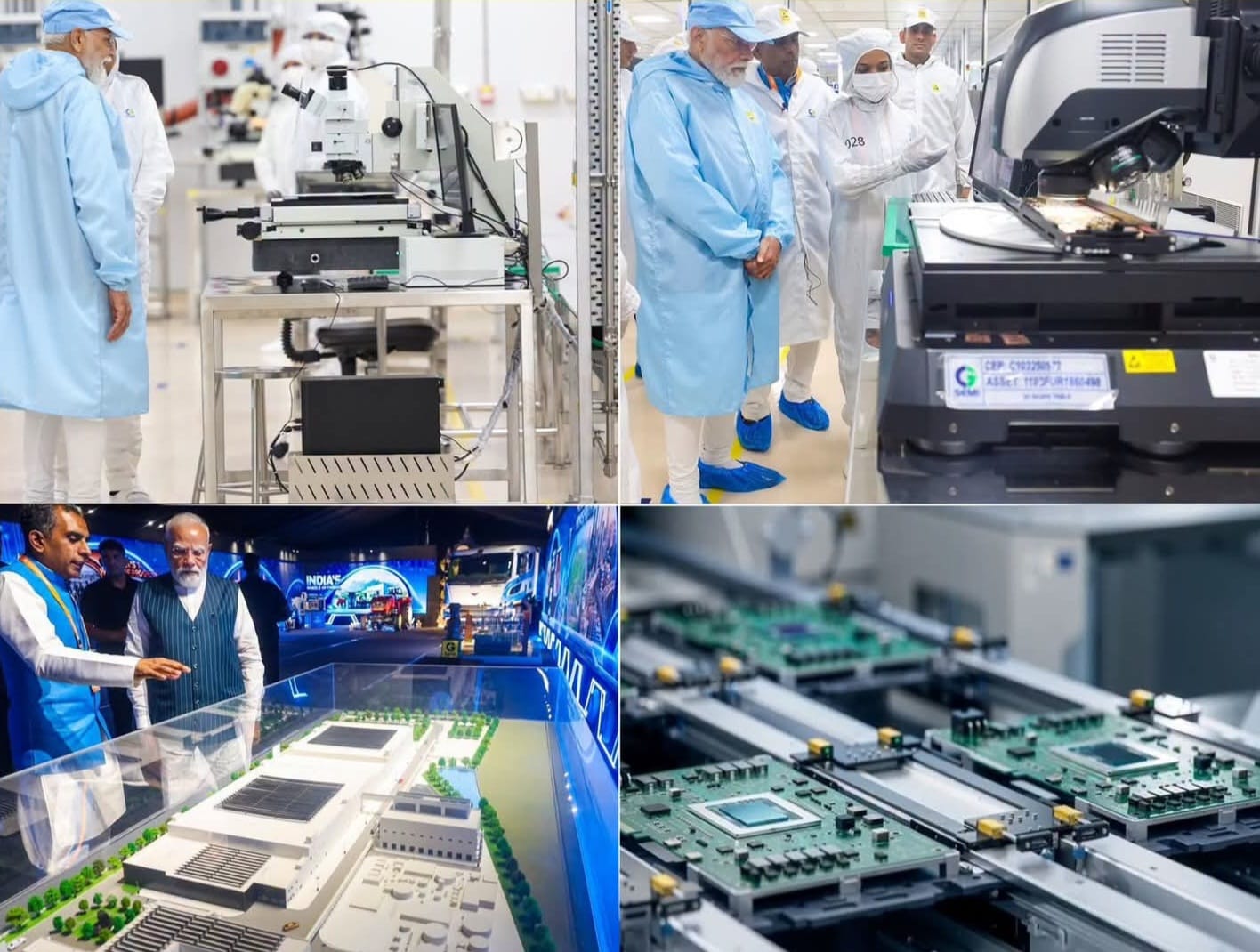
Union Minister Ashwini Vaishnaw confirmed that five semiconductor plants will be operational in India by the end of 2026. The milestone follows the launch of commercial operations at the ₹7,600-crore CG Semi OSAT facility in Sanand, boosting domestic hardware output and cementing India's role in global electronic supply chains.
NEW DELHI — India’s electronic self-reliance initiative achieved a critical milestone as Union Minister for Electronics and IT, Ashwini Vaishnaw, announced that five semiconductor plants are expected to be fully operational across the country by the end of 2026. Speaking at the inauguration of the nation’s third semiconductor unit in Sanand, Gujarat, Vaishnaw outlined an accelerated timeline for the remaining approved facilities. The rapid expansion signifies a structural shift in the global technology supply chain, advancing India's position from an architecture consumer to an international chip production destination.
CG Semi Plant Kickstarts Commercial Production in Sanand
The announcement coincided with Prime Minister Narendra Modi inaugurating the CG Semi Outsourced Semiconductor Assembly and Test (OSAT) facility. Constructed through an investment exceeding ₹7,600 crore, the facility was established via a joint venture with Japan's Renesas Electronics and Thailand’s Stars Microelectronics.
The Sanand plant managed an accelerated development cycle, transitioning from its groundbreaking ceremony on March 13, 2024, to active commercial manufacturing in 27 months. The facility is engineered to produce an initial 20 crore (200 million) chips annually, with long-term scaling targets set at 500 crore (5 billion) chips per year.
The hardware manufactured at the site will primarily serve standard industrial applications, automobiles, and electric scooters. Crucially, a significant portion of this output is designated for export markets, including the United States, Japan, and Europe, embedding India into the global technology ecosystem.
Mapping India's 2026 Semiconductor Infrastructure
Under the framework of the India Semiconductor Mission (ISM), which features a ₹76,000 crore fiscal support program, the Union Cabinet has approved 12 distinct semiconductor projects. The projection of 5 semiconductor plants likely to be operational in India by 2026 end relies on the sequential commissioning of these approved units.
Active Operations and Upcoming Launches
Currently, three facilities have entered active commercial production phases:
Micron Technology (Sanand, Gujarat): An advanced ATMP/OSAT facility focusing on DRAM and NAND flash memory packaging, launched on February 28, 2026.
Kaynes Semicon (Sanand, Gujarat): An operational OSAT plant providing integrated packaging and testing services, commissioned on March 31, 2026.
CG Power / CG Semi (Sanand, Gujarat): The newly opened automotive and industrial-grade packaging unit that commenced production in July 2026.
According to ministry filings, two additional plants—including Suchi Semicon's full-scale setup in Surat and targeted assembly units—are scheduled for inauguration over the coming months to complete the five-plant operational core by late 2026. Concurrently, Tata Electronics’ mega-scale greenfield wafer fabrication foundry in Dholera is continuing advanced construction, with its initial silicon production output projected for the 2026–2027 window.
Technical Specifications and Workforce Social Change
The facilities currently operational represent mature-node processing configurations (28nm and above) rather than sub-7nm leading-edge logic chip manufacturing foundries. Industry data indicates that 28nm legacy chips comprise the sweet spot for the global automotive, consumer appliance, and Internet of Things (IoT) sectors.
Beyond hardware metrics, government officials emphasized the socio-economic impact of the new workforce models. The newly inaugurated CG Semi plant employs a specialized operator cohort composed of young women from Jharkhand, Chhattisgarh, Madhya Pradesh, Bihar, Jammu & Kashmir, Kerala, and Gujarat. These employees were sent to Malaysia for technical training in assembly protocols prior to the plant's opening.
Official Sources Section
The updates regarding the domestic electronics ecosystem have been confirmed via formal statements from the Ministry of Electronics and Information Technology (MeitY) and official project status boards maintained by the India Semiconductor Mission (ISM). System logistics and investment tracking are registered under the central government's Atmanirbhar Bharat monitoring protocols.
Quote Section
Addressing the industry delegates and engineers at the Sanand manufacturing cluster, Union Minister Ashwini Vaishnaw stated:
"By the end of 2026, five semiconductor plants are expected to be operational across the country. This momentum will give a new boost to the Atmanirbhar Bharat mission. India has entered a new era in semiconductors."
Why It Matters
The emergence of 5 semiconductor plants likely to be operational in India by 2026 end fundamentally addresses supply chain vulnerabilities exposed during recent global chip shortages. For domestic automotive manufacturers and electronics assemblers, local sourcing significantly reduces logistics expenses and safeguards against cross-border shipping delays. For global technology firms and institutional investors, India offers a viable diversification node, reducing the systemic risk of geographic concentration in East Asian chip manufacturing.
Key Facts at a Glance
2026 Target Portfolio: Five distinct semiconductor assembly and fabrication facilities will be online by the close of 2026.
Active Production: Three large-scale OSAT facilities are operational as of July 2026.
Economic Footprint: India's broader electronics manufacturing sector has grown to an estimated ₹13 lakh crore value, supporting over 25 lakh jobs.
Global Integration: Microchips manufactured at the Sanand facilities are slated for direct export to the US, Europe, and Japan.
FAQ Section
Q: What specific types of microchips are being produced in India right now?
A: The operational facilities focus on Outsourced Semiconductor Assembly and Test (OSAT) services, packaging DRAM, NAND memory chips, and mature-node legacy chips (28nm and above) utilized in vehicles and industrial machinery.
Q: Where are the primary semiconductor manufacturing hubs located?
A: Sanand and Dholera in Gujarat have emerged as the foundational clusters, alongside emerging project sites in Assam and Uttar Pradesh.
Q: Is India manufacturing high-end artificial intelligence (AI) chips?
A: No. Current infrastructure focuses on mature nodes. Leading-edge logic capabilities (sub-7nm) used for advanced AI accelerators remain concentrated in Taiwan, South Korea, and the US.
Sources: Official Press Release, Ministry of Electronics and IT / Press Information Bureau, Investment and Project Dashboard, India Semiconductor Mission (ISM)