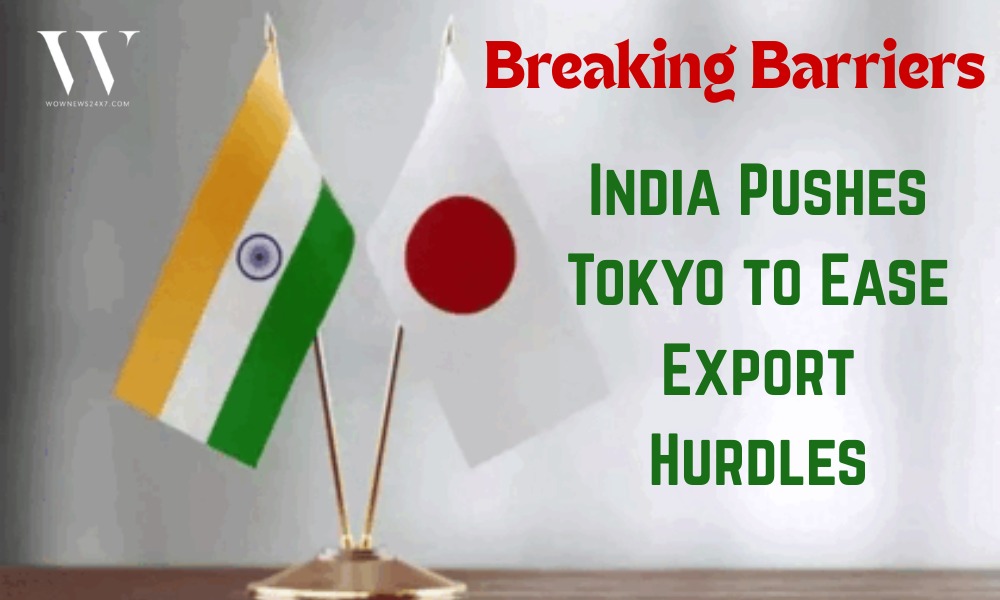
India is pushing Japan to eliminate stringent regulatory hurdles to help boost Indian exports and address a $15 billion bilateral trade deficit. As India and Japan deepen their strategic partnership, New Delhi is calling for fast-track certification pathways for its pharmaceutical and agricultural sectors to ensure equitable market access.
NEW DELHI — The Indian government is actively pressing Japan to address persistent regulatory hurdles that have long constrained the entry of Indian goods into the Japanese market. As India strives to bolster its export performance, Commerce and Industry Minister Piyush Goyal has identified the removal of stringent non-tariff barriers as a priority to help domestic manufacturers better leverage the India-Japan Comprehensive Economic Partnership Agreement (CEPA).
While the two nations recently reaffirmed their "Special Strategic and Global Partnership," the economic relationship faces friction due to a significant trade deficit. India’s exports to Japan stood at roughly $6.04 billion in FY 2025-26, while imports from Japan surged to $21.43 billion. Officials in New Delhi argue that Japan’s rigid phytosanitary standards and complex conformity assessment procedures are effectively stifling the potential of Indian pharmaceuticals, agricultural products, and marine exports.
Addressing Barriers to Trade
The ongoing dialogue between New Delhi and Tokyo centers on streamlining technical regulations. Under the CEPA framework, both countries have established sub-committees to manage issues related to Rules of Origin, customs procedures, and standards. However, Indian exporters have frequently reported that "technical regulations" often act as de facto barriers.
In recent months, the Indian Ministry of Commerce has signaled a shift toward a more aggressive stance on these trade frictions. Minister Goyal has frequently emphasized the need for "better market access" and has instructed officials to enhance monitoring frameworks to ensure that trade policies are effectively implemented on the ground. The push to ease these hurdles comes at a critical time, as India aims to reach a merchandise export target of $1 trillion by 2026-27.
Strategic Economic Alignment
The timing of these discussions is significant, coinciding with Japanese Prime Minister Sanae Takaichi’s official visit to New Delhi. During the summit-level talks, leaders are expected to focus on building resilient supply chains and deepening cooperation in critical sectors such as semiconductors, critical minerals, and green energy.
According to officials, while India remains committed to the Special Strategic and Global Partnership, it is increasingly looking to move beyond a "buyer-seller" dynamic. The government is pushing for deeper industrial collaboration, including technology transfers and mutual recognition agreements (MRAs) that would allow Indian products to bypass duplicative testing requirements upon entering Japan.
Why It Matters
For Indian exporters, particularly in the MSME and pharmaceutical sectors, the removal of these regulatory roadblocks is essential for competitive pricing and timely market access. If Japan eases its compliance requirements, Indian businesses could significantly increase their footprint in one of the world's most sophisticated consumer markets. Conversely, for Japan, partnering with India offers a strategic "plus-one" production base as it looks to diversify its supply chains away from over-reliance on a single region.
Key Facts at a Glance
Trade Imbalance: India faces a bilateral trade deficit with Japan, with imports ($21.43B) significantly outweighing exports ($6.04B) in FY 2025-26.
Primary Friction: Indian exporters report that non-tariff barriers, rigid phytosanitary standards, and complex conformity procedures limit the export of pharmaceuticals and agricultural goods.
Strategic Goal: India aims to utilize the India-Japan CEPA Joint Committee to establish fast-track regulatory pathways and mutual recognition agreements.
Bilateral Engagement: Commerce Minister Piyush Goyal is leading efforts to align trade policies with India's "Make in India" and export-promotion mandates.
FAQ
What specific "regulatory hurdles" is India referring to?
These primarily include stringent non-tariff barriers such as rigid phytosanitary (plant health) standards for agricultural exports, complex technical regulations, and lengthy conformity assessment procedures for pharmaceutical and industrial products.
Why is India concerned about the trade deficit with Japan?
With imports at $21.43 billion against exports of $6.04 billion, the deficit exceeds $15 billion, prompting India to seek better market access to balance its trade account.
How does the CEPA agreement fit into this?
The Comprehensive Economic Partnership Agreement (CEPA) is the primary framework for India-Japan trade. It covers goods, services, and investment, but India is now seeking to address implementation issues that prevent the agreement from reaching its full potential.
Source: Ministry of External Affairs, India, Embassy of India, Tokyo, IBEF Trade Reports, Drishti IAS Analysis