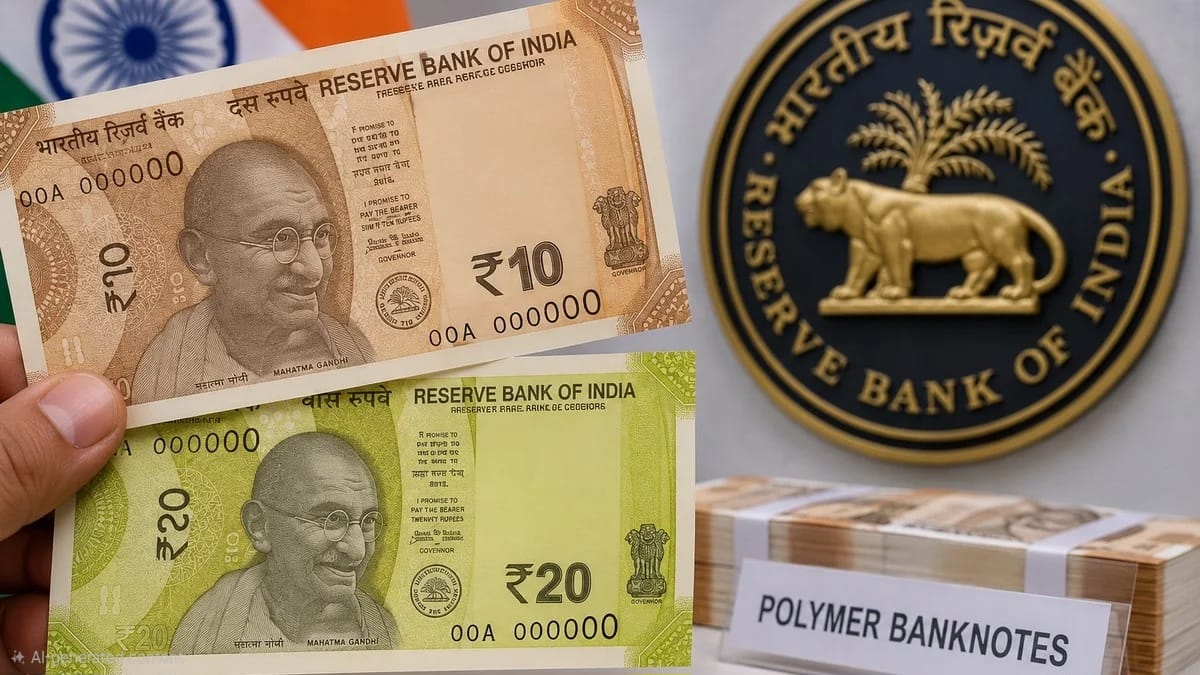
The Reserve Bank of India plans to introduce ₹10 and ₹20 polymer banknotes by early FY28 to replace rapidly wearing paper notes. The transition aims to improve currency durability, enhance security against counterfeiting, and lower long-term printing and operational cash-management costs across the nation's financial ecosystem.
MUMBAI — The Reserve Bank of India (RBI) is preparing to introduce ₹10 and ₹20 polymer banknotes into public circulation by early FY28 as part of a strategic initiative to enhance currency durability and reduce long-term printing costs.
Strategic Transition to Polymer Currency
The central bank's initiative to transition lower-denomination banknotes to synthetic polymer substrate follows extensive field trials and material evaluations. Lower-denomination notes, particularly ₹10 and ₹20 denominations, experience high velocity of circulation in daily retail transactions, resulting in rapid physical soilage and frequent destruction.
According to official updates from banking authorities, polymer notes offer a significantly longer operational lifespan—up to four times that of traditional cotton-paper banknotes. Synthetic notes are resistant to moisture, dirt, and tearing, making them particularly suitable for high-frequency micro-transactions across India's diverse climatic zones.
Implementation Timeline and Manufacturing Logistics
The phased introduction scheduled for early FY28 allows the central bank, Security Printing and Minting Corporation of India Limited (SPMCIL), and commercial banking networks to align production lines, calibrate automated teller machines (ATMs), and update sorting equipment.
Key operational milestones include:
Substrate Sourcing: Establishing secure supply chains for advanced polymer substrates integrated with proprietary security features.
Cash Handling Adaptation: Upgrading currency verification and counting machines across public and private sector bank branches.
Phased Rollout: Gradual distribution through banking channels while concurrently retiring worn cotton-paper notes without causing disruption to public transactions.
Official Sources
Developments regarding currency substrate upgrades and circulation timelines reflect official updates from the Reserve Bank of India and filings from the Ministry of Finance.
Official Statement
According to officials familiar with currency management operations, the adoption of polymer notes aims to deliver substantial environmental and economic efficiencies over the currency lifecycle by drastically reducing the frequency of reprint cycles.
Why It Matters
For citizens and retail merchants, polymer banknotes mean cleaner, more resilient cash that resists tearing and water damage during daily use. For the banking sector and the central government, the extended lifespan of polymer substrate significantly lowers recurring cash management, transportation, and re-printing expenses, while advanced security features strengthen anti-counterfeiting safeguards.
Key Facts at a Glance
Target Target Date: Early Financial Year 2028 (FY28).
Target Denominations: ₹10 and ₹20 banknotes.
Primary Material: High-durability synthetic polymer substrate.
Core Advantage: Increased lifespan, moisture resistance, and enhanced anti-counterfeiting features.
Frequently Asked Questions
Will existing paper ₹10 and ₹20 notes remain legal tender?
Yes. Existing paper banknotes will remain valid legal tender and will be gradually withdrawn through natural bank intake as polymer notes enter circulation.
Why are ₹10 and ₹20 notes being prioritized for polymer substrate?
Lower-denomination notes circulate at the highest frequency among consumers and small businesses, making them prone to rapid wear and tear compared to higher-value notes.
Are polymer notes environmentally friendly?
While synthetic, polymer notes require less frequent replacement, reducing overall paper pulp consumption, chemical processing, and transport emissions over their extended lifespan.
Source: Reserve Bank of India, Ministry of Finance