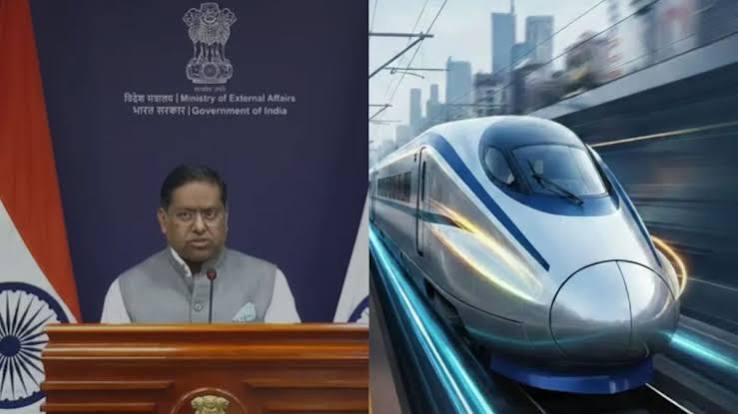
India’s first bullet train project is set to launch its first section in 2027 using indigenously manufactured high-speed trains. Japan will supply its next-generation E10 Shinkansen series in the early 2030s once development is complete, with both nations confirming that the bilateral infrastructure partnership remains firmly on track.
NEW DELHI — The Indian government has confirmed that the first phase of the Mumbai-Ahmedabad High-Speed Rail (MAHSR) corridor, India’s maiden bullet train project, will commence passenger operations using indigenously developed high-speed trains. This strategic decision ensures the project remains on schedule for its phased launch, with the initial operational stretch expected to open in 2027.
The clarification follows recent discussions regarding the timeline for deploying Japan's next-generation E10 Shinkansen trainsets. According to the Ministry of External Affairs (MEA), while Japan remains a key partner providing technological and financial support, the E10 series is currently still under development. Consequently, both nations have agreed to initiate services with Indian-made high-speed trainsets, with the advanced Japanese technology set to be integrated into the network in the early 2030s.
Accelerating Construction and Domestic Capability
Construction on the 508-km corridor has accelerated significantly, overcoming earlier challenges related to land acquisition and project logistics. The rail line, which will connect Mumbai’s Bandra Kurla Complex with Ahmedabad, is designed for operational speeds of up to 320 kmph, potentially reducing travel time between the two cities from approximately eight hours to two hours.
In tandem with the infrastructure progress, India is bolstering its domestic manufacturing capabilities. The "B28" (Bharat-made) high-speed trainset is currently under development by BEML at its Bengaluru facility. These trains are designed with an operational speed of 250 kmph and will feature modern passenger amenities, including air-conditioned chair cars, rotatable seats, and advanced infotainment systems, ensuring that initial services meet international comfort standards.
Addressing Cooperation Concerns
The government’s announcement comes amid recent media reports regarding individual criticisms from a former Japanese minister concerning project timelines and signalling systems. Indian officials have firmly rejected these claims, characterizing them as individual opinions that do not reflect the robust state of bilateral cooperation.
"India-Japan discussions on the Mumbai-Ahmedabad high-speed train are in fact progressing well," stated MEA spokesperson Randhir Jaiswal. Officials further clarified that the signalling equipment has been ordered in alignment with international specifications and that the project execution remains in line with the shared goal of launching high-speed services at the earliest possible date.
Why It Matters
For travelers, this phased approach marks the beginning of a new era in Indian rail travel, promising drastically reduced travel times and a modern commuting experience. For the national infrastructure sector, the ability to launch the service using domestic trainsets while preparing for the integration of cutting-edge Japanese Shinkansen technology underscores India's evolving self-reliance in high-speed rail engineering and operations.
Key Facts at a Glance
Initial Launch: Phased passenger operations are scheduled to begin in 2027, starting with the Surat-Bilimora section.
Train Fleet: Initial services will utilize domestically manufactured high-speed trains (B28 series), with Japanese E10 Shinkansen trains to follow in the early 2030s.
Project Speed: The corridor is designed for speeds up to 320 kmph, targeting a two-hour transit time between Mumbai and Ahmedabad.
Infrastructure Scope: A 508-km corridor connecting Mumbai, Gujarat, and Dadra and Nagar Haveli with 12 stations.
FAQ
Why is the Japanese E10 train not being used immediately?
The E10 series Shinkansen is currently under development in Japan, so both nations agreed to launch initial operations using Indian-manufactured high-speed trainsets.
When will the first bullet train service begin?
The first section of the corridor is expected to open for passengers by August 15, 2027.
Is the project still utilizing Japanese technology?
Yes, the project continues to be built with Japanese Shinkansen technology and financial assistance from the Japan International Cooperation Agency (JICA).
Source: Ministry of External Affairs (MEA), Indian Express, Times of India, Business Today