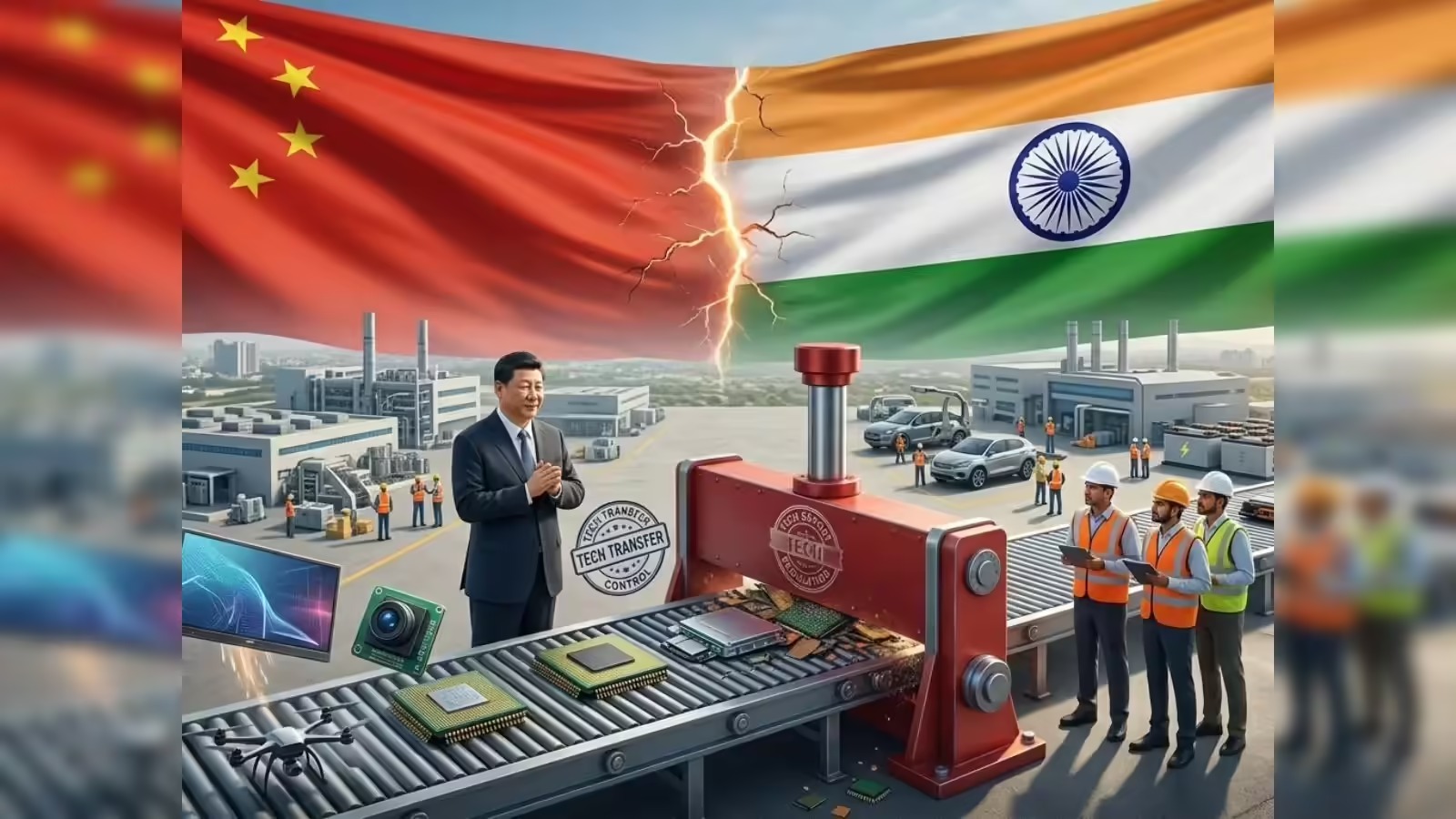
Shares of major Indian electrical equipment companies fell between 4.2% and 6.4% on July 3, 2026. The downturn followed a government decision to allow four Chinese firms to bid for state procurement orders, a move aimed at bridging a 40% domestic deficit in critical power transmission components.
MUMBAI — Shares of leading Indian electrical equipment manufacturers fell sharply during morning trading on Friday, July 3, 2026, following a major regulatory adjustment in cross-border trade policies. In a dynamic multi-departmental briefing issued late Thursday evening, the Government of India confirmed it has formally authorized four major Chinese engineering corporations to participate directly in state procurement orders. The decision exempts these specific foreign suppliers from the strict political and security clearance registration rules enforced since the 2020 Himalayan border standoffs, immediately intensifying price competition across the power transmission grid ecosystem.
Heavy Selling Hits Major Domestic Power Equipment Makers
The sudden integration of lower-cost manufacturing options triggered a wave of institutional selling across the industrial baskets of the National Stock Exchange of India (NSE). Shares of state-run engineering giant Bharat Heavy Electricals Limited (BHEL) dropped 6.4% in high-volume trade, while private sector alternatives including CG Power and Industrial Solutions and Siemens India slid between 4.2% and 5.7%.
Technical traders note that the correction reflects fears of pricing compression, as Chinese manufacturers historically price equivalent heavy transformers, high-voltage switchgear, and grid automation assemblies roughly 10% to 20% lower than their domestic counterparts. Prior to this policy shift, local original equipment manufacturers (OEMs) enjoyed a highly protected domestic environment, supported by a seven-year order book backlog that insulated margins from global cost-undercutting.
Strategic Exemptions Address 40% Grid Component Shortage
According to institutional readouts circulated by the inter-ministerial panel on industrial infrastructure, the calibrated policy shift was enacted primarily under "national interest" parameters to eliminate project execution delays. India has committed to a massive green transformation, targeting the installation of 500 gigawatts (GW) of non-fossil capacity by 2030. However, domestic manufacturing capacity has struggled to keep pace with demand, pushing import dependence up to 33%.
The Ministry of Power confirmed that transmission project developers faced an impending 40% structural shortfall in high-capacity transformers and critical reactors over the next three years if foreign supply chains remained blocked. To protect domestic manufacturing capability from broad supply shocks, the government chose to grant specific, case-by-case bidding waivers to four approved Chinese enterprises specializing in large-scale transmission components rather than fully reopening open procurement to all border-sharing nations.
Official Sources Section
The financial indicators, stock adjustments, and administrative trade exemptions detailed in this regulatory report are derived from:
Executive Statements
"The exemption has been granted in the national interest, as fully blocking Chinese imports would ultimately hurt India's long-term manufacturing capability and delay vital grid integration timelines. The calibrated shift balances localized capacity shortfalls against strategic security parameters."
— Official Bureaucratic Joint Statement, Inter-Ministerial Infrastructure Panel
According to officials close to state-run utilities like NTPC, government-owned generation platforms will continue to prioritize localized sourcing for core thermal units, minimizing any structural disruption to the long-term order books of domestic infrastructure suppliers.
Why It Matters
The structural adjustment carries wide-ranging practical implications across multiple economic sectors:
For Project Developers: Power transmission firms gain immediate access to critical high-voltage equipment, allowing them to complete grid connections on schedule.
For Power Consumers: Enhanced supply chain competition reduces overall capital expenditure outlays for state utilities, helping to limit increases in retail electricity tariffs.
For Capital Investors: Equity holdings in domestic Indian electrical equipment companies face near-term valuation adjustments as corporate profit margins adapt to incoming foreign price competition.
Key Facts at a Glance
Market Slide: Shares of prominent Indian electrical equipment makers dropped between 4.2% and 6.4% following the policy update.
Regulatory Relief: Four Chinese manufacturing entities received official exemptions from the 2020 political and security registration clearance mandates.
Supply Shortfalls: The policy adjustment addresses an immediate 40% supply gap in high-capacity transformers and power reactors.
Targeted Approach: The government will utilize a case-by-case waiver process for critical equipment imports rather than executing a full reopening of the state contract market.
FAQ Section
Why did the government ease procurement rules for Chinese firms now?
The relaxation was driven by persistent infrastructure bottlenecks and equipment shortages. Local manufacturers faced a 40% supply gap for critical power transmission components, risking severe delays to India's target of adding 500 GW of clean energy capacity by 2030.
Will this policy change fully expose domestic companies to aggressive foreign dumping?
No. The inter-ministerial panel emphasized that the relaxations are limited to four specific companies under a case-by-case waiver framework, ensuring that national security parameters and local manufacturing growth remain protected.
How are domestic engineering firms expected to respond to the price competition?
Indian manufacturers are expected to focus heavily on execution efficiency and cost-optimization strategies. Given their extensive multi-year order backlogs, analysts expect these firms to maintain high utilization rates while gradually adjusting product pricing.
Source: National Stock Exchange of India, BSE India Listing Centre, Ministry of Power Gazetted Notifications, Reuters Economy Bulletins.