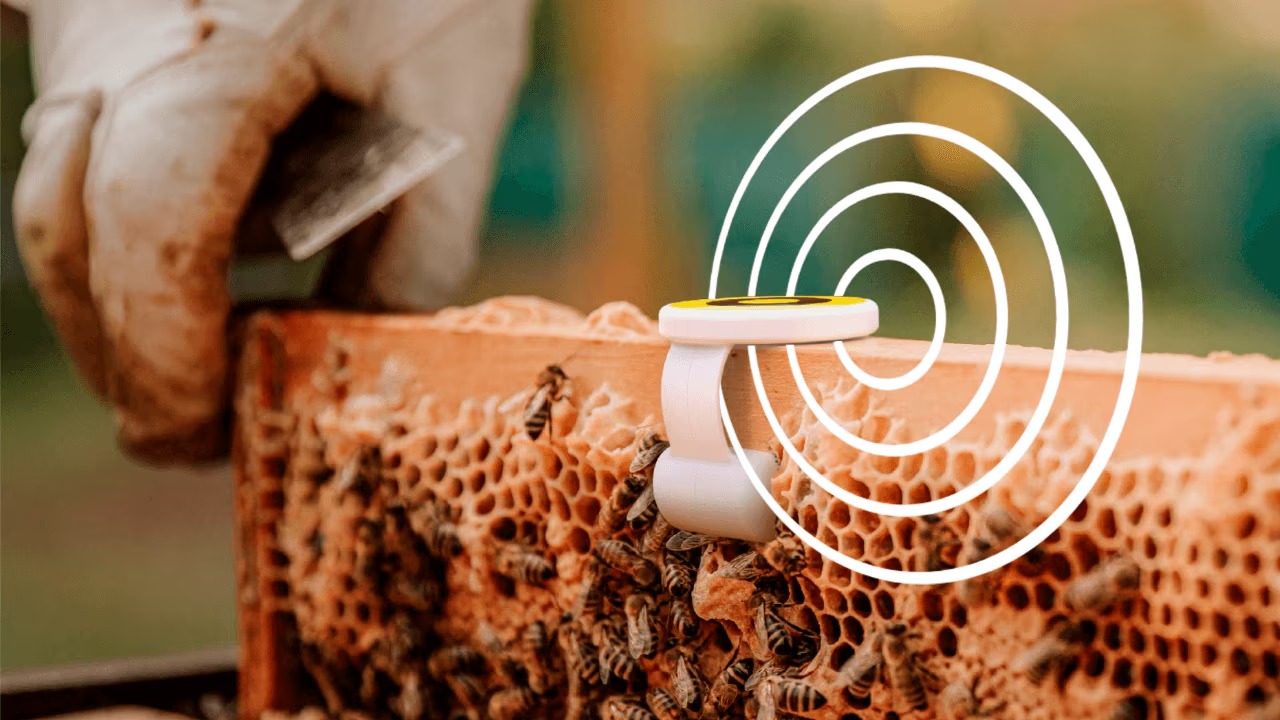
Three Indian professors have developed an indigenous, affordable "Smart Honeycomb Monitoring Device" to modernize beekeeping. By using internal cameras and data-driven insights to track queen health, pest threats, and environmental impacts, this patent-protected invention helps small-scale beekeepers increase honey yields and prevent colony loss at a fraction of global costs.
Three Indian researchers are revolutionizing apiculture by developing indigenous, affordable smart beehives to monitor colony health and boost honey yields.
A Tech-Driven Approach to Bee Conservation
In a major leap for Indian apiculture, a team of three professors has developed an indigenous "Smart Honeycomb Monitoring Device" designed to protect bee colonies from disease and environmental shifts. The project, led by Radhakrishna Pandit, former head of the department of zoology at Savitribai Phule Pune University, alongside Vikram Kakulte and Balasaheb K. Tapale, aims to democratize advanced bee surveillance at a fraction of the cost of international alternatives.
As bee populations face increasing threats from climate change, habitat loss, and pesticides, global food security is increasingly at risk. While advanced smart surveillance systems in the West often cost upwards of ₹14,000 per hive, this new Indian-made device can be built for as little as ₹2,000.
Innovation Inside the Hive
The smart monitoring device consists of a wooden beekeeping box equipped with built-in cameras capable of tracking bee activity and behavior in real-time. Unlike traditional manual inspections, which often disturb the colony, this technology allows beekeepers to monitor internal conditions non-invasively.
According to the researchers, the system provides critical insights, including:
Queen Health: The cameras enable beekeepers to monitor egg-laying patterns, allowing them to replace older queens when laying rates decline, thereby stabilizing the hive.
Disease Early-Warning: The system helps identify the onset of infections and parasitic threats, such as wax moths that thrive in the humid conditions of the monsoon season.
Environmental Insights: By tracking how bees respond to different locations or food sources, such as nearby orchards, farmers can strategically relocate hives to maximize pollination and honey production.
"The greatest advantage was that its cameras helped us track the queen's laying habits," says Gautam Demase, a Nashik-based beekeeper who tested the prototypes. "When we saw the bees were taking to two new pomegranate saplings we planted, we were able to safely bring more hives closer to the trees and increase honey production."
Bridging the Cost Gap
The device was granted a design patent in 2022, marking a significant milestone in Indian "bee-tech." The professors are currently refining prototypes across various price ranges and seeking financial backing for a commercial rollout. Their work is part of a broader trend of Indian researchers applying local ingenuity to solve complex agricultural problems, mirroring advancements in fields ranging from space exploration to healthcare.
Ramnath Andhale, an assistant professor of genetics who consulted on the project, noted that the device is especially vital for preventing colony collapse. "Spikes in humidity can cause female moths to fly into hives and lay eggs," he explained. "They can then lay over 200 at a time, which can hatch as larvae and cause entire hives to collapse. Such an event can be prevented with early alerts."
Why It Matters
For India, the world’s eighth-largest honey producer, this innovation holds significant potential to professionalize small-scale beekeeping. By providing data-driven management, the device helps transform traditional apiculture—often treated as a reactive art—into a proactive, precise science. This transition is essential for increasing yields and ensuring that the small-scale farmers who form the backbone of the industry can compete in an increasingly difficult environmental landscape.
Key Facts at a Glance
Indigenous Innovation: The Smart Honeycomb Monitoring Device, granted a design patent in 2022, is one of the first of its kind built in India.
Affordability: The system can be manufactured for roughly ₹2,000, significantly undercutting Western equivalents that start at ₹14,000.
Key Features: Integrated cameras monitor the queen’s health, detect pest infestations, and analyze foraging behavior.
Development Team: Developed by Radhakrishna Pandit (Savitribai Phule Pune University), Vikram Kakulte (KTHM College), and Balasaheb K. Tapale (MN Deshmukh College).
FAQ
1. How does the device monitor bee behavior without disturbing the colony?
The system uses built-in cameras housed within the wooden hive box, allowing for remote, non-invasive observation of the brood chamber and queen activity.
2. Why is monitoring humidity inside the hive so important?
High humidity levels can attract pests like wax moths, whose larvae can destroy a hive. Monitoring these levels allows beekeepers to take preventive measures before a total colony collapse occurs.
3. Is this technology available for commercial purchase?
The professors have tested several successful prototypes and are currently seeking financial backing to facilitate a mass-market commercial rollout.
4. How does this help improve honey yields?
By monitoring the health of the queen and the proximity of bees to floral sources, beekeepers can make evidence-based decisions about hive placement and colony maintenance, directly impacting productivity.
Source: Hindustan Times