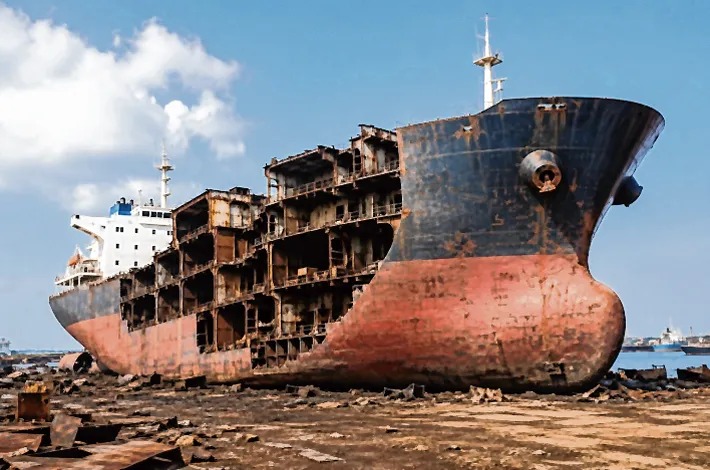
India has become the world’s leading ship recycling nation, capturing 35.4% of the global market in 2025 by processing nearly 3 million gross tonnes of vessels. Through policy reforms and HKC compliance, the country achieved its Maritime India Vision 2030 targets five years ahead of schedule, with plans to further double capacity.
India has surpassed its 2030 Maritime Vision targets, capturing 35.4% of the global ship recycling market and processing nearly 3 million gross tonnes in 2025.
A Landmark Achievement in Maritime Industry
India has officially cemented its status as the world’s leading destination for ship recycling, achieving a major strategic milestone well ahead of schedule. According to the latest data from the United Nations Conference on Trade and Development (UNCTAD), India’s share of global ship recycling activity rose to 35.4% in 2025, up from 30.1% the previous year.
The surge in activity saw India process 2.99 million gross tonnes (GT) of ships in 2025, marking a nearly 60% increase from the 1.86 million GT recorded in 2024. This performance fulfills a key objective of the "Maritime India Vision 2030" five years early, signaling the success of sustained policy reforms and infrastructure modernization.
Policy Reforms Driving Market Leadership
The Ministry of Ports, Shipping and Waterways (MoPSW) attributes this rapid growth to a coordinated strategy involving legislative action, financial incentives, and strict adherence to international safety protocols. A cornerstone of this strategy is the Recycling of Ships Act, 2019, which aligned India’s domestic regulatory framework with the Hong Kong International Convention for the Safe and Environmentally Sound Recycling of Ships (HKC).
To facilitate this transition, the government provided ₹53.5 crore in financial assistance to modernize facilities, resulting in 115 ship recycling yards achieving HKC compliance. Additionally, the launch of the Ship-breaking Credit Note Scheme has created a "virtuous cycle" for the maritime sector. Under this program, ship owners receive credit notes equivalent to 40% of a recycled ship's scrap value, which can be utilized to offset up to 5% of the cost of commissioning a new vessel at an Indian shipyard.
Expansion Plans and Future Outlook
The Alang Ship Recycling Yard in Gujarat remains the backbone of the industry, accounting for approximately 97% of India's ship recycling activities. To capitalize on the forecasted global demand—with over 16,000 vessels expected to be recycled worldwide over the next decade—the government is planning a significant capacity expansion.
"India’s emergence as the world’s top ship recycling nation reflects the success of sustained policy reforms, industry efforts, and adherence to international environmental and safety standards," said Union Minister of Ports, Shipping and Waterways, Sarbananda Sonowal.
The government, in collaboration with the Gujarat state administration, is preparing a comprehensive master plan to nearly double India's ship recycling capacity to approximately 9 million light displacement tonnes (LDT). This expansion is designed to position India not just as a hub for recycling, but as a holistic maritime powerhouse capable of integrating recycling with large-scale domestic shipbuilding.
Why It Matters
India’s ascent to the top of the global ship recycling market has profound economic and environmental implications. By establishing a formalized, safe, and sustainable ship recycling ecosystem, the nation is actively contributing to the circular economy. For the domestic industry, this leadership provides a steady supply of steel and recycled components, while simultaneously driving job creation and fostering the growth of local shipbuilding infrastructure.
Key Facts at a Glance
Global Market Share: India now holds a 35.4% share of the global ship recycling market.
Tonnage Growth: Processed 2.99 million GT in 2025, a 60% increase year-on-year.
Infrastructure: 115 ship recycling yards are now fully HKC-compliant.
Future Goal: Plans to double capacity to 9 million LDT through the expansion of the Alang Ship Recycling Yard.
FAQ
1. What is the Hong Kong International Convention (HKC)?
The HKC is an international treaty aimed at ensuring that the recycling of ships does not pose unnecessary risks to human health, safety, and the environment.
2. How does the Ship-breaking Credit Note Scheme work?
Ship owners receive credits worth 40% of the scrap value of their recycled vessel, which they can use to lower the cost of building a new vessel in India by up to 5%.
3. What role does Alang play in this achievement?
Located in Gujarat, Alang is the world's largest ship recycling hub and accounts for approximately 97% of India's total ship recycling volume.
4. Why is ship recycling considered part of a circular economy?
It allows for the recovery of vast quantities of high-grade steel, electrical components, and machinery from end-of-life vessels, which are then reintroduced into the industrial supply chain
Official Sources