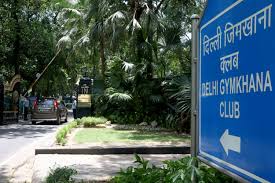
Colonial-era Indian gymkhanas are undergoing a deep cultural and legal re-examination following federal eviction orders against elite establishments like the Delhi Gymkhana Club. Originally built as racially exclusive British fortresses, these private institutions face intense scrutiny over their historic dress code restrictions, nepotistic waiting lists, and prolonged use of valuable public land.
NEW DELHI — India’s historic gymkhanas and elite private clubs are facing a defining institutional crisis as a wave of government eviction orders and public scrutiny forces a re-examination of their colonial-era origins. The Ministry of Housing and Urban Affairs recently ordered the iconic Delhi Gymkhana Club (DGC)—established in 1913 and situated on 27 acres of prime real estate next to the Prime Minister’s residence—to vacate its public land. This legal battle has reignited an intense national debate over the lingering hierarchies of the British Raj.
The development has sent shockwaves through the country's most exclusive recreational enclaves, stretching from Mumbai and Kolkata to Chennai. Originally structured to protect the social comfort of European administrators, these entities are under growing pressure to fully decolonize their strict dress codes, decade-long waiting lists, and restrictive gatekeeping mechanisms that critics argue remain inherently anti-national.
The Birth of the Gymkhana as an Imperial Fortress
The institutional architecture of the Indian gymkhana was forged in the mid-19th century as a direct tool of imperial separation. The term itself is believed to have mutated from the Persian jamat-khana, meaning "place of assembly," yet its operational structure was entirely British. Following the consolidation of the empire, European administrators sought spaces to reproduce the familiarity of their home country while living in what they perceived as an alien environment.
According to historical research archives compiled by regional cultural institutions, early hubs like the Bengal Club (1827) and the Byculla Club in Bombay functioned as exclusive social fortresses. In June 1875, the establishment of the Bombay Gymkhana consolidated separate white-only cricket, polo, and football associations into a single, high-society entity. Backed by the Governor of Bombay as its patron, the club enforced strict racial lines. Indians were explicitly barred from entry, except when employed in domestic service roles as sweepers and cooks, or under highly controlled conditions as visiting athletic competitors.
Sartorial Gatekeeping and Cultural Exclusion
As the 20th century progressed, the primary mechanism of maintaining these social barriers shifted from outright racial segregation to strict behavioral and sartorial policing. To enter a gymkhana was to submit to a meticulous regime of rules governing attire, etiquette, and belonging.
Historical club records preserve a lengthy series of high-profile confrontations between local cultural figures and anglicized club management:
The Madras Club historically removed celebrated author Khushwant Singh from its premises for wearing leather sandals instead of closed-toed Western shoes.
The Calcutta Swimming Club famously expelled musician Anand Shankar for appearing in traditional Indian attire rather than a Western button-down shirt and trousers.
The Willingdon Sports Club in Bombay asked world-renowned artist M.F. Husain to leave after he arrived at the facility barefoot.
Even when growing cohorts of Indian Civil Service (ICS) officers and royals gained entry in the decades leading up to 1947, social assimilation remained a prerequisite. Indigenous members were expected to master British ballroom dancing, bridge, and specific dining habits to prove their "clubbability."
Official Sources Section
Investigative dossiers published by the Ministry of Housing and Urban Affairs and judicial petitions filed in the Delhi High Court reveal that the current friction centers on the economics of privilege. Government data outlines that many colonial-era clubs continue to occupy exceptionally valuable public land under lease terms drafted over a century ago.
According to historical directories maintained by the National Archives of India, the proliferation of these institutions was extensive:
Total Outposts: By 1947, there were 667 operational elite clubs scattered across the Indian subcontinent.
Demographic Shift: While the word "Imperial" was dropped from institutions like the Delhi Gymkhana post-independence, the underlying administrative structures remained virtually untouched.
Quote Section
Commenting on the societal underpinnings of the ongoing real estate and cultural disputes, independent public analysts tracking the legal proceedings stated:
"According to officials, what looked like decolonization at independence was, in reality, a transfer of gatekeeping. The British sahibs handed the keys to an anglicized class of Indian bureaucrats, generals, and executives, who reproduced the exact same hierarchies and rituals of belonging that defined the colonial era. The current real estate audits represent a broader effort to ensure public lands serve democratic interests rather than insular networks."
Why It Matters
For ordinary citizens and contemporary policymakers, the legal disputes surrounding the gymkhanas symbolize a broader movement to democratize urban public spaces. For over a century, thousands of square meters of prime metropolitan land have been reserved for a fraction of a percent of the population.
While these private clubs maintain the constitutional right to set their own member criteria and dress rules, the termination of historic, low-cost public land leases means these spaces may finally be repurposed for broader civic use, public parks, or modern municipal infrastructure.
Key Facts at a Glance
Land Disputes: Major colonial-era clubs, including the Delhi Gymkhana Club, face eviction orders from the central government over the usage of highly valuable public land.
Colonial Roots: Gymkhanas were originally established in the 19th century as exclusive, white-only sanctuaries to replicate British domestic life for imperial officers.
Dress Code Protests: Historically, these clubs penalized traditional Indian clothing, sparking notable public standoffs with figures like Khushwant Singh and M.F. Husain.
Gatekeeping Legacy: Despite replacing tuxedos with bandhgalas over the decades, many clubs still enforce membership waiting periods that span more than 30 years.
FAQ Section
Q1: Why did the British create separate "Gymkhanas" alongside traditional social clubs?
While traditional social clubs focused primarily on dining, drinking, and card games, gymkhanas were established to combine those social amenities with sprawling outdoor sports fields, such as cricket ovals, tennis courts, and polo grounds.
Q2: How did the Willingdon Sports Club in Mumbai change the exclusionary pattern?
Established in 1917 by Governor Lord Willingdon, the club was created as a specific response to the strict "Europeans-only" policies of the era, deliberately inviting elite Indian gentlemen and foreign administrators to socialize within the same space.
Q3: Are traditional Indian outfits like kurtas still banned in these clubs today?
Following decades of public pushback, most prominent gymkhanas have updated their formal regulations to allow refined national dress, such as buttoned bandhgalas and formal kurtas, though strict bans on casual round-neck T-shirts, rubber slippers, and collarless shirts remain common.
Source: National Archives of India Historical Club Registries, Ministry of Housing and Urban Affairs Land Audit Reports, and Delhi High Court Property Filings.