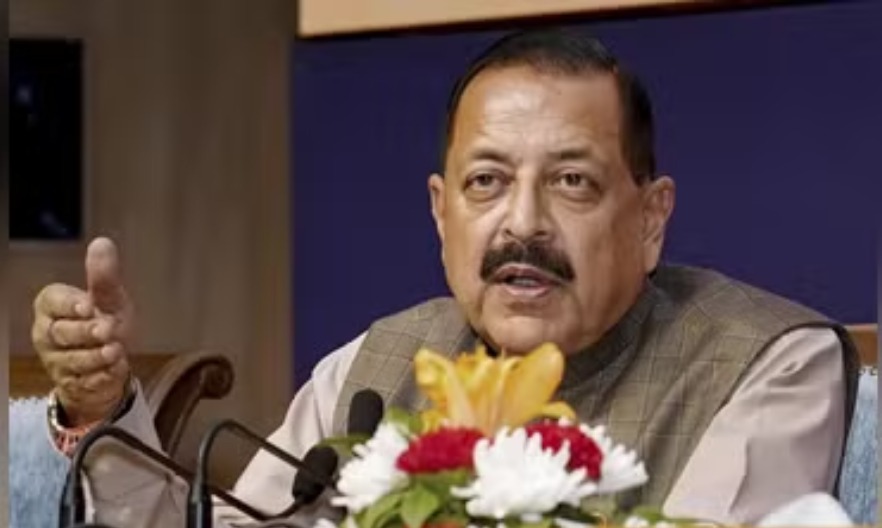
Union Minister Dr. Jitendra Singh announced at the RISE Conclave 2026 that India's startup ecosystem has generated nearly 25 lakh jobs over the past decade. Scaling from 350 to 2.3 lakh ventures, more than half of these enterprises now emerge from tier-2 and tier-3 cities, signaling decentralized economic growth.
BENGALURU — India’s startup ecosystem has emerged as a primary driver of national employment, generating nearly 24 to 25 lakh jobs over the past ten years, Union Minister of State Dr. Jitendra Singh announced on Saturday. Speaking at the RISE Conclave 2026, Dr. Singh detailed the structural transformation of the domestic market, revealing that the country’s total startup register has escalated from approximately 350 ventures a decade ago to nearly 2.3 lakh active enterprises today.
The high-profile technology summit, organized under the central theme "Innovation & Entrepreneurship Driven Growth for Viksit Bharat 2047," brought together cross-sector policymakers, academic researchers, and venture capital syndicates. The data highlights a decade-long transition, positioning India formally as the world’s third-largest startup ecosystem behind the United States and China.
Decentralizing Innovation Beyond Metropolitan Hubs
A significant finding highlighted in the government report is the rapid decentralization of enterprise capital away from traditional tier-1 metropolitan technology hubs. According to official data presented by the Ministry of Science and Technology, more than 50% of India’s recognized startups are now operating out of tier-2 and tier-3 regional municipalities.
This geographic shift indicates that entrepreneurial infrastructure, high-speed digital public networks, and early-stage seed funding have penetrated smaller urban centers. Dr. Singh noted that local accessibility has democratized wealth creation, allowing individuals with specialized technological aptitude to launch high-growth enterprises regardless of their geographic location or formal institutional pedigree. Furthermore, demographic tracking records indicate that between 35% and 39% of these newly registered ventures are entirely women-led.
Policy Reforms Open Strategic Fields to Private Capital
The Ministry attributed this systemic expansion to targeted policy shifts initiated by the federal government over the last 12 years. The structural foundations were established by the launch of the "Startup India" initiative in 2015, which introduced tax exemptions, compliance self-attestation, and streamlined patent application processes.
Subsequent regulatory unbundling has successfully integrated private startups into highly sensitive, capital-intensive strategic sectors that were previously state monopolies. For example, the space-tech startup domain has expanded from a single-digit layout to over 400 specialized corporate entities.
The national aerospace incubator "mach33.aero"—founded by the Council of Scientific and Industrial Research-National Aerospace Laboratories (CSIR-NAL)—celebrated five years of operations at the conclave, having successfully commercialized 34 deep-tech aerospace startups. Backed by an expanding sovereign space pipeline, India’s aggregate space economy is valued at $9 billion in 2026, with formal treasury projections targeting a market valuation of $45 billion over the next seven to eight years.
Official Sources Section
According to official administrative disclosures published by the Press Information Bureau (PIB) on behalf of the Ministry of Science & Technology, the Department of Space, and the Ministry of Personnel, Public Grievances & Pensions, the state is actively coordinating frameworks to link institutional laboratory research directly with commercial markets to accelerate product cycles.
Quote Section
"The country's start-up ecosystem, which comprised only around 350–400 start-up entities about ten years ago, has today expanded to nearly 2.3 lakh ventures, making India the world's third-largest start-up ecosystem," stated Union Minister Dr. Jitendra Singh during his keynote address at the RISE Conclave 2026. "The startup movement has emerged as a major driver of employment generation, creating nearly 24–25 lakh jobs over the last decade. Innovation is no longer confined to metropolitan centres."
Why It Matters
For young professionals and engineering graduates, the expansion of the deep-tech sector provides specialized high-value careers inside their home regions, mitigating domestic brain drain. For corporate enterprises and international venture funds, the rising volume of regional startups presents an untapped pool of niche IP and localized software solutions. Structurally, the generation of 25 lakh jobs over a decade highlights how entrepreneurship functions as a core pillar for stabilizing national employment statistics.
Key Facts at a Glance
Employment Impact: India's startup ecosystem has created between 24 and 25 lakh direct and indirect jobs over the past ten years.
Numerical Surge: The total volume of recognized startup operations has grown from under 400 in 2014 to over 2.3 lakh ventures in 2026.
Regional Diversification: Over 50% of active tech startups are now headquartered in tier-2 and tier-3 municipalities.
Strategic Growth: The private space-tech industry has scaled to 400 active companies, driving a sovereign space economy valued at $9 billion.
Inclusive Demographics: Women entrepreneurs now lead between 35% and 39% of the country’s registered startup entities.
Frequently Asked Questions (FAQ)
What official data source confirms the creation of 25 lakh startup jobs?
The statistics were formally presented by Union Minister Dr. Jitendra Singh at the RISE Conclave 2026 in Bengaluru, backed by comprehensive registration audits compiled by the Press Information Bureau (PIB) and the Ministry of Science and Technology.
What has driven the growth of startups in tier-2 and tier-3 cities?
Growth in smaller cities is driven by the democratization of digital public infrastructure, localized incubation centers like CSIR-NAL networks, lowered regulatory barriers under the Startup India program, and reduced operational overheads compared to tier-1 metropolitan cities.
How much is India's space startup economy currently worth?
As of mid-2026, India's space tech and satellite startup economy is valued at approximately $9 billion. Driven by ongoing private sector deregulations, it is officially projected to scale to $45 billion within the next seven to eight years.
Source: Press Information Bureau (PIB) Delhi Event Releases, Ministry of Science & Technology Administrative Records, RISE Conclave 2026 Executive Dossiers, and CSIR-National Aerospace Laboratories (CSIR-NAL) Incubator Progress Reports.