India and New Zealand are set to sign a landmark Free Trade Agreement (FTA) on April 27, 2026, allowing 70% of Indian goods to enter New Zealand duty-free. Commerce Minister Piyush Goyal said the pact will significantly boost exports from MSMEs and traditional sectors, deepening bilateral economic ties.
In a major step toward expanding India’s global trade footprint, Union Commerce and Industry Minister Piyush Goyal announced that the long-awaited India–New Zealand Free Trade Agreement will be signed on April 27. The deal, finalized after years of negotiations, promises to open new export avenues for Indian businesses, particularly micro, small, and medium enterprises (MSMEs).
Key Trade Provisions
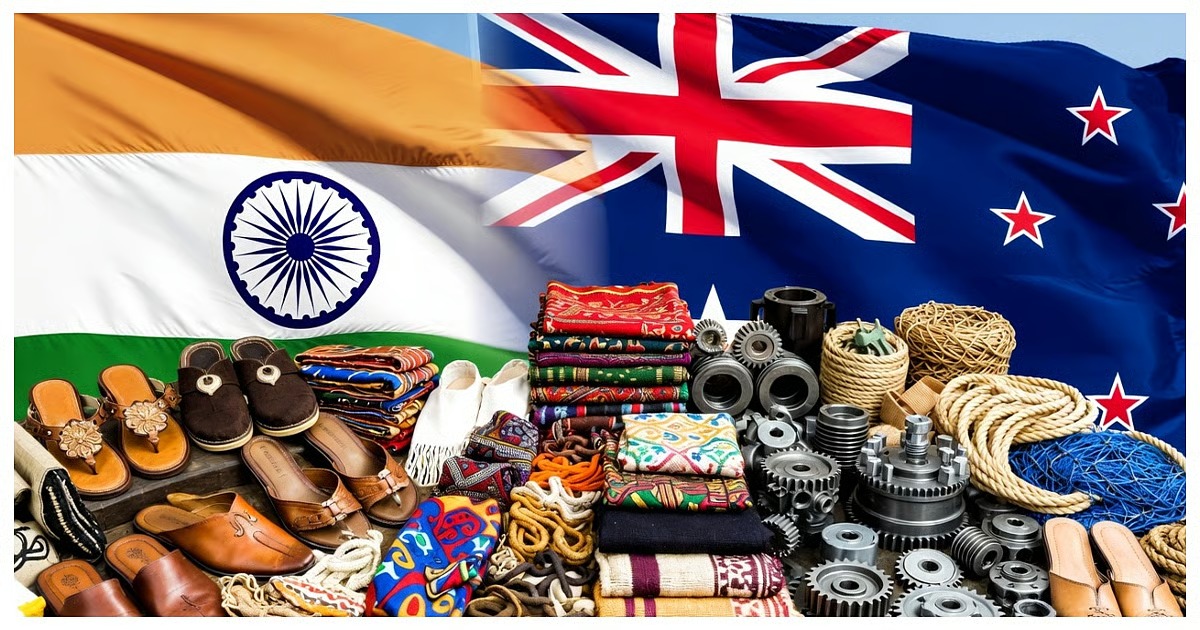
Under the agreement, 70% of Indian goods will enter New Zealand without import duties, offering a substantial advantage to exporters in sectors such as leather, handloom, handicrafts, engineering goods, and agricultural products. The pact also includes provisions for investment cooperation, skill mobility, and agricultural productivity partnerships, aligning with India’s vision of Viksit Bharat 2047.
According to the Ministry of Commerce, the FTA will provide zero-duty market access for nearly all Indian exports, while India will offer tariff liberalization on 70% of product lines covering 95% of New Zealand’s exports. Sensitive sectors like dairy, coffee, and edible oils have been excluded to protect domestic producers.
Boost For MSMEs And Traditional Industries
Goyal emphasized that the agreement will be a game-changer for MSMEs, enabling artisans, craftsmen, and small manufacturers to tap into new markets. He cited examples from Agra’s leather industry and Uttar Pradesh’s handloom and handicraft clusters, which are expected to benefit from duty-free access and improved logistics.
The pact also supports India’s One District One Product (ODOP) initiative, helping regional producers gain international visibility. New Zealand’s Minister for Trade and Investment, Todd McClay, described the relationship with India as “the strongest ever,” highlighting plans for direct flights and tourism expansion between the two nations.
Strategic And Economic Impact
The FTA is expected to increase bilateral trade volumes, strengthen Indo-Pacific economic cooperation, and attract USD 20 billion in investments over 15 years. It also includes post-study work visas and temporary employment quotas for Indian professionals, enhancing people-to-people ties.
Analysts view the agreement as a strategic milestone, positioning India as a key player in the Pacific trade corridor while supporting sustainable growth for small exporters.
Key Highlights
- India–New Zealand FTA to be signed on April 27, 2026
- 70% of Indian goods to enter New Zealand duty-free
- Major boost for MSMEs, leather, handloom, and handicraft sectors
- Sensitive items like dairy and edible oils excluded for domestic protection
- Expected USD 20 billion investment over 15 years
- Enhanced mobility for students and professionals between both nations
Sources: Asian News International, The Hindu BusinessLine, Moneycontrol, The Economic Times, Press Information Bureau