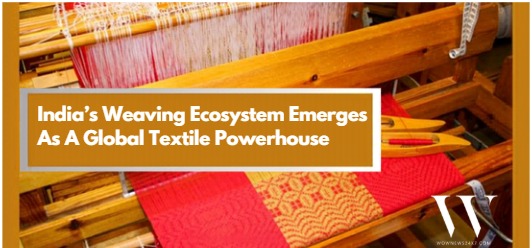
India’s weaving ecosystem is undergoing a quiet yet powerful transformation, driven by modernization, sustainability, and government-backed initiatives under Budget 2026–27. From rural handloom clusters to mega textile parks, the sector is evolving into a globally competitive, technology-enabled industry while preserving its artisanal roots.
India’s centuries-old weaving tradition is entering a new era of innovation and inclusivity. The Union Budget 2026–27 has placed textiles at the heart of economic growth, introducing integrated programs to modernize clusters, empower artisans, and promote sustainable manufacturing. This shift is redefining how India’s weaving ecosystem contributes to jobs, exports, and rural livelihoods.
Modernization Of Traditional Clusters
The Textile Expansion and Employment Scheme is upgrading traditional weaving hubs with advanced machinery, testing centers, and technology support. These upgrades aim to enhance productivity and quality compliance while creating new employment opportunities. The initiative also encourages collaboration between industry and academia to develop skilled manpower through Samarth 2.0, ensuring weavers are equipped for modern textile demands.
Sustainability And Global Competitiveness
The Tex-Eco Initiative is promoting eco-friendly production aligned with international sustainability standards. This program supports green manufacturing, responsible sourcing, and access to emerging global markets. By integrating natural and vegetable dyes and improving dye-house infrastructure, India’s weaving clusters are becoming more environmentally resilient and globally relevant.
Empowering Artisans And Rural Communities
The National Handloom and Handicraft Programme merges existing schemes to strengthen market linkages and artisan incomes. It supports branding, training, and quality improvement under the Mahatma Gandhi Gram Swaraj Initiative, which focuses on khadi, handloom, and handicrafts. These efforts are helping rural weavers gain visibility through the One District One Product (ODOP) framework.
Strategic Impact On India’s Textile Future
With Mega Textile Parks planned across states, India’s weaving ecosystem is poised to become a global manufacturing hub for technical textiles used in industrial, medical, and defense applications. The government’s integrated approach—from fibre self-reliance to export facilitation—positions India as a leader in sustainable textile innovation.
Key Highlights
- Budget 2026–27 places textiles at the center of growth
- Textile Expansion and Employment Scheme modernizes clusters
- Tex-Eco Initiative promotes sustainable and green manufacturing
- Samarth 2.0 enhances skilling and industry collaboration
- National Handloom and Handicraft Programme boosts artisan incomes
- Mega Textile Parks to drive global competitiveness
Sources: The Economic Times, Firstpost, Parth IAS