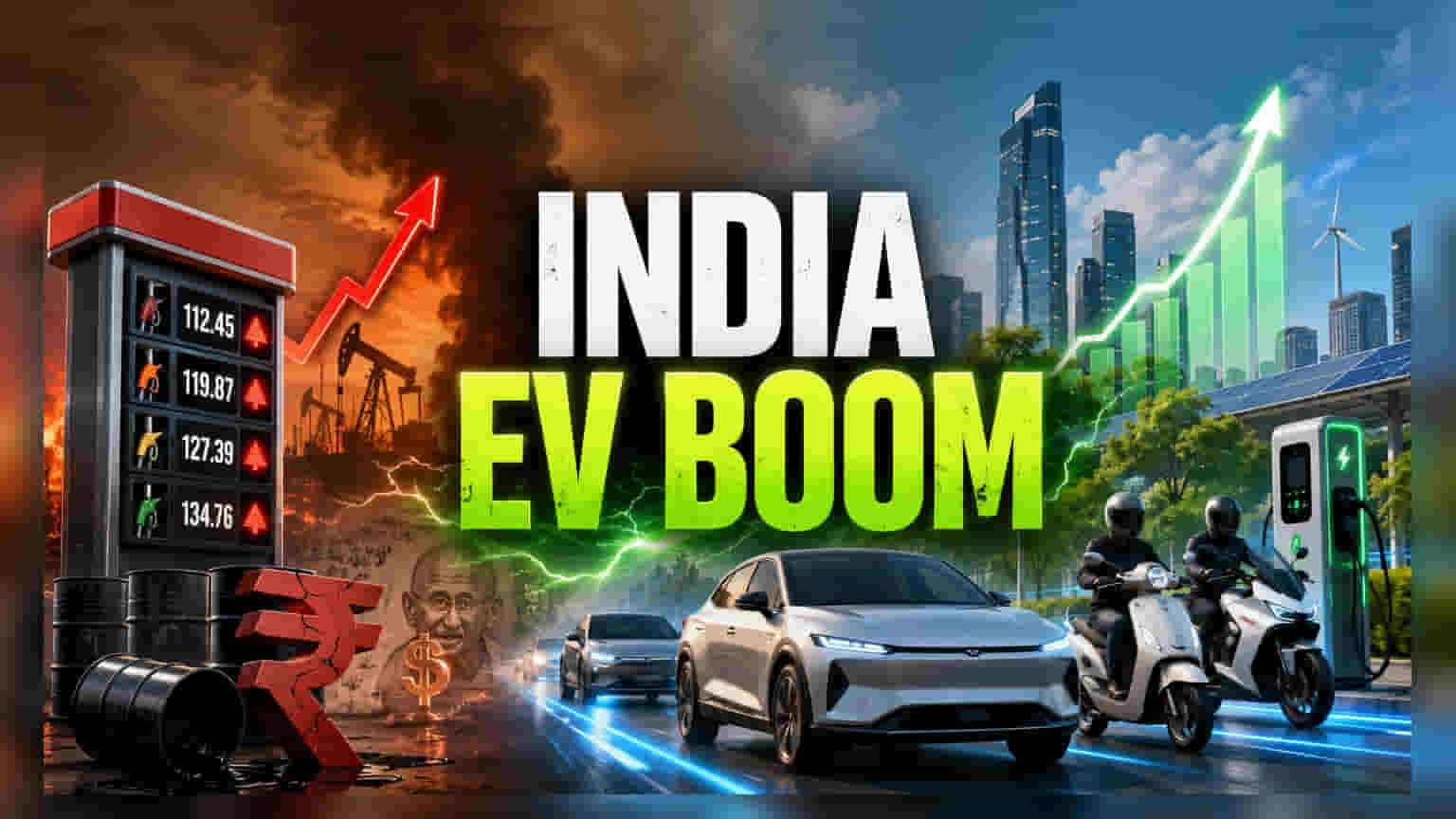
As rising retail petrol prices pressure household budgets across India, the country's electric vehicle transition is gathering rapid momentum. Driven by cost-effective running logistics, an expanding network of public fast-charging stations, and localized battery manufacturing, consumers and commercial fleet operators are shifting toward zero-emission alternatives at a record pace.
NEW DELHI — India’s strategic shift toward an electric vehicle transition has reached a critical inflection point as retail petrol prices touch unprecedented highs across major metropolitan hubs. High automotive fuel overheads, combined with updated production-linked regulatory incentives, are rapidly altering the economics of personal mobility.
This structural realignment is forcing a rapid transition in consumer purchasing behavior today, forcing domestic automakers to overhaul their assembly pipelines to meet a sudden surge in electric vehicle demand.
Escalating Fuel Pressures Reshape Commuter Economics
According to daily pricing metrics published by state-run oil marketing enterprises, localized fuel rates have experienced steady upward pressure due to volatile international crude supply chains and refined product import duties. In high-density urban areas, the climbing cost of conventional internal combustion engine operation has significantly strained middle-class household budgets.
Energy infrastructure analysts indicate that the expanding cost gap between fossil fuels and grid electricity has turned public attention heavily toward local running economics. While the initial showroom acquisition cost of an electric model historically carried a premium, the daily operational cost per kilometer for a battery-operated vehicle has dropped to a fraction of its fossil-fuel equivalent. This stark financial divergence is driving a significant wave of vehicle trade-ins across the country.
Infrastructure Expansion and Manufacturing Inflow
The accelerating electric vehicle transition is heavily backed by proactive public capital outlays aimed at eliminating driver range anxiety. Regulatory frameworks managed by the Ministry of Heavy Industries have successfully accelerated the installation of high-capacity direct-current fast-charging stations along high-density national highways and major freight corridors.
Furthermore, major domestic automobile conglomerates have committed substantial capital to build localized lithium-ion cell manufacturing plants and dedicated battery assembly hubs. By anchoring the core supply chain within India, automakers are steadily reducing their structural reliance on imported electronics, protecting the domestic market from global supply bottlenecks and driving down retail sticker prices for mass-market vehicles.
Market Dynamics and the Two-Wheeler Catalyst
While passenger car segments are showing steady growth, market statistics show that the two-wheeler and three-wheeler commercial sectors are leading the electric vehicle transition. Independent urban delivery fleets, e-commerce distribution networks, and ride-hailing platforms are aggressively phasing out petrol-powered scooters in favor of smart electric variants to protect their operational margins.
For everyday commuters and small business owners, switching to an electric fleet brings instant relief from volatile fuel pricing. Municipal transport departments are supporting this shift by introducing zero-emission low-speed zones, cutting commercial registration fees, and offering direct road-tax waivers for battery-powered fleets, significantly lowering the total cost of ownership for commercial operators.
Official Sources Section
Statistical registration figures, consumer adoption datasets, and infrastructure progress metrics are regularly compiled via the nationwide Vahan Dashboard managed by the Ministry of Road Transport and Highways. Long-term industrial roadmaps and clean energy compliance targets are consistently updated within public guidelines circulated by the NITI Aayog National Institution for Transforming India.
Quote Section
"According to officials analyzing national energy consumption patterns, the economic pressure of rising retail fuel costs has fundamentally shortened the consumer decision-making cycle for clean energy adoption," stated senior transport policy advisors during a clean energy infrastructure summit. "Organizers stated that by combining strong infrastructure development with scaled local component manufacturing, the domestic automotive market is securely positioned to establish self-sustaining, long-term growth in the battery-powered mobility sector."
Why It Matters
For private consumers, corporate auto manufacturers, energy utility networks, and public planners, the speed of the electric vehicle transition directly affects national economic health. On a macroeconomic scale, reducing aggregate petroleum imports helps stabilize the national trade deficit and strengthens currency resilience. For the end consumer, migrating away from volatile oil markets provides long-term financial predictability, shields household savings from global energy shocks, and supports cleaner urban air quality across India's densely populated cities.
Key Facts at a Glance
Fuel Pricing Pressures: Persistent increases in retail petrol costs are driving rapid consumer migration toward alternative transport tech.
Two-Wheeler Leadership: The electric vehicle transition is expanding fastest within the urban two-wheeler and commercial delivery sectors.
Infrastructure Outlay: Public agencies and private networks are expanding fast-charging stations along high-density highways.
Supply Chain Localization: Automobile manufacturers are investing heavily in domestic battery cell fabrication plants to lower retail costs.
Policy Support: State governments are offering structural incentives, including full road-tax exemptions and lower registration fees for new electric buyers.
Frequently Asked Questions
How does the daily running cost of an electric vehicle compare to a standard petrol model?
On average, a battery electric vehicle costs approximately ₹1.20 to ₹1.50 per kilometer to operate based on standard domestic power tariffs, whereas a traditional petrol-powered vehicle typically demands ₹6.50 to ₹8.00 per kilometer.
Are there enough public charging stations to support long-distance highway travel?
Yes, highway charging infrastructure is expanding rapidly. Government welfare programs alongside private energy networks have deployed fast-charging arrays at regular 25-to-30-kilometer intervals along most major national expressways to eliminate range anxiety.
How long do modern electric vehicle batteries last before requiring replacement?
Most contemporary production electric vehicles utilize advanced thermal-management battery packs that carry comprehensive manufacturer structural warranties ranging from 5 to 8 years, or up to 1,60,000 kilometers, ensuring high long-term reliability.
Source: Ministry of Road Transport and Highways, NITI Aayog.