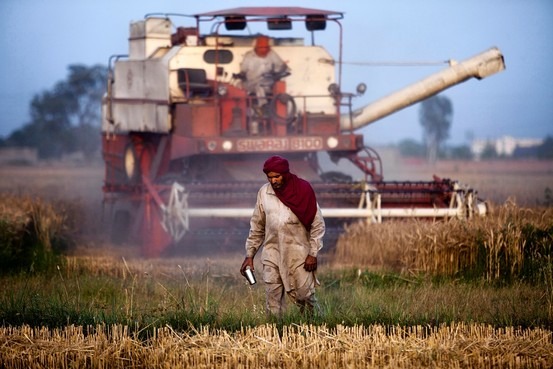
India's agricultural sector, which feeds 1.4 billion people, is running on tools and techniques that haven't kept pace with scale. A growing body of policy evidence and parliamentary committee reports now point to one critical, underserved area: the mechanisation of small and marginal farms, which account for 86% of India's total operational holdings yet remain largely cut off from modern farm technology.
The Missing Middle Problem
India's overall farm mechanisation rate stands at just 47% significantly behind China at 60% and Brazil at 75%. But the raw number obscures something starker: the 86% of farmers operating on holdings smaller than two hectares are effectively excluded from the mechanisation story. Equipment is expensive, landholdings are fragmented, and subsidy channels often benefit larger, more commercially organised farmers rather than those tilling a single acre in Vidarbha or Bundelkhand.
A Policy Framework That Exists But Underperforms
The government's Sub-Mission on Agricultural Mechanisation (SMAM) has, since 2014–15, distributed 14.2 lakh machines and set up 37,097 Custom Hiring Centres (CHCs) and Farm Machinery Banks (FMBs). Each well-functioning centre can serve 100–200 farmers. Yet critics and parliamentary committees have flagged that subsidy distribution lacks transparency, machine maintenance infrastructure is thin, and awareness among marginal farmers remains low. The mission was merged into Rashtriya Krishi Vikas Yojana in 2022, raising concerns about dilution of focus.
The Road To 2047
India has set a target of achieving 75–80% farm mechanisation by 2047 but the Standing Committee on Agriculture has warned this could take 25 years at the current pace. Closing the gap will require more than subsidies. It demands affordable, small-scale machinery designed for Indian field conditions, robust rental ecosystems through CHCs, digital platforms for equipment booking, and credit access for marginal farmers investing in shared machinery.
Key Highlights
- India's farm mechanisation stands at 47%, lagging China (60%) and Brazil (75%) considerably.
- Small and marginal holdings make up 86% of India's total agricultural holdings yet remain under-mechanised.
- SMAM has distributed 14.2 lakh machines and established 37,097 Custom Hiring Centres since 2014–15.
- A parliamentary standing committee targets 75% mechanisation by 2047 but warns it could take 25 years at present pace.
- Key barriers include high machine costs, fragmented land, lack of repair infrastructure, and poor subsidy transparency.
- Drone deployment to women's self-help groups and Digital Agriculture Mission signal a new, tech-forward direction.
- Crop-specific mechanisation gaps are widest in sowing, weeding, and non-wheat/rice harvesting operations.
Sources: PRS India Standing Committee Report, Lok Sabha Parliamentary Reply (Feb 2025), PIB, Times of India, India Briefing, UN-CSAM India Country Presentation.