India’s historic railway stations, including Mumbai’s CSMT, Howrah Junction, and the high-altitude Ghum station, serve as vital symbols of cultural and architectural heritage. Blending Victorian, Indo-Saracenic, and complex mountain engineering designs, these active transit hubs continue to handle millions of daily travelers while preserving the nation's rich rail history.
MUMBAI, India — India’s railway network, one of the largest in the world, moves millions of passengers daily across a vast geography of deserts, coastlines, and mountains. However, several stations have evolved far beyond their practical transportation functions. Through striking architectural designs, deep historical narratives, and structural engineering achievements, these railway stations have established themselves as prominent, permanent landmarks within their respective cities.
From the UNESCO-protected structures of Maharashtra and West Bengal to the high-altitude terminuses of the Himalayas, India's heritage railway stations reflect a long-standing cultural and economic relationship with train travel. Today, these transit points continue to serve as major economic drivers while simultaneously preserving centuries of cultural heritage.
Architectural Masterpieces of Urban India
Chhatrapati Shivaji Maharaj Terminus (CSMT), Mumbai
Few transport hubs possess the global recognition of Mumbai's Chhatrapati Shivaji Maharaj Terminus. Completed in 1887, the sprawling terminal stands as a premier example of Victorian Gothic Revival architecture structurally integrated with traditional Indian design elements. The facility features an array of stone carvings, stained-glass windows, turrets, and expansive domes that define the skyline of South Mumbai. Recognizing its cultural and architectural significance, UNESCO designated the terminal as a World Heritage Site in 2004. The station routinely processes millions of local and long-distance commuters annually, demonstrating how historical infrastructure can support modern urban transport demands.
Howrah Junction, Kolkata
Situated on the banks of the Hooghly River, Howrah Junction is one of the oldest operating and highest-volume railway facilities in the country. Initially opened in 1854, the terminal has functioned for over 170 years as the primary rail gateway to Eastern India, managing generations of transit into Kolkata. Visually and geographically linked with the historic Howrah Bridge, the station remains a critical anchor for regional commerce, passenger transit, and industrial logistics.
Chennai Central, Chennai
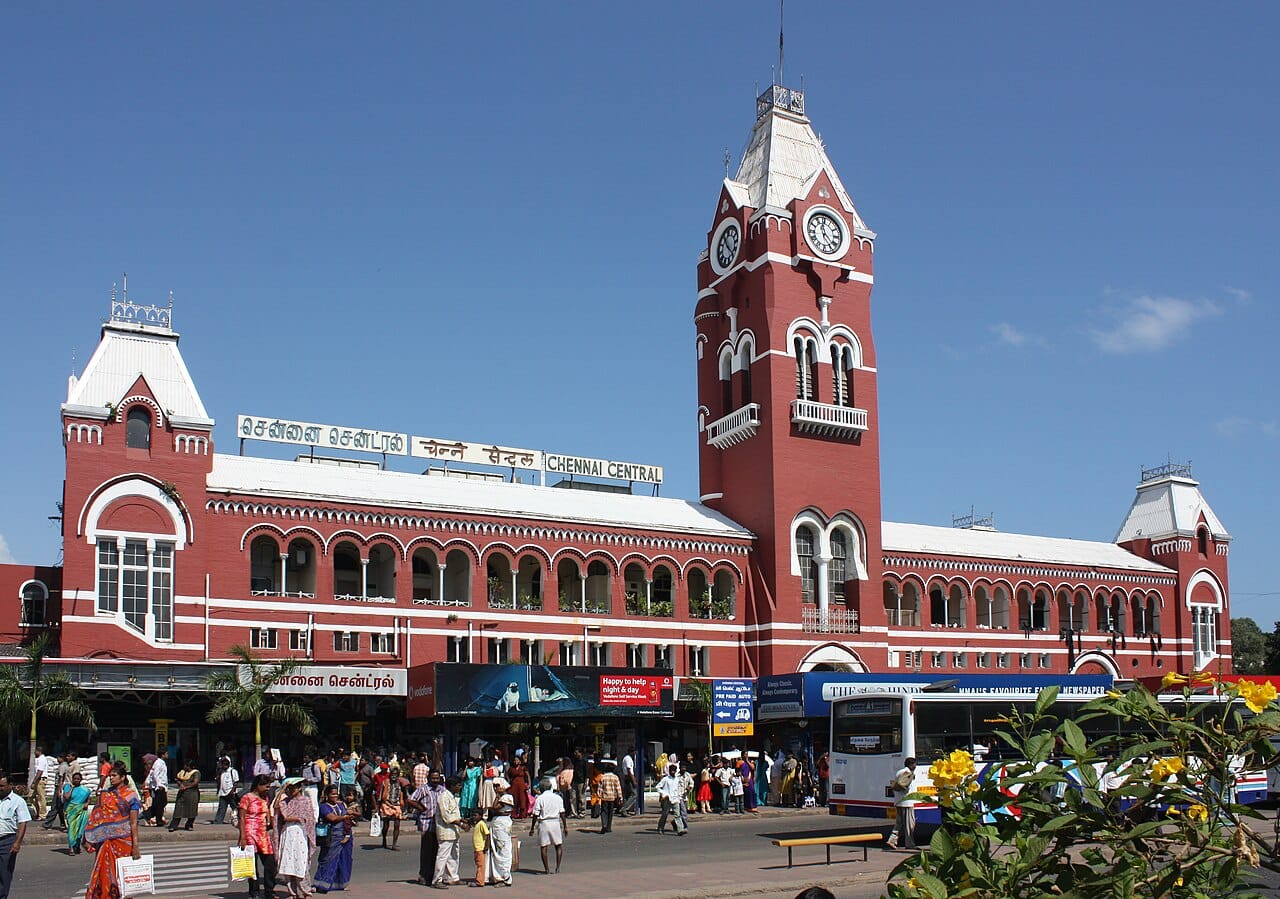
Distinguished by its distinctive red-brick facade and central clock tower, Chennai Central is a primary architectural landmark in South India. Designed by British architect George Harding and opened to the public in 1873, the station serves as the main hub connecting the southern peninsula to the rest of the domestic rail network. Its structural profile is highly integrated into regional identity, regularly appearing in Indian media, films, and tourism campaigns.
Palaces of Transit and Mountain Engineering
Charbagh Railway Station, Lucknow
Completed in 1914, Lucknow's Charbagh Railway Station is frequently cited by architectural historians for its Indo-Saracenic design. The structure utilizes symmetrical lines, grand arches, and large domes that cause the transit facility to visually resemble a traditional palace. Beyond its front facade, the station possesses an unusual structural layout: when viewed from an aerial perspective, the entire building complex is arranged to mimic the layout of a chessboard.
Darjeeling and Ghum Stations, West Bengal
In the high-altitude regions of West Bengal, the Darjeeling Himalayan Railway—popularly referred to as the "Toy Train"—represents a significant milestone in nineteenth-century mountain engineering. The Darjeeling Railway Station provides access to this narrow-gauge line, which was recognized as a UNESCO World Heritage Site in 2005. Further up the line sits the Ghum Railway Station. Positioned at an elevation exceeding 2,200 meters above sea level, Ghum is among the highest railway stations anywhere in India, drawing international railway enthusiasts and tourists due to its technical layout and views of the Himalayan range.
Geographical Anchors of the Rail Network
At the extreme geographic boundaries of the subcontinent, infrastructure plays a vital role for both long-distance travelers and logistics networks.
New Delhi Railway Station: Operating in the nation's capital, this central junction processes hundreds of trains daily. It serves as the primary multi-directional transit hub connecting northern lines with southern, eastern, and western rail corridors.
Kanyakumari Railway Station: Located at the southernmost point of mainland India, this terminal carries immense geographical significance. It serves as the definitive terminus or starting point for some of the longest single-route train journeys across the subcontinent, marking the completion of major cross-country travel routes.
Official Sources Section
Historical data, construction timelines, and engineering milestones are verified via the archives of the Ministry of Railways and regional state tourism datasets. Heritage protections and international listings are maintained under the official regulatory frameworks of the UNESCO World Heritage Centre.
Quote Section
"According to officials from the Ministry of Railways, preserving the structural integrity of these heritage terminals remains a core priority even as modernization, digital signaling, and passenger-capacity upgrades are implemented across major junctions."
Why It Matters
For citizens, travelers, and international investors, these stations represent more than nostalgia; they are high-capacity economic zones. Maintaining heritage status while implementing modern expansions preserves real estate values, boosts tourism revenue, and ensures that critical transport architecture remains functional for the millions of commuters relying on daily rail transit.
Key Facts at a Glance
UNESCO Recognition: Both Chhatrapati Shivaji Maharaj Terminus (2004) and the Darjeeling Himalayan Railway (2005) hold protected UNESCO World Heritage status.
High-Altitude Transit: Ghum Railway Station sits at an altitude of over 2,200 meters, making it one of India's highest rail points.
Unique Geometry: The aerial footprint of Lucknow's Charbagh station is deliberately shaped like a giant chessboard.
Historical Longevity: Howrah Junction stands as one of the oldest major railway hubs in India, operating continuously since 1854.
FAQ Section
Which Indian railway stations are officially listed as UNESCO World Heritage Sites?
Chhatrapati Shivaji Maharaj Terminus (CSMT) in Mumbai and the Darjeeling Himalayan Railway are officially listed as UNESCO World Heritage Sites. The mountain railway line received its formal inscription in 2005.
What is unique about the design of Lucknow's Charbagh Railway Station?
Charbagh Railway Station features a distinct Indo-Saracenic architectural style with symmetrical domes and arches. Additionally, its structural plan is designed to resemble a chessboard when viewed from above.
How high is the Ghum Railway Station, and why is it important?
Ghum Railway Station is situated at an elevation of more than 2,200 meters above sea level. It is notable for being one of India's highest railway stations and forms a critical part of the historic Darjeeling Himalayan mountain rail line.
What is the oldest operating major railway station mentioned?
Howrah Junction in Kolkata is among the oldest hubs, having opened in 1854 to serve as the foundational gateway for rail travel into eastern India.
Source: Indian Railways Heritage Directorate, UNESCO World Heritage Database, Firstpost Lifestyle Archives.